 Save
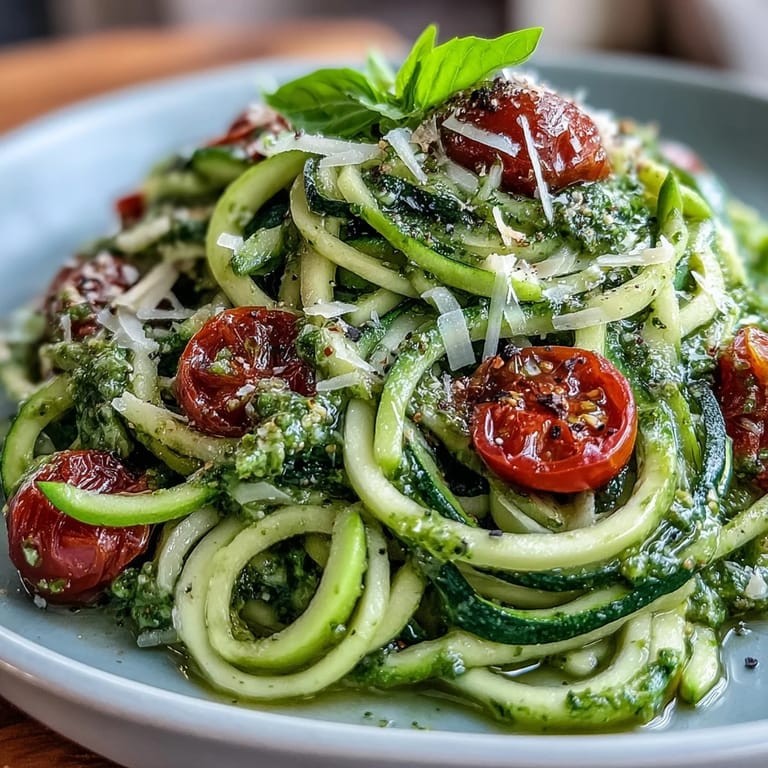
Save The first time I made zucchini noodles, my kitchen was full of late-summer sunlight and the sweet, peppery aroma of basil. The spiralizer made a soft, squeaky noise against the cool green skin, turning familiar vegetables into something unexpectedly delightful. I remember snacking on cherry tomatoes as I worked, bright red juice dotting my fingers and the counter. Even though the dish is raw, its colors and scents fill the room with cheerful, Mediterranean energy. There is something satisfying about preparing a meal that feels both playful and nourishing in each forkful.
One afternoon, I tossed these zucchini noodles in pesto for my partner after a long, hot walk. The sound of the food processor whirring drew them in, and they lingered by the kitchen island, plucking cherry tomato halves right from the bowl. We ended up sharing the dish on the porch, sunlight glinting off shaved Parmesan, and it was gone faster than I'd expected. It became our unofficial meal for those days when cooking seemed like too much, but we still wanted something a little special. I still grin at how quickly a bowl of raw veggies can disappear when dressed up with good olive oil and plenty of basil.
Ingredients
- Zucchinis: Spiralized ribbons of zucchini make this dish fresh and satisfying; use firm, smaller zucchini for the best texture.
- Cherry tomatoes: Their juicy pop balances the herby pesto, and I find halving them keeps things tidier.
- Fresh basil leaves: Use lots—the more fragrant, the better; I always pack the cup just a little extra.
- Pine nuts (or walnuts): Toasting the nuts brings out their flavor, but raw is perfectly classic for true pesto purity.
- Grated Parmesan cheese: Adds salty depth; a higher quality cheese goes a long way in elevating the whole bowl.
- Garlic clove: One is enough, though I learned the hard way that two can easily overwhelm the recipe.
- Extra virgin olive oil: Pick one you love, since its fruitiness shines in the dressing.
- Sea salt: Season carefully, since both cheese and zucchini contribute their own salinity.
- Freshly ground black pepper: A little freshly cracked elevates the pesto’s bite.
- Lemon juice: Brightens and ties all flavors together; squeeze right before using for max freshness.
- Garnishes (optional): Extra basil, shaved Parmesan, and cracked black pepper make each serving feel restaurant-pretty.
Tired of Takeout? 🥡
Get 10 meals you can make faster than delivery arrives. Seriously.
One email. No spam. Unsubscribe anytime.
Instructions
- Spiralize the zucchinis:
- Grab your spiralizer and make long, curly noodles out of two medium zucchinis—watch out for slippery ends, and set them in a large bowl when done.
- Make the pesto:
- In the bowl of a food processor, combine basil, pine nuts (or walnuts), Parmesan, garlic, salt, pepper, and lemon juice; pulse until everything is uniformly chopped but still has some texture.
- Add the olive oil:
- With the processor running, slowly pour in the olive oil and scrape the sides as needed; the aroma will give you a hint it’s ready when it smells bright and herbaceous.
- Toss zucchini noodles with pesto:
- Spoon the creamy pesto over your zucchini noodles and toss gently with tongs until everything is glistening and thoroughly coated but not smashed.
- Add cherry tomatoes:
- Fold in the halved cherry tomatoes, letting their juices meet the pesto while keeping the noodles crisp.
- Finish and serve:
- Transfer to plates and garnish with extra basil leaves, shaved Parmesan, and cracked black pepper if you’re feeling fancy; serve right away while crisp and vibrant.
 Save
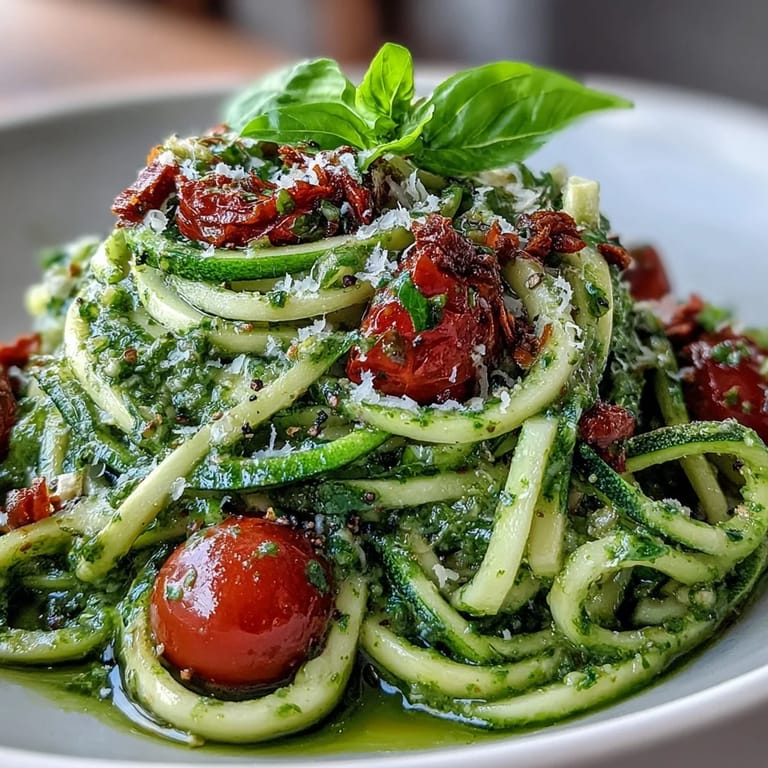
Save I’ll never forget serving these noodles to a friend who declared herself a zucchini skeptic and left with the recipe scribbled on a napkin. There’s a quiet pride in watching someone’s face change as they take that first unexpected bite, and suddenly raw zucchini becomes the main event. That afternoon, we sat laughing over green-flecked forks and talking about all the ways you can sneak more vegetables into everyday meals.
The Secret to Crisp Zucchini Noodles
Letting the zucchini noodles rest in a colander and giving them a gentle squeeze with paper towels helps banish excess moisture. I was skeptical, but after a few trials where my sauce puddled at the bottom, I learned this step is worth the extra moment. The result: crisp-tender noodles that hold their shape and don’t water down the pesto. It’s the kind of kitchen shortcut that feels like a magic trick you wish you’d always known.
Choosing the Perfect Basil
When picking basil for pesto, I look for bright, unblemished leaves—the more aromatic the better. Washing and gently patting the leaves dry before pulsing them makes the pesto less bitter. Once I grabbed a batch of basil that was starting to wilt and the flavor really dulled the sauce, so freshness counts for both scent and taste. Keep basil refrigerated only briefly, and use it at room temperature if you can help it.
Easy Swaps and Personal Touches
This dish is endlessly adaptable—sometimes I swap pine nuts for a handful of toasted almonds, or use nutritional yeast instead of Parmesan for plant-based friends. A splash of white balsamic or a few red pepper flakes gives the bowl a different twist, depending on what’s in the pantry. It’s a forgiving recipe that invites creativity without fuss.
- If you want to prep ahead, keep noodles and pesto separate until serving.
- Packed lunch tip: bring garnishes in a little container and add just before eating.
- Don’t forget to taste for salt—zucchini can mellow the boldest flavors.
 Save
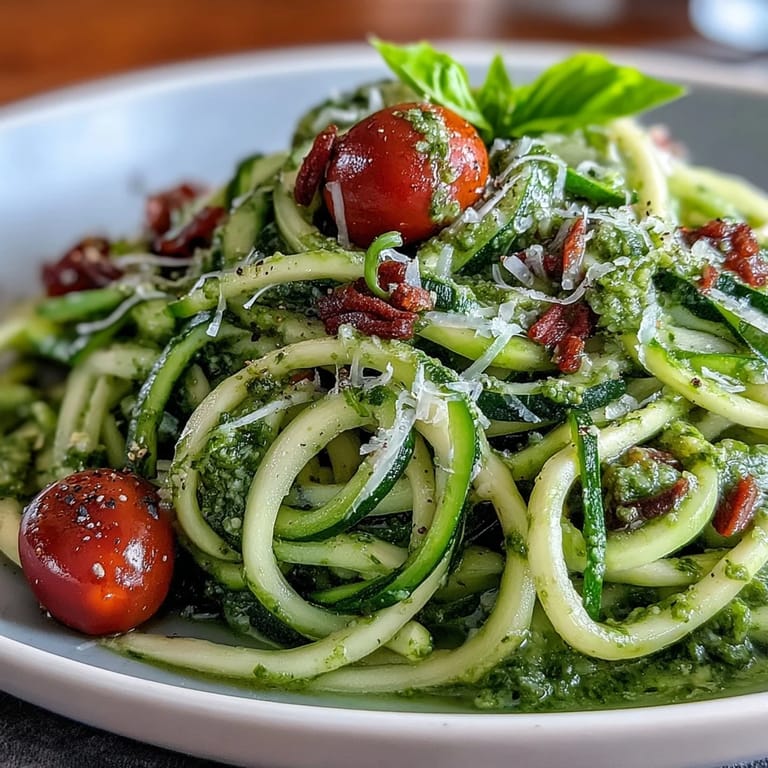
Save Hope you enjoy this as much as I do—each time I make it, I find a new reason to love every swirl. Here’s to light, joyful cooking and sharing sunny meals with the people who make your kitchen home.
Recipe FAQ
- → How do I prevent zucchini noodles from getting watery?
After spiralizing, place noodles on paper towels and gently press or blot to remove excess moisture. Toss with pesto just before serving to keep them crisp.
- → What can I use instead of pine nuts?
Walnuts, almonds, or cashews make great substitutes; toast them lightly for more depth. Use the same quantity and pulse to a similar texture in the pesto.
- → Can I make the basil sauce without cheese?
Yes—swap Parmesan for nutritional yeast or omit it entirely and increase nuts or lemon for body and umami. Adjust salt to taste.
- → How long will leftovers keep?
Stored airtight in the fridge, components keep 1–2 days; keep pesto and noodles separate if possible to preserve texture, then combine before serving.
- → Is a food processor necessary for the pesto?
A food processor gives the creamiest texture, but a blender or mortar and pestle also work. Pulse until ingredients are finely chopped, then stream in oil to emulsify.
- → Any tips for serving and garnishes?
Serve immediately with extra basil leaves, shaved Parmesan, and cracked black pepper. For added richness, drizzle a touch more olive oil or fold in halved cherry tomatoes at the end.