 Save
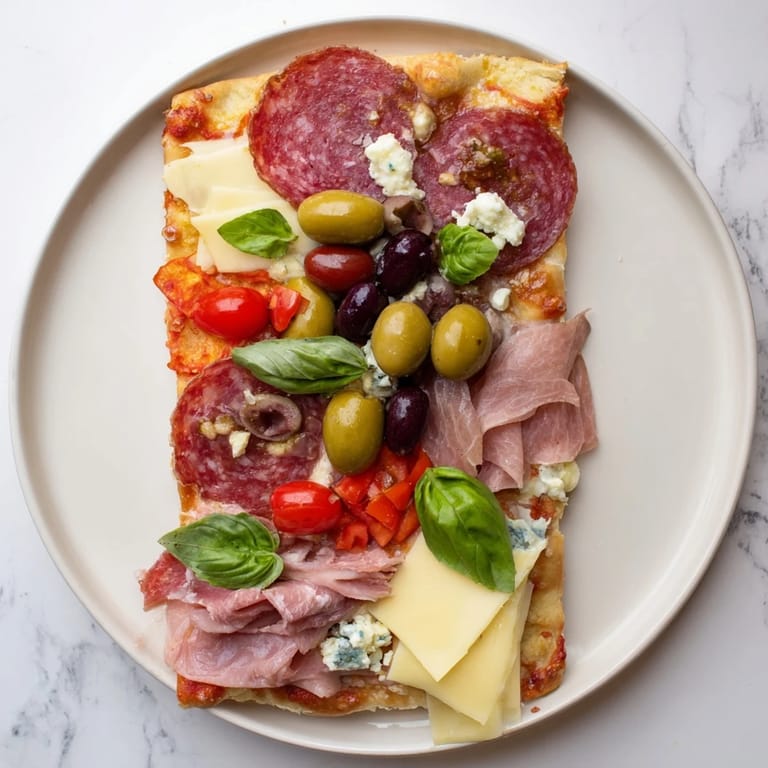
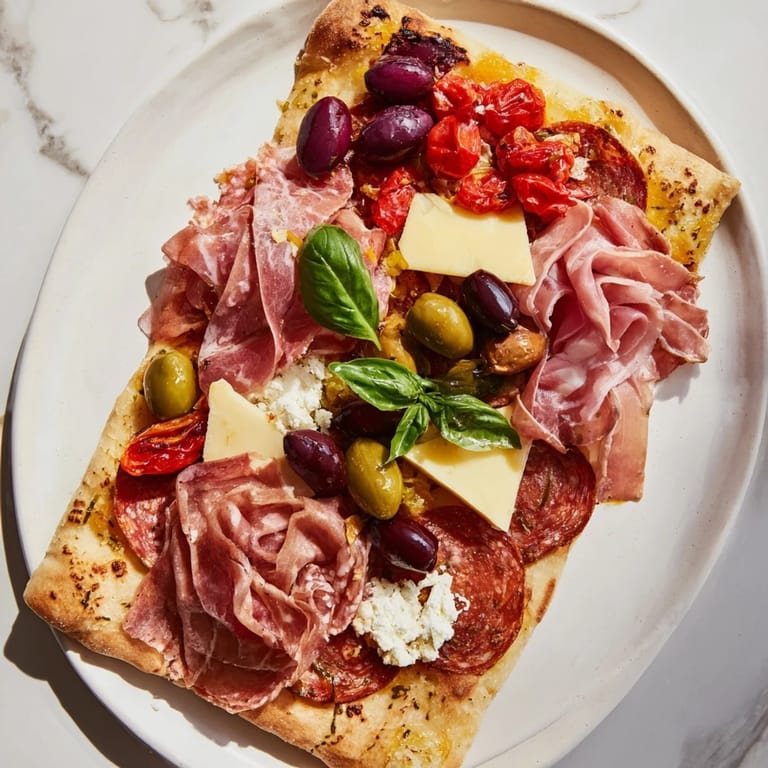
Save My friend Marcus showed up at my apartment with a grocery bag and a wild idea: skip the traditional charcuterie board and turn flatbread into edible vessels for a feast. We spent the afternoon layering meats and cheeses like we were building something architectural, and by the time guests arrived, the wooden board looked like something from a European market. The first person to reach for a piece didn't just grab food—they grabbed the entire concept of what appetizers could be, and suddenly everyone was breaking off their own custom bites.
I made this for a dinner party where one friend was vegetarian and another was anti-pork, and instead of making separate boards, I just doubled down on the brie, added roasted vegetables, and let people build their own rafts. Watching someone create their perfect bite—cheese, basil, a grape, a tomato—reminded me that the best appetizers aren't about showing off what you bought, but giving people permission to eat exactly what they want.
Ingredients
- Flatbreads: Rectangular shapes work best so people actually have a base to build on; lavash is forgiving, naan gets crispy, and ciabatta-style flatbread adds chew.
- Olive oil and garlic: Just enough to toast the bread without overshadowing the toppings.
- Prosciutto: The salty, delicate foundation that makes everything else taste better.
- Salami: Adds texture and that peppery kick that keeps things interesting.
- Smoked turkey breast: For someone who wants the meat without the intensity of cured pork.
- Soppressata or chorizo: Pick whichever your guests gravitate toward; soppressata is subtle, chorizo is bold.
- Brie: It melts slightly on warm bread and makes people feel like they're eating something fancy.
- Aged cheddar: Sharp enough to stand out but familiar enough that nobody skips it.
- Manchego: The one cheese people aren't expecting, which means they'll actually taste it.
- Blue cheese: For the people bold enough to want it; crumble it so they can control the amount.
- Grapes and cherry tomatoes: Sweetness cuts through the salt in a way that feels intentional.
- Marinated olives: Briny, textural, and they keep getting eaten even when all the cheese is gone.
- Roasted red peppers: Soft enough to break off easily, sweet enough to bridge flavors.
- Fresh basil: The aromatic signal that this isn't just meat and cheese, it's a composed dish.
- Honey or fig jam: The secret ingredient people drizzle on at the last second and then wonder why they didn't do it sooner.
Tired of Takeout? 🥡
Get 10 meals you can make faster than delivery arrives. Seriously.
One email. No spam. Unsubscribe anytime.
Instructions
- Heat your flatbreads:
- Brush them lightly with olive oil, scatter minced garlic across the surface, and let the oven warm them until they're just starting to crisp around the edges—about five to seven minutes at 200°C. You want them pliable enough to break but sturdy enough to hold weight.
- Arrange your rafts:
- Space the warm flatbreads out on your largest board with breathing room between them, like they're actually boats on a table. This isn't just practical; it tells people they can move things around.
- Layer with intention:
- Start with the softer cheeses (brie), then alternate meats and harder cheeses so every bite has something different. Don't worry about perfection—the visual chaos is part of the appeal.
- Fill the water:
- Use the space between flatbreads to scatter grapes, tomatoes, olives, and peppers. Think of it as the edible landscape around your meaty islands.
- Finish and serve:
- Tear basil leaves over everything, set out small bowls of honey and fig jam within reach, and let people break off their own pieces. The messiness is the entire point.
 Save
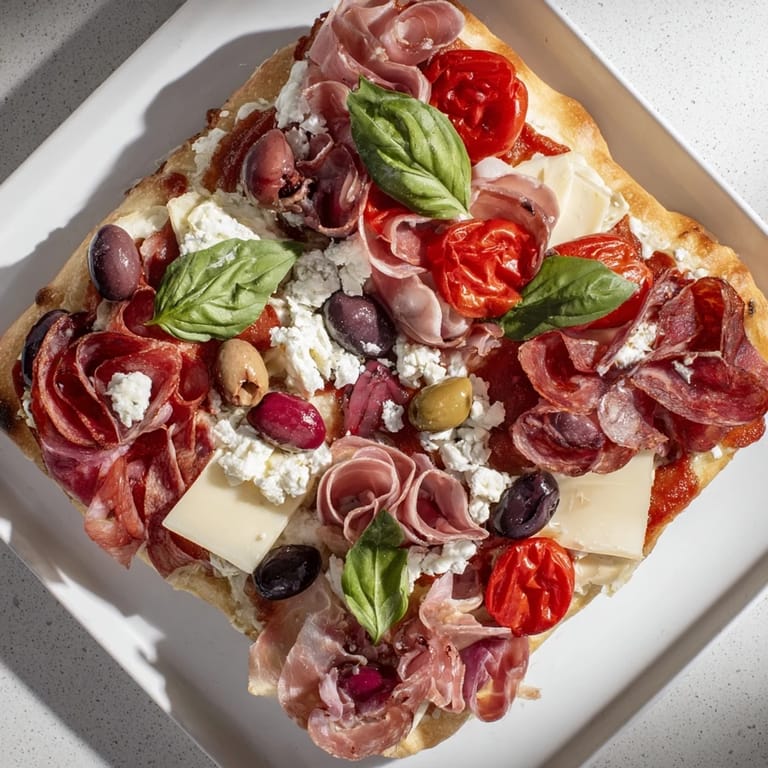
Save My sister brought her six-year-old to one of these boards, and he built a grape-honey-basil combination that made no culinary sense but tasted like joy to him. That's when I realized this dish works because it's not about executing a recipe perfectly—it's about giving people the tools to surprise themselves.
Building Your Flavor Combinations
The beauty of this dish is that every person at your table will create something slightly different. The sharp cheddar and fig jam combination hits different than brie and honey, which is completely different from blue cheese with just basil. Pay attention to what people reach for first and what they pair together; it tells you something about their taste. Sweet accompaniments bring out the saltiness of the cured meats in a way that makes everything pop, while the fresh basil and peppers keep the whole thing from feeling heavy.
Making It Ahead and Timing
You can slice all your meats and cheeses the morning of, store them in containers, and assemble the board no more than twenty minutes before guests arrive. The flatbread is the only timing-critical element; it needs to be warm but not hot when people start eating. If you're making this for a casual gathering, you can even toast the flatbreads right when people walk in—the smell alone is worth the two extra minutes of attention.
Adapting for Your Crowd
This recipe is forgiving enough to work with almost any preference without creating extra work. Vegetarians get their own raft with extra cheese and all the vegetables. Gluten-free guests can bring their own flatbread or just load up on the accompaniments and meats. The honey and fig jam work as bridges between flavors for picky eaters, and honestly, some people just want to eat olives and basil off a warm bread base, which is completely valid.
- Nuts like Marcona almonds add unexpected crunch if you toast them lightly first.
- Pickled vegetables (onions, peppers, cauliflower) add acidity that cuts through the richness beautifully.
- A crisp white wine or light red like Pinot Noir pairs perfectly, though sparkling works too if you want festive energy.
 Save
Save This dish works because it respects your guests enough to let them build their own story around it. Every broken piece of flatbread carries exactly what that person wanted, not what you decided they should eat.
Recipe FAQ
- → What types of flatbreads work best?
Flatbreads such as lavash, naan, or ciabatta provide an ideal base with their sturdy yet tender texture that crisps nicely when brushed with oil and warmed.
- → Can I customize the meat and cheese selection?
Absolutely! Feel free to substitute or mix cured meats and cheeses to suit personal taste or availability, maintaining a balance of flavors and textures.
- → What accompaniments pair well with these flatbreads?
Fresh grapes, cherry tomatoes, marinated olives, and roasted red peppers add color, contrast, and bursts of fresh flavor to complement the rich toppings.
- → How should I serve the dish for gatherings?
Arrange the flatbreads on a large board spaced apart, garnish with fresh basil, and offer honey or fig jam on the side for drizzling or dipping to enhance each bite.
- → Are there suggested wine pairings?
A crisp white wine or a light-bodied red pairs excellently, balancing the richness of the meats and cheeses while refreshing the palate.