 Save
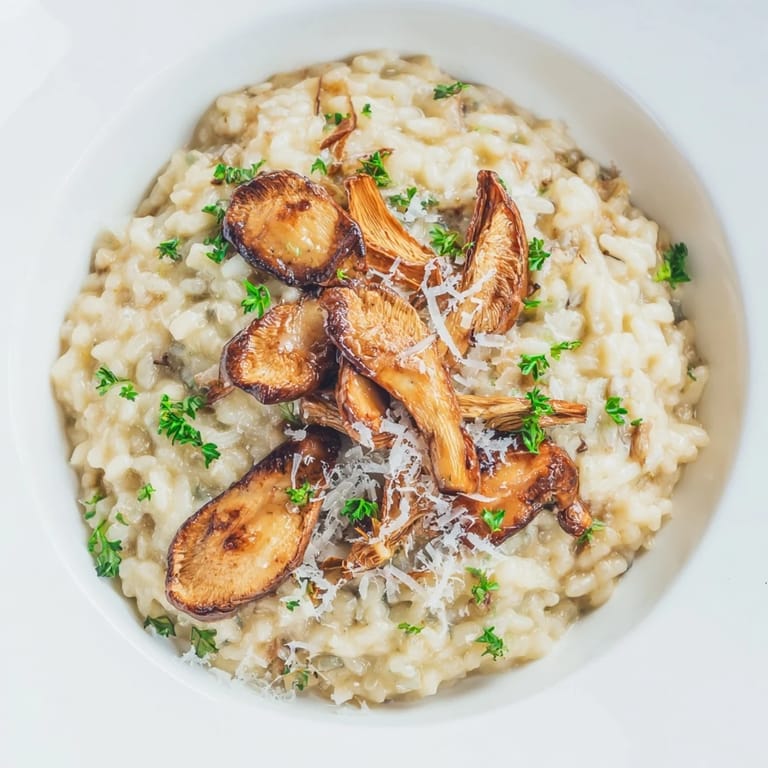
Save The kitchen smelled like earth and butter the night I finally stopped rushing my risotto. I'd been stirring impatiently for weeks, convinced the recipe was broken, until a friend pointed out I was adding cold broth and cranking the heat too high. That batch turned out glossy and perfect, studded with mushrooms so caramelized they tasted like they'd been kissed by fire. It was the first time I understood that some dishes demand your presence, not just your time.
I made this for a small dinner party on a rainy November evening, and everyone went quiet after the first bite. One friend scraped her bowl clean and asked if it was rude to lick it. We ended up opening a second bottle of wine and talking until midnight, the kind of night that only happens when the food makes people stay. I've never served risotto without thinking of that table, the candles burning low, and the way comfort food can turn strangers into friends.
Ingredients
- Mixed mushrooms: Using a variety like cremini, shiitake, and button gives you different textures and flavors in every spoonful; slice them evenly so they roast at the same rate.
- Olive oil (for mushrooms): This helps the mushrooms caramelize rather than steam, creating those crispy, golden edges that add so much character to the dish.
- Fresh thyme: Thyme loves mushrooms the way garlic loves butter; if using dried, rub it between your palms first to release the oils.
- Vegetable broth: Keeping it warm on a back burner is non negotiable, cold liquid shocks the rice and stops the starch from releasing properly.
- Arborio rice: The high starch content is what makes risotto creamy; don't rinse it or you'll wash away the magic.
- Dry white wine: It adds acidity and brightness; if you wouldn't drink it, don't cook with it, but it doesn't need to be expensive.
- Parmesan cheese: Freshly grated melts into the risotto like a dream, while pre grated stuff can turn grainy and sad.
- Butter and olive oil: Starting with both gives you the flavor of butter without the risk of burning it during the initial saute.
- Yellow onion: Finely chopped so it melts into the background, sweetening the risotto without stealing the spotlight from the mushrooms.
- Garlic: Just enough to add warmth without overwhelming the delicate, earthy flavors you've worked so hard to build.
Tired of Takeout? 🥡
Get 10 meals you can make faster than delivery arrives. Seriously.
One email. No spam. Unsubscribe anytime.
Instructions
- Roast the mushrooms:
- Preheat your oven to 220C (425F) and toss the sliced mushrooms with olive oil, salt, pepper, and thyme until every piece is lightly coated. Spread them in a single layer on a baking sheet and roast for 20 to 25 minutes, stirring once halfway through, until they're golden brown and their edges are crisp.
- Start the risotto base:
- While the mushrooms roast, heat butter and olive oil in a large, heavy bottomed saucepan over medium heat, then add the finely chopped onion and cook for about 5 minutes until it's soft and translucent. Stir in the minced garlic and let it cook for just 1 minute until fragrant.
- Toast the rice:
- Add the arborio rice to the pan and stir constantly for about 2 minutes, letting each grain get coated in the fat and lightly toasted. You'll hear a faint crackling sound and smell a nutty aroma when it's ready.
- Deglaze with wine:
- Pour in the white wine and stir until it's almost completely absorbed, scraping up any toasty bits stuck to the bottom of the pan. This step adds a subtle acidity that balances the richness to come.
- Add broth gradually:
- Begin adding the warm vegetable broth one ladleful at a time, stirring frequently and waiting until each addition is mostly absorbed before adding the next. Continue this gentle rhythm for 25 to 30 minutes until the rice is creamy on the outside but still has a slight firmness in the center.
- Fold in the finish:
- Stir in most of the roasted mushrooms (save a few pretty ones for garnish), the grated Parmesan, and chopped parsley, then taste and adjust the seasoning with salt and pepper. The risotto should flow slowly off the spoon, not sit in a stiff mound.
- Serve immediately:
- Spoon the risotto into warm bowls, top with the reserved mushrooms and extra Parmesan, and bring it to the table right away. Risotto waits for no one.
 Save
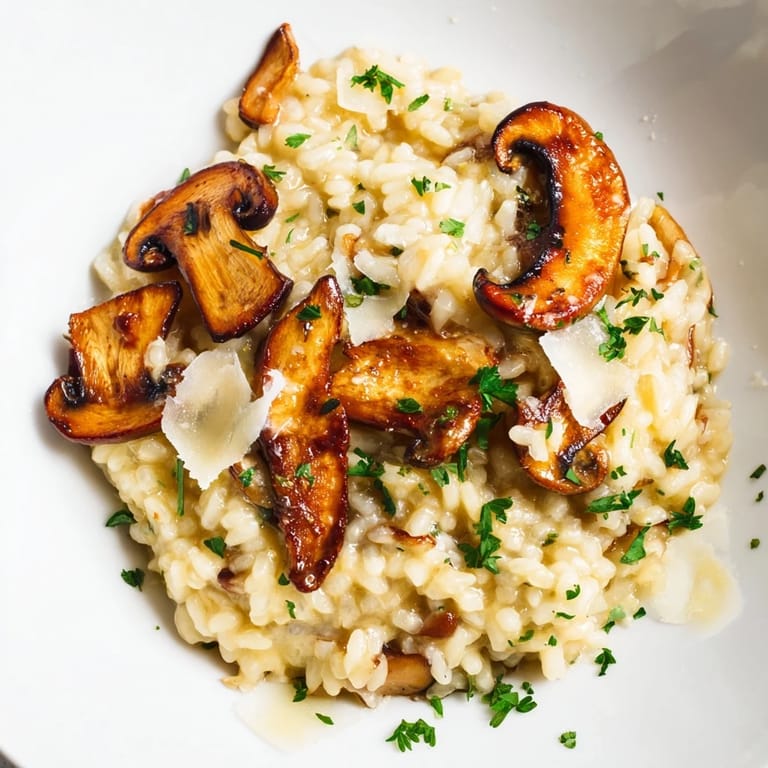
Save There's a moment near the end of cooking risotto when the rice starts to look glossy and loose, almost like it's moving on its own. My grandmother used to call it all'onda, the wave, and she'd tilt the pan to show me how it should ripple across the surface. The first time I got it right, I texted her a photo and she replied with three heart emojis and the word brava, which I printed out and stuck to my fridge. It's still there, a little faded now, reminding me that some victories are worth celebrating even when you're cooking alone.
Choosing Your Mushrooms
I used to buy whatever mushrooms were on sale until I realized that mixing varieties gives you layers of flavor you can't get from just one type. Cremini mushrooms add a deep, earthy base, shiitakes bring a slightly smoky richness, and button mushrooms offer a mild sweetness that balances everything out. If you can find oyster or maitake mushrooms, toss in a handful for a delicate, almost floral note that surprises people in the best way. The key is slicing them evenly so they roast at the same rate, otherwise you end up with some pieces burned and others still pale and sad.
The Art of Stirring
Stirring risotto isn't about constant, frantic motion like some recipes suggest; it's more like a slow, meditative rhythm that keeps the rice moving just enough to release its starch. I usually stir every 30 seconds or so, using a wooden spoon to scrape the bottom and sides of the pan where the rice likes to stick. You'll know you're doing it right when the grains start to look suspended in a glossy, creamy liquid rather than sitting in a pool of broth. Some nights I put on music or a podcast and let the stirring become automatic, a quiet task that clears my head better than any meditation app ever could.
Serving and Storing
Risotto is at its absolute best the moment it comes off the stove, still loose and flowing, which is why Italian cooks say it should wait for no one. If you need to hold it for a few minutes, cover the pan and remove it from the heat, then stir in a splash of warm broth just before serving to loosen it back up. Leftovers will firm up in the fridge overnight, but they transform beautifully into crispy risotto cakes when you press them into patties and pan fry them in butter until golden. I've also stirred cold risotto into beaten eggs for a surprisingly delicious frittata that uses every last spoonful.
- Serve in shallow bowls rather than deep ones so the risotto spreads out and shows off its creamy texture.
- A drizzle of good olive oil on top just before serving adds a fruity brightness that cuts through the richness.
- If reheating, add broth or water a little at a time over low heat, stirring gently until it loosens up again.
 Save
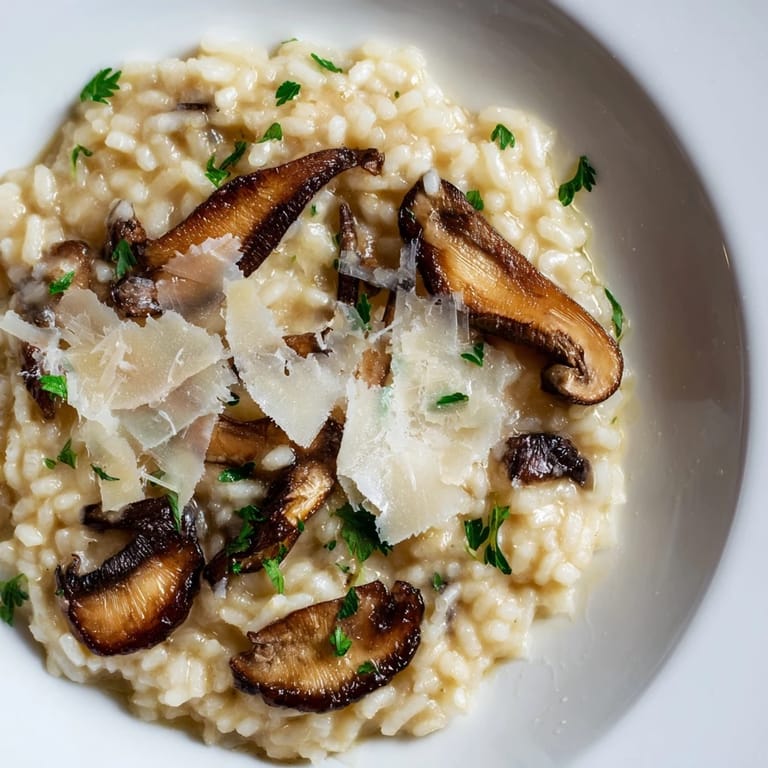
Save This risotto has become my answer to cold nights and the kind of hunger that needs more than just food. It's the dish I make when I want to feel grounded, when I need my hands busy and my kitchen warm, and it never lets me down.
Recipe FAQ
- → Why is arborio rice essential for risotto?
Arborio rice has high starch content that releases gradually during cooking, creating the characteristic creamy texture without added cream. Its firm center also maintains structure while the exterior becomes soft and luxurious.
- → How do I achieve the perfect consistency?
Add warm broth gradually, one ladle at a time, stirring frequently. Wait until each addition is mostly absorbed before adding the next. The risotto should flow slightly on the plate when finished, not clump or sit stiffly.
- → Can I prepare mushrooms ahead of time?
Yes, roast mushrooms up to 4 hours in advance and store them covered in the refrigerator. Warm them gently before folding into the finished risotto to maintain their texture and flavor.
- → What type of broth works best?
Vegetable broth is ideal for this dish, allowing the mushroom and Parmesan flavors to shine. Keep it simmering in a separate pot and add it warm to prevent temperature drops that interrupt the cooking process.
- → Is it necessary to toast the rice?
Yes, toasting the rice for 2 minutes after adding it to the pan helps firm the grains and prevents mushiness. It also enhances the nutty flavor that complements the roasted mushrooms beautifully.
- → Can I make this ahead for entertaining?
Risotto is best served immediately after cooking. However, you can prepare components ahead: roast mushrooms, chop vegetables, and measure ingredients. Assemble and cook fresh when ready to serve for optimal creaminess.