 Save
Save My mother called at 8 AM that Mother's Day morning, not asking for much, just mentioning offhand how she hadn't had a proper Eggs Benedict in years. I hung up and stood there in my quiet kitchen, suddenly seized by the idea of making it myself—something I'd never attempted before. The challenge felt right: a dish that looks restaurant-fancy but asks you to slow down and pay attention, three components that had to finish at nearly the same moment. By the time she arrived two hours later, my kitchen smelled like toasted bread and butter, and I'd learned that poaching eggs isn't magic, just patience.
I remember my friend Sarah's face when she took her first bite at our brunch table last spring—she closed her eyes like she was tasting a memory. That's when I realized Eggs Benedict isn't just food; it's an excuse to gather people you care about and tell them they matter enough for a homemade breakfast that requires three pans and genuine focus. It became our thing after that, the dish we'd make when someone needed celebrating or when the morning felt like it deserved to be special.
Ingredients
- English muffins, split and toasted: These need proper browning to hold up under the weight of eggs and sauce without getting soggy—a good toaster does half the work for you.
- Canadian bacon: The salty-smoky quality cuts through the richness of hollandaise, but thick-cut ham works beautifully too if that's what you have.
- Large eggs: Freshness matters here since you're eating them barely cooked; get them from someone you trust if you can.
- White vinegar: This tiny amount helps the egg whites set faster, keeping them tidy in the water without any vinegary taste.
- Egg yolks for hollandaise: The sauce lives or dies by these three—they're doing all the emulsifying work, so handle them with care.
- Lemon juice, freshly squeezed: Bottled will make a noticeable difference; fresh lemon brings brightness that bottled simply can't match.
- Unsalted butter, melted and warm: Temperature matters—if it's too hot, it'll scramble your yolks; too cold, the sauce breaks.
- Cayenne pepper: Just a whisper of it adds depth without heat; don't skip this small gesture.
Tired of Takeout? 🥡
Get 10 meals you can make faster than delivery arrives. Seriously.
One email. No spam. Unsubscribe anytime.
Instructions
- Build your warm water bath for hollandaise:
- Fill a saucepan with water that barely simmers—you want steam rising, not rolling boils. Set a heatproof bowl on top without letting it touch the water; this gentle heat will cook your egg yolks safely and slowly.
- Whisk yolks and lemon into glossy silk:
- Start whisking the moment the bowl hits the steam, moving constantly to prevent scrambling. You'll feel the mixture thicken under your whisk after a minute or two, transforming from pale yellow to something richer and ribbony.
- Drizzle butter in like you're telling a secret:
- This is the moment that feels scary the first time—go slowly, whisking constantly, adding just a thin stream of melted butter. The emulsion holds because you're patient; rush it and the whole thing breaks into greasy, separated sadness.
- Season and shelter your sauce:
- Taste it, add salt and that pinch of cayenne, then cover it loosely and set it somewhere warm but not hot. A turned-off oven or even a warm spot on your counter works perfectly.
- Brown the Canadian bacon gently:
- A quick minute or two per side in a warm skillet is all it needs—you want the edges crispy, not the whole thing dried out. Set it aside on a plate and keep it warm while you handle the eggs.
- Create a gentle swirl in simmering water:
- Add a splash of vinegar to your saucepan of barely simmering water, then use a spoon to create a whirlpool. This spinning motion helps the egg white wrap around itself instead of spreading into wispy threads.
- Slide each egg into its own moment:
- Crack an egg into a small bowl first, then gently pour it into the center of your whirlpool—the momentum keeps it tidy. Work in batches if your pan isn't huge; overcrowding means eggs touching each other, which means messy results.
- Watch for that perfect moment of doneness:
- Three to four minutes in and the whites should be set but the yolk will jiggle softly when you gently shake the spoon. A slotted spoon lifts them out cleanly; rest them on paper towels to drain.
- Stack everything in the order it came together:
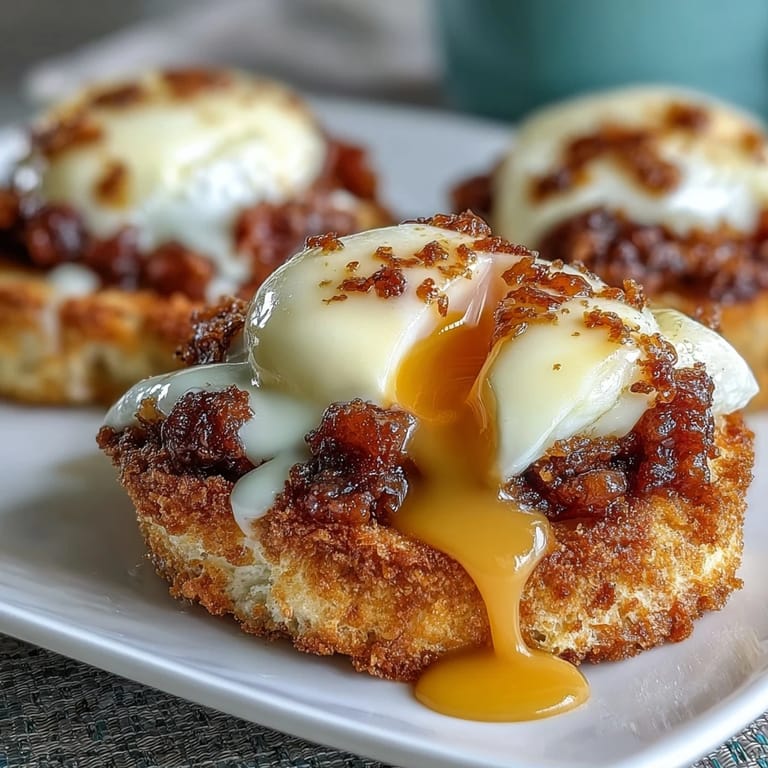
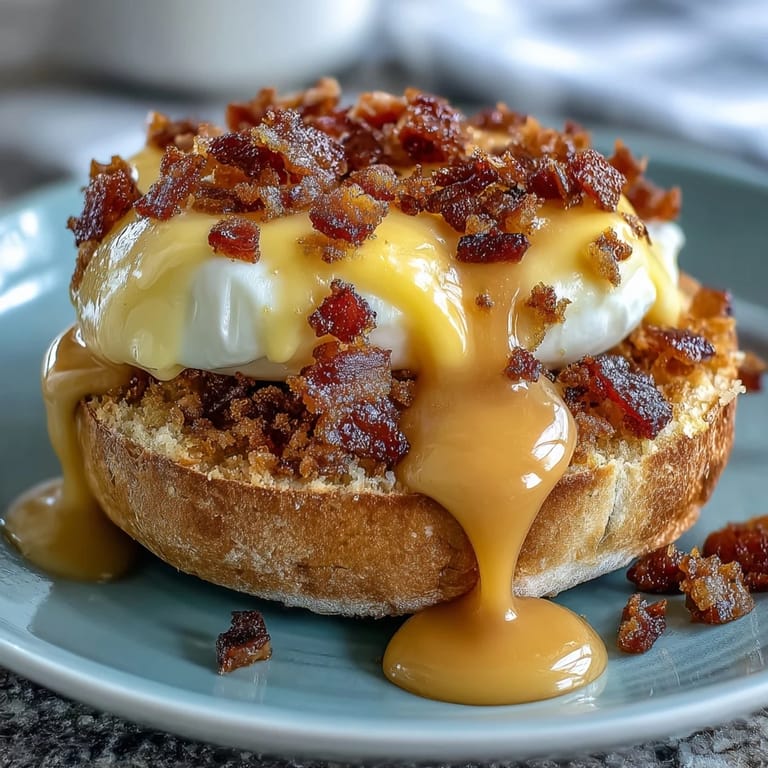
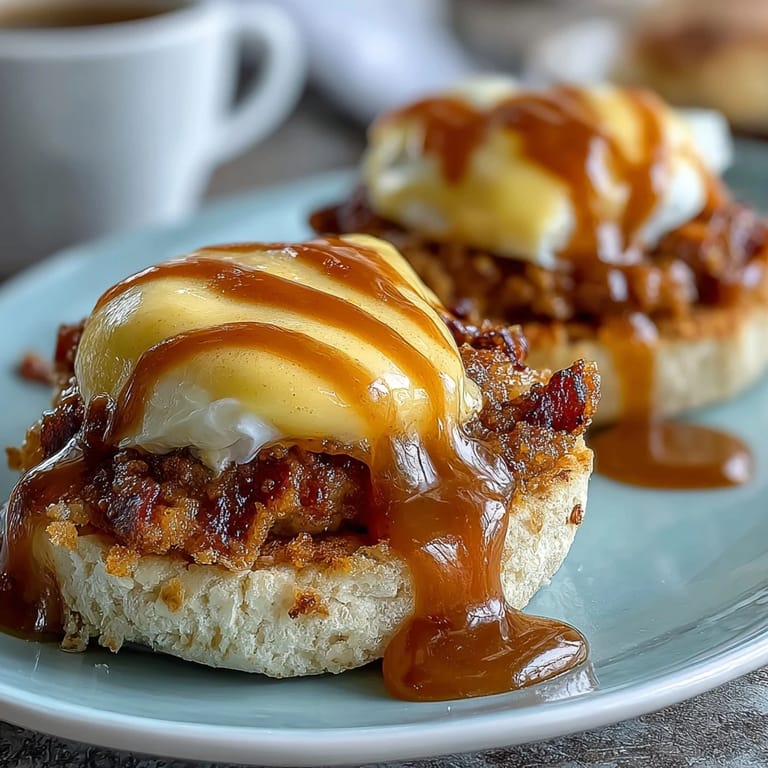
- Two muffin halves on the plate, Canadian bacon on top, then your poached egg, then that butter-lemon sauce cascading over like a golden blanket. Garnish if you're feeling it, season with salt and pepper, and serve immediately before anything cools down.
 Save
Save There's something deeply satisfying about timing three separate components so they all converge on the same plate at the same second. When you nail it—when the eggs are just set, the butter is still warm, the bacon still has warmth in it—you've done something that feels almost like cooking magic, except it's really just paying attention.
The Art of Poaching Without Panic
Poaching eggs intimidates people more than it should. The truth is, your eggs are doing most of the work themselves—the gentle simmer, the vinegar, the swirling water are all just creating the right environment for them to set tidily. I learned this only after several batches of ragged, torn eggs taught me to stop gripping the spoon so hard and trust the process instead. The water temperature is the real hero; if it's actually simmering (not boiling), your eggs will turn out fine even if your technique is shaky.
Hollandaise Without Fear
Hollandaise has a reputation for being temperamental, which is partly fair and partly just about understanding that you're emulsifying fat into eggs, not making magic. The moment I stopped whisking frantically and started whisking steadily, the sauce started cooperating. It also helped to remember that if it does break—if you add butter too fast or the heat spikes—you can save it by starting fresh with one egg yolk and slowly whisking in the broken sauce, which sounds wasteful but tastes perfectly fine.
Building Flavor in the Details
The components of Eggs Benedict are simple, almost austere: eggs, bread, meat, butter, and lemon. The magic happens in how you treat each one. Toast your muffins until they're genuinely golden and crunchy, not just warm; cook your Canadian bacon until the edges crisp slightly; squeeze your lemon fresh; whisk your hollandaise until it's silky, not grainy. These small choices compound into a dish that tastes like someone cared.
- If you notice the hollandaise starting to look thin or broken, you can save it by whisking in a tablespoon of cold water very slowly, which often brings it back together.
- Set everything up before you poach the eggs—toasted muffins on plates, bacon warming on the side, hollandaise ready and covered—so you're not scrambling once eggs hit the water.
- Eggs Benedict tastes best eaten immediately, but if you must hold it, keep the muffins warm in a low oven and the hollandaise loosely covered; the poached eggs are forgiving for a few minutes.
 Save
Save Eggs Benedict reminds you why people gather for breakfast on special mornings—it's not really about the eggs or even the hollandaise. It's about saying, with your hands and your attention, that someone is worth the effort. Make it for yourself too sometimes.
Recipe FAQ
- → How do I perfectly poach eggs for this dish?
Bring water with vinegar to a gentle simmer, swirl, then slide eggs gently in. Poach 3-4 minutes until whites are set and yolks remain soft.
- → What’s the best way to keep hollandaise sauce smooth?
Whisk yolks and lemon juice over simmering water, then slowly add melted butter while whisking continuously. Keep warm, not hot, to avoid curdling.
- → Can I substitute Canadian bacon with a vegetarian option?
Yes, sautéed spinach or avocado slices provide a flavorful alternative while maintaining texture and freshness.
- → How should the English muffins be prepared?
Split and toast the muffins until golden and crisp to add a sturdy base with a pleasant crunch.
- → What garnishes complement this dish well?
Fresh chopped chives or parsley enhance color and add a mild herbal note without overpowering flavors.