 Save
Save I discovered the magic of grazing boards completely by accident during a dinner party when my carefully stacked appetizers started sliding off the edge of my table, and instead of panicking, I watched my guests light up as they reached for the cascading cheeses and fruits. That happy mistake became an obsession—I started intentionally designing boards where ingredients tumbled over the edge like an edible waterfall, and suddenly what had been a simple spread became the conversation starter that made people linger before dinner even began. There's something about abundance spilling toward you that makes people feel welcomed, and I've been chasing that feeling ever since.
I remember setting up one of these boards for a last-minute wine night with neighbors I'd just met, terrified it wouldn't look "professional" enough, only to have them spend the first twenty minutes just admiring it and asking how I'd thought of the idea. One of them said it made her feel like she was at a fancy charcuterie restaurant, which is still the best compliment I've ever received about something I didn't technically cook.
Ingredients
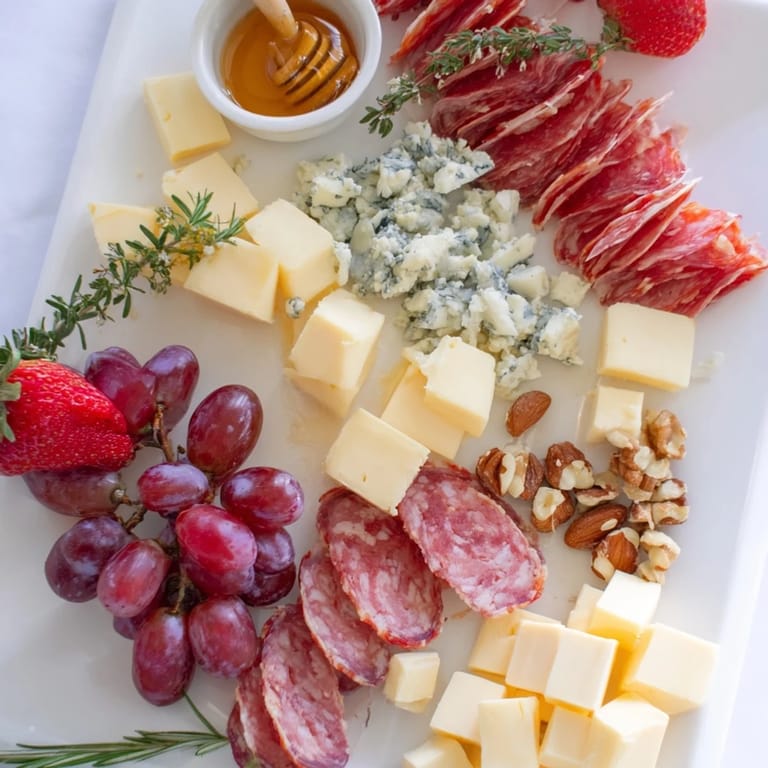
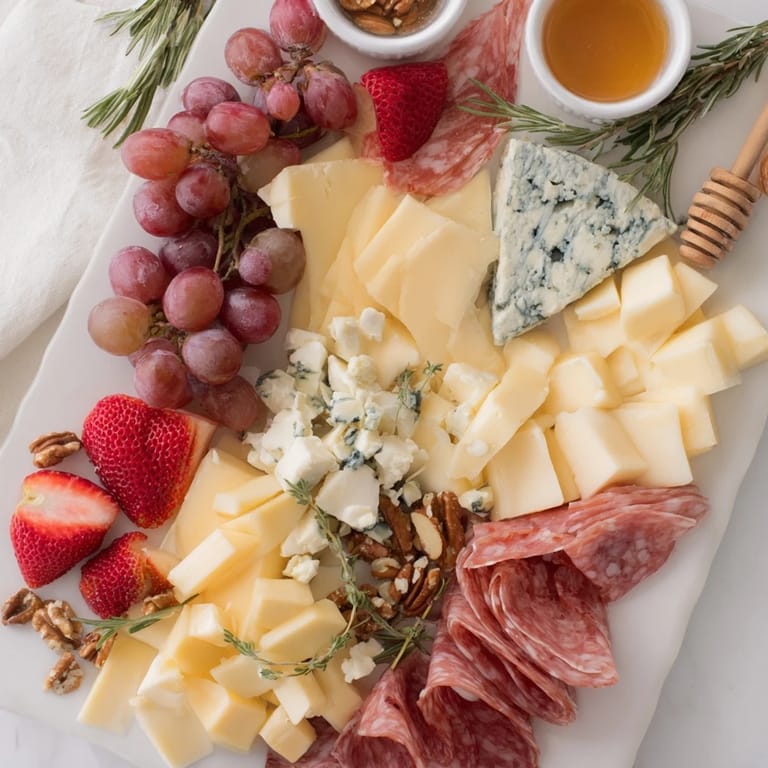
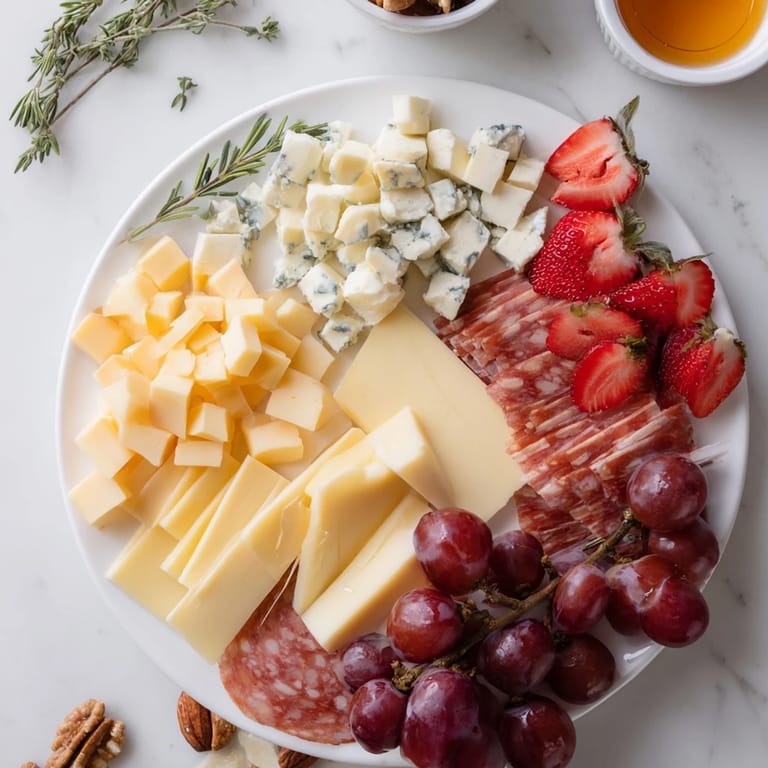
- Brie, sliced (150 g): The creamy anchor that everything revolves around; slice it while it's slightly cool so it holds its shape without crumbling.
- Aged Cheddar, cubed (150 g): You want something with personality here—look for a cheddar that's been aging at least a year so the flavor cuts through all the sweetness.
- Blue cheese, crumbled (100 g): This is your bold statement; use it sparingly because it should intrigue, not overwhelm.
- Goat cheese, sliced (100 g): The creamy bridge between sharp and subtle; keep it cold so the slices stay neat.
- Prosciutto (100 g): Buy it sliced thin at the counter and drape it loosely so light passes through it—that's how you know it's thin enough.
- Salami, sliced (100 g): Pick one with visible fat and spice; the visual interest matters as much as the taste.
- Red grapes in small clusters (1 cup): Cut them into manageable clusters because whole bunches are awkward to grab and look less intentional.
- Strawberries, halved (1 cup): Halve them just before assembly so they stay bright and glossy; wet strawberries lose their appeal within an hour.
- Blueberries (1/2 cup): These are your visual glue, filling gaps and creating color contrast without effort.
- Pear, thinly sliced (1): Slice this last and toss with a tiny squeeze of lemon juice so it doesn't brown before people eat it.
- Dried apricots (1/2 cup): The chewy sweetness that makes people reach for them as palate cleansers between savory bites.
- Dried figs, halved (1/2 cup): Halving them shows the gorgeous interior and makes them less intimidating to grab.
- Almonds (1/3 cup): Toast them lightly if you have time; the smell alone makes the board feel more thoughtful.
- Walnuts (1/3 cup): These add earthy texture and pair beautifully with the cheese and fruit.
- Baguette, sliced and toasted (1): Toast it right before assembly so it stays crisp; stale bread is the quickest way to kill the elegance of a grazing board.
- Assorted crackers (150 g): Pick 3–4 different shapes and textures so people have choices and the board looks more dynamic.
- Honey (1/4 cup): Use the good stuff here—it's the finishing touch that makes everything taste more luxurious.
- Fig jam (1/4 cup): The sweet-savory bridge that ties flavors together and adds a gorgeous deep color.
- Mixed olives (1/4 cup): Keep them pitted so your guests don't have that awkward moment of not knowing where to put the pit.
- Fresh herbs—rosemary and thyme: These are your final flourish, adding fragrance and visual greenery that makes the whole thing feel intentional.
Tired of Takeout? 🥡
Get 10 meals you can make faster than delivery arrives. Seriously.
One email. No spam. Unsubscribe anytime.
Instructions
- Set the stage:
- Position your board so part of it hangs over the table edge with clear space below—this is where the magic happens. The overhang shouldn't be dramatic, just enough to make people nervous and delighted in equal measure.
- Build the cheese foundation:
- Arrange your cheeses in overlapping layers near the edge, with brie slices slightly shingled and cheddar cubes clustered where you want visual weight. Let a few pieces intentionally cross the boundary; this is where the "waterfall" begins.
- Drape the cured meats:
- Fold prosciutto gently beside the cheese so it catches light, and layer salami where it can cascade with the flow. Meat should look loose and generous, not perfectly arranged—wrinkles are beautiful here.
- Scatter fresh fruits with intention:
- Tuck grape clusters and strawberry halves into gaps, nestling some so they balance precariously on the edge. This is where you're creating visual tension that makes people smile.
- Fill with dried fruits and nuts:
- Scatter almonds and walnuts along both the board and the table below, tucking dried apricots and figs into any empty spaces. These small treasures should feel like pleasant surprises, not afterthoughts.
- Anchor with crackers and toast:
- Stand some crackers and toast slices upright so they look alive and three-dimensional, and let a few lean or stack as if they're gently tumbling. This adds height and makes the board feel abundant without being chaotic.
- Position your accompaniments:
- Place small bowls of honey, jam, and olives on the board itself, and let drips or scattered olives lead the eye down to the table. Small bowls create natural stopping points for the eye and hands.
- Finish with fragrance:
- Tuck fresh rosemary sprigs and thyme throughout so people smell it before they taste it, and so the greenery catches light and adds visual depth.
- Invite the cascade:
- Step back and admire—then serve immediately, encouraging guests to grab from both the board and the fallen elements. Part of the joy is that some pieces naturally migrate to the table, and that's perfect.
 Save
Save What I love most about these boards is the moment when someone realizes this was meant to be this way, that the chaos is actually a design choice. I had one guest ask if I'd gone to culinary school, and I almost laughed—the secret is just giving myself permission to break the rules of what a board "should" be.
The Art of Intentional Overflow
The waterfall effect isn't about ingredients falling chaotically—it's about creating a visual story where your eyes follow a path from the abundance on the board down to the treasures that have escaped. I learned this by accident when a guest reached down to grab a piece of prosciutto from the table and said it felt like the board was offering more than it looked like it held. That's the moment I realized this technique transforms a grazing board from functional appetizer into an experience.
Cheese Pairing as Conversation
The four-cheese approach—creamy, sharp, pungent, and delicate—works because each one tells a different story and they taste better when eaten together. I've watched people try blue cheese and immediately reach for brie to balance it, then discover how the goat cheese clarifies the palate for another bite of cheddar. The board becomes a lesson in how flavors speak to each other, and people end up eating more thoughtfully without even realizing it.
Make It Your Own
This formula works with whatever you have access to, and that's what makes it feel personal instead of templated. In summer I load it with berries and fresh herbs from the garden; in fall I add roasted grapes and candied nuts; in winter I lean into darker cheeses and deeper jams. The structure stays the same—abundance flowing toward your guests—but the story changes with the season.
- Don't be afraid to use frozen fruit if fresh isn't at its peak; thawed berries and grapes actually work beautifully in a pinch.
- Keep a small spray bottle of water nearby while assembling so you can mist the fruit and greens to keep them looking dewy and fresh.
- If you're nervous about the overhang, test it with heavier items first—they're more forgiving than delicate ingredients.
 Save
Save This board has become my favorite way to show people I care without spending hours in the kitchen, and somehow it always makes the moment feel more generous than it deserves. There's real magic in giving people permission to be a little messy, a little indulgent, and a lot delighted.
Recipe FAQ
- → How do I create the cascading effect on the board?
Arrange ingredients in overlapping layers near the edge, allowing some items like fruits and crackers to extend or fall off slightly for a natural waterfall appearance.
- → Can this be adapted for vegetarians or vegans?
Yes, omit cured meats and use plant-based cheeses for a vegan-friendly option while maintaining the abundant, layered look.
- → What types of accompaniments complement this board?
Honey, fig jam, olives, and fresh herbs like rosemary and thyme add flavor contrasts and visual appeal to the layered arrangement.
- → How should I select cheeses for balance?
Mix soft, creamy cheeses with aged and crumbly varieties to provide a range of textures and flavors that enhance the overall presentation.
- → What tips help with cleanup after serving?
Placing parchment or butcher paper beneath the table area catches falling bits, making cleanup easier after guests enjoy the spread.