 Save
Save The first time I made lahmacun was in a cramped Istanbul kitchen during a summer when the heat made me reconsider every life choice. My Turkish friend's mother watched me fumble with the dough, then quietly took over, her hands moving with the kind of certainty that only comes from making something a thousand times. She didn't explain much—just showed me how thin the dough should be, how the meat should sizzle when it hit the hot stone. I burned the first batch and laughed at myself. By the fourth one, I understood why this simple flatbread had become her comfort food, her quick dinner, her answer to almost everything.
Years later, I made lahmacun for a potluck and watched people wolf them down without saying much—just quiet, contented eating. Someone asked for the recipe before even finishing their first one. That's when I realized this wasn't just my friend's mother's dinner solution anymore; it had become mine too.
Ingredients
- All-purpose flour (300g): The foundation of everything; make sure it's fresh and not too old or your dough will feel tired.
- Warm water (180ml): Not hot, not cool—blood temperature is the sweet spot so your yeast wakes up happy.
- Instant yeast (1 tsp): This is the magic, but don't let it sit in water too long or it gets grumpy.
- Sugar (1 tsp): A small gift to the yeast to help it do its job.
- Salt (1 tsp for dough, 1 tsp for topping): Don't skip this; it makes everything taste like itself.
- Olive oil (2 tbsp for dough, 2 tbsp for topping): Use good oil if you can; it's one of the few ingredients that really makes a difference in flavor.
- Ground lamb or beef (300g): Lamb is more traditional and tastes more Turkish, but beef works fine if that's what you have.
- Onion, garlic, tomato, and red bell pepper: These get finely chopped into almost a paste, which is how you know the filling will stay put and taste balanced.
- Tomato paste (2 tbsp): Use concentrated paste, not sauce; it adds serious depth without extra moisture.
- Fresh parsley (2 tbsp): Fresh herbs at the end make it taste alive.
- Cumin, paprika, black pepper, and chili flakes: These are the spices that make it taste like it came from somewhere specific.
- Lemon wedges and sumac: The finish; they wake everything up just as you're about to bite.
Tired of Takeout? 🥡
Get 10 meals you can make faster than delivery arrives. Seriously.
One email. No spam. Unsubscribe anytime.
Instructions
- Build your dough base:
- Combine flour, sugar, and salt in a large bowl. Dissolve the yeast in warm water, let it sit for a minute so it gets friendly with the water, then pour it into the dry ingredients along with the olive oil. Mix until a shaggy dough forms, then knead for 5 to 7 minutes until it's smooth and elastic—you'll know when it stops sticking and starts feeling alive under your hands.
- Let it rise with patience:
- Cover the dough with a damp cloth or plastic wrap and leave it somewhere warm for about 30 minutes. It should roughly double in size; you're not looking for a huge dramatic rise, just enough to know the yeast did its work.
- Make the meat mixture:
- In another bowl, combine the ground meat, onion, garlic, tomato, bell pepper, tomato paste, parsley, cumin, paprika, black pepper, optional chili flakes, salt, and olive oil. Mix everything together with your hands or a spoon until it looks like a cohesive filling—no streaks of unmixed meat, everything talking to everything else.
- Heat your cooking surface:
- Preheat your oven to 250°C (480°F) or as hot as it goes. Put a pizza stone or baking tray inside to heat up; this is the step that makes the edges crisp instead of chewy.
- Shape and stretch:
- Divide the risen dough into 8 equal pieces. On a lightly floured surface, take each piece and gently stretch it into a thin oval or circle about 20 cm across—thin enough that you can almost see through it, but sturdy enough that it doesn't tear. This is where it feels more like art than cooking.
- Spread the topping:
- Lay out your first stretched dough round and spread a thin, even layer of the meat mixture over it. Don't go all the way to the edges; leave about a half-inch border so the dough can crisp up without burning.
- Bake until it sings:
- Carefully transfer your topped lahmacun to the hot baking tray or stone. You'll hear it sizzle immediately; that's the sound of good things happening. Bake for 6 to 8 minutes until the edges are golden and crisp and the meat looks cooked through.
- Finish and serve:
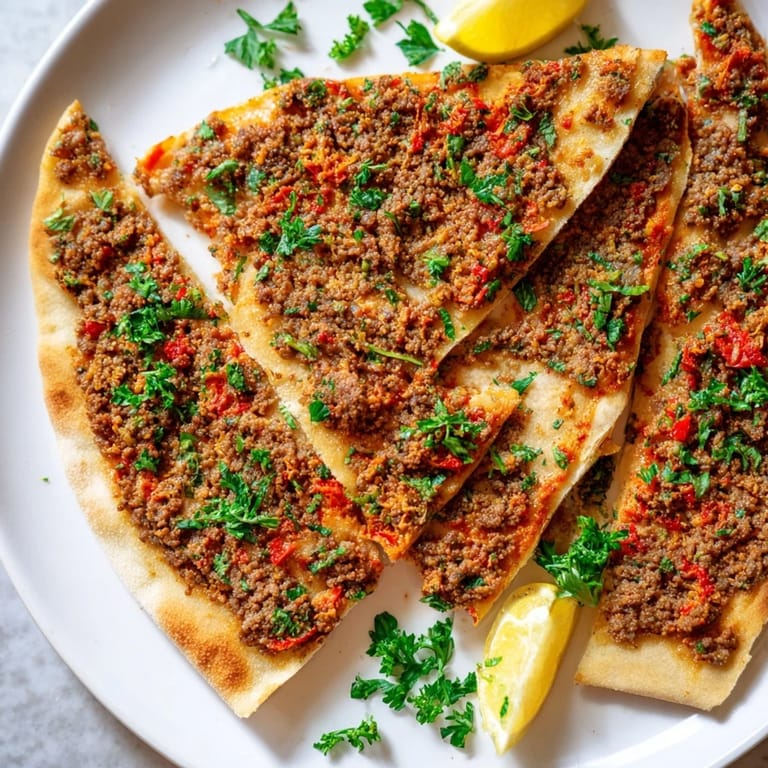
- Pull them out, let them cool for about 30 seconds so you don't burn your mouth, then top with fresh parsley, a squeeze of lemon, and optional sliced onions and sumac. Eat them while they're still warm, when the contrast between crispy dough and warm meat is still perfect.
 Save
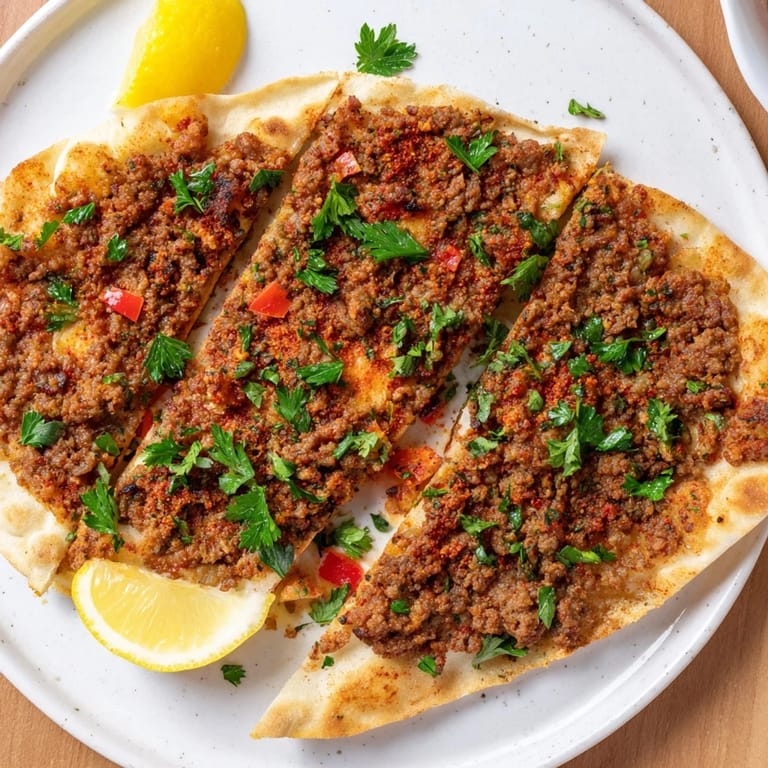
Save I remember the moment my neighbor bit into one and her eyes got wide. She didn't say anything, just smiled with her mouth full, and I felt like I'd just shared something precious. That's what good food does sometimes—it doesn't need words.
Why the Dough Matters Most
The dough is the entire story here. I've made lahmacun with fancy meat toppings and forgettable dough, and it was forgettable. But I've also made it with simple toppings and dough that was stretched thin and baked hot, and people asked for seconds. The dough should be thin enough to tear if you're not careful, almost translucent. This is not the time to be timid with the rolling pin. The thinner it is, the crispier it becomes, and that contrast between the crispy bread and the warm, spiced meat is where the magic lives.
The Meat Topping as a Flavor Canvas
The beauty of the meat mixture is how flexible it is while still tasting distinctly Turkish. The cumin and paprika are non-negotiable—they're what makes it taste like it came from somewhere, not from the freezer section. But the vegetables are your chance to play. If you have fresh coriander instead of parsley, use it. If your tomatoes are mealy, use tomato paste instead. I once didn't have red peppers and used a yellow one, and honestly, no one noticed because the flavor profile was already so balanced. The key is that balance: meat and spice and vegetable and herb, all in conversation.
Serving and Variations
The traditional way to serve lahmacun is to wrap it around fresh herbs, sliced onions, and maybe some sumac, then eat it like a taco. It becomes a little edible package you build yourself. I love this because people get to customize their bite, and there's something fun about that. You can also eat it flat like a pizza, or tear it into pieces for sharing. My last discovery came when I reheated leftover lahmacun in a dry pan the next morning—it crisped back up and tasted almost better than fresh.
- Roll it with fresh herbs, sliced onions, and sumac for a handheld meal that feels like celebration.
- Serve it alongside ayran, the traditional Turkish yogurt drink, which cuts through the richness beautifully.
- Make a vegetarian version by swapping the meat for a finely chopped mushroom and walnut mixture, which gives a similar texture and umami depth.
 Save
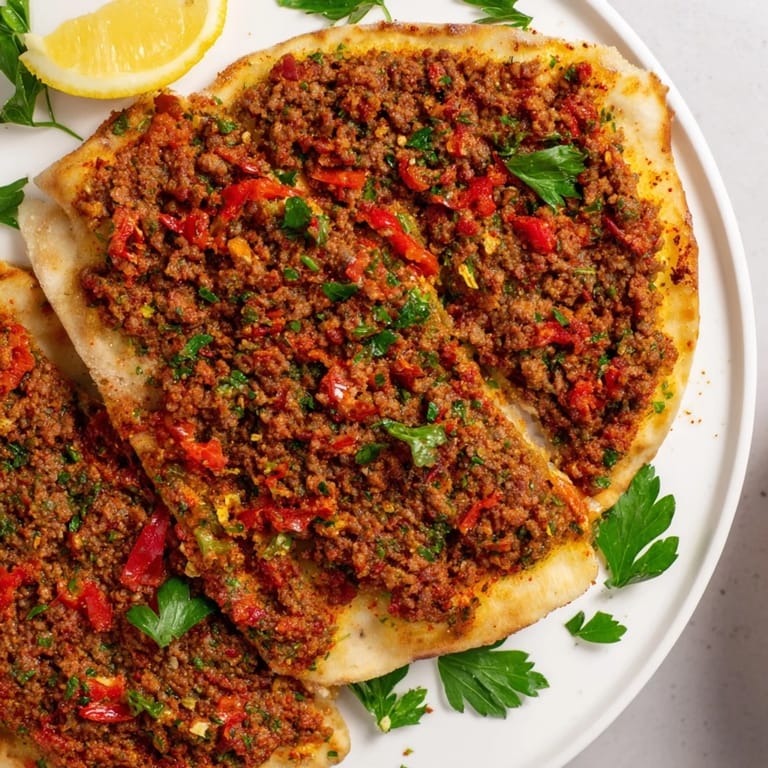
Save Make this when you want something that tastes like travel but only takes 40 minutes start to finish. Your kitchen will smell like somewhere warm and far away, even if you're making it on a Tuesday night in your regular life.
Recipe FAQ
- → What type of meat is used for the topping?
Ground lamb or beef is finely mixed with spices, vegetables, and herbs to create a flavorful topping.
- → How thin should the dough be rolled?
The dough should be rolled very thin, about 20 cm in diameter, to achieve a crisp texture when baked.
- → Can I bake lahmacun without a pizza stone?
Yes, a baking tray preheated to a high temperature works well to bake the flatbread until the edges are crisp.
- → What are common garnishes served with this dish?
Fresh parsley, lemon wedges, sliced onions, and sumac are typical garnishes that enhance the flavors.
- → Is there a vegetarian alternative for the topping?
A minced mixture of mushrooms and walnuts can substitute meat for a vegetarian version with similar texture and flavor.