 Save
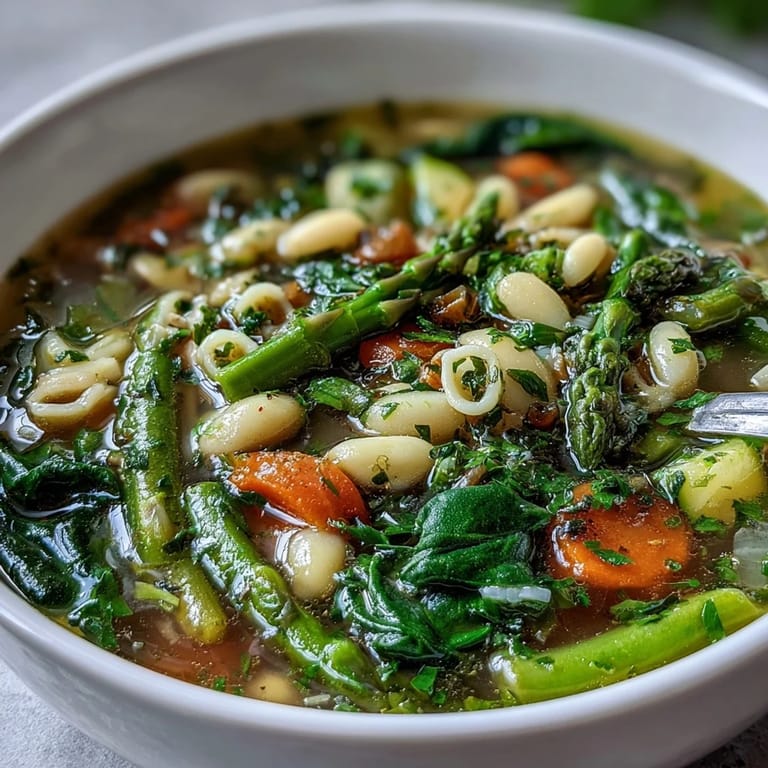
Save There's something about spring that makes me want to fill a pot with everything green and growing. This minestrone came together one April afternoon when my farmers market haul was overflowing with asparagus and tender peas, and I realized I had just enough white beans in the pantry to make something substantial. The soup emerged warm and bright, the kind of dish that tastes like the season itself—not heavy, but genuinely nourishing in a way that felt like the right thing to eat after months of heavier cooking.
I made this for my neighbor one rainy spring evening when she mentioned missing home cooking, and watching her face light up over a simple bowl of it taught me something about what food can do. She came back the next week asking if I could write down the recipe, which tells you everything about how this soup manages to be both straightforward and memorable.
Ingredients
- Olive oil: Use a good quality oil here since it's not being cooked down—it matters in the finished bowl.
- Onion, carrots, and celery: This holy trinity is where the flavor foundation lives; don't rush the softening step.
- Garlic: Minced fresh garlic makes all the difference—jarred garlic will leave you feeling like something's missing.
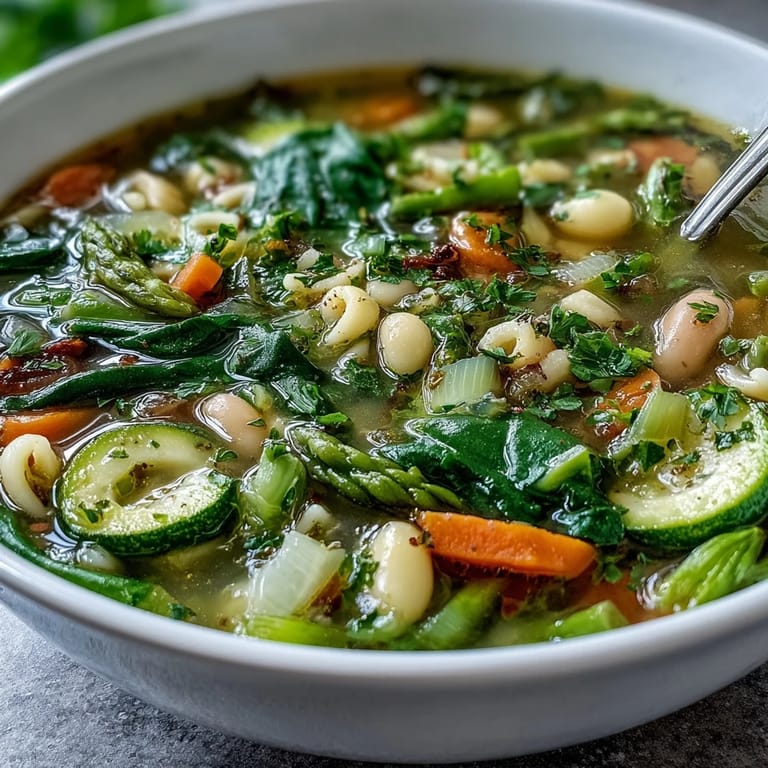
- Zucchini: Spring zucchini are delicate; add them midway so they don't dissolve into the broth.
- Asparagus: Cut into 1-inch pieces so they cook evenly and stay tender, not mushy.
- Peas: Frozen actually work beautifully here and save you the fussy task of shelling fresh ones.
- Baby spinach or Swiss chard: Adds color and a gentle mineral note; add it at the very end so it stays bright.
- White beans: Cannellini beans are traditional, but Great Northern beans work just as well and add a creamy quality.
- Small pasta: Ditalini or small shells hold the broth perfectly; avoid long pasta that feels out of place in soup.
- Vegetable broth: Low-sodium lets you control the salt and taste the vegetables themselves.
- Thyme, oregano, and bay leaf: Dried herbs are reliable here; they infuse the broth quietly without overpowering.
- Lemon zest and parsley: These final touches brighten everything—don't skip them even if you're in a hurry.
Tired of Takeout? 🥡
Get 10 meals you can make faster than delivery arrives. Seriously.
One email. No spam. Unsubscribe anytime.
Instructions
- Start your foundation:
- Heat the olive oil in a large pot over medium heat, then add your diced onion, carrots, and celery. Let them soften for about 5 minutes, stirring occasionally—you're looking for them to become translucent and fragrant, the moment when your kitchen smells like something real is happening. This is your flavor base, so take the time here.
- Awaken the garlic:
- Stir in your minced garlic and cook for just 1 minute until it's fragrant but not browned. A minute is all it takes; any longer and it starts tasting bitter instead of sweet and mellow.
- Add the tender vegetables:
- Toss in the diced zucchini and cook for another 2 minutes. The zucchini releases some water, which begins building the soup's base.
- Build the broth:
- Pour in your vegetable broth and add the thyme, oregano, and bay leaf. Bring everything to a gentle boil—you're not rushing here, just slowly heating everything through so the herbs have time to bloom into the liquid.
- Add beans and pasta:
- Stir in the drained white beans and your small pasta, then reduce the heat to a simmer. Let this cook undisturbed for about 10 minutes, which gives the pasta time to soften and the flavors a chance to meld.
- Finish with spring vegetables:
- Add the asparagus pieces and peas, then simmer for another 5 to 7 minutes until everything is tender and the pasta has absorbed some of the broth's flavor. Taste a piece of asparagus to know you're there.
- Final brightness:
- Stir in your spinach or chard along with the lemon zest and fresh parsley. Cook for just 2 more minutes until the greens are wilted and have released their color into the soup. Now taste, adjust your salt and pepper, and remove that bay leaf before serving.
 Save
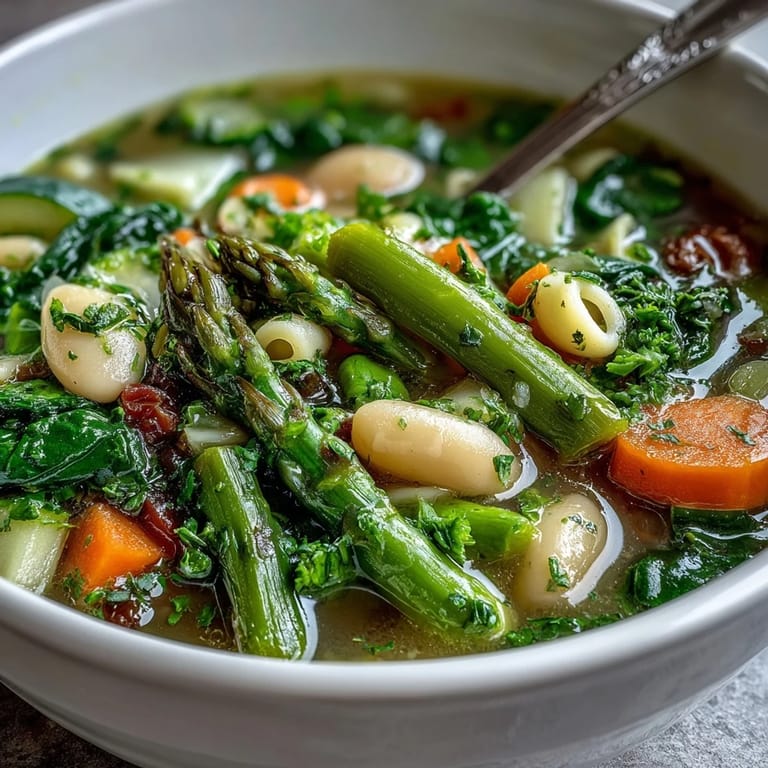
Save There's a moment in making this soup when you stir in those final handfuls of spinach and watch it wilt into the warm broth, releasing its color and making everything suddenly look alive again. That's when you know you've got something worth serving.
Why Spring Vegetables Matter
Spring vegetables have a delicate sweetness that disappears if you cook them too long or too hard. The asparagus stays bright green and snappy, the peas remain sweet, and the zucchini never becomes waterlogged—all because you're adding them in stages and respecting their natural texture. This soup celebrates what's actually in season instead of trying to force flavor where it doesn't naturally exist.
Making It Work for Everyone
The structure of this recipe makes it genuinely flexible without requiring you to cook multiple versions. If someone at your table eats vegan, skip the Parmesan and add a generous drizzle of good olive oil instead—the soup doesn't miss it, and that final richness comes from somewhere else. If gluten matters, swap in gluten-free pasta and no one loses anything; the soup's beauty has nothing to do with what the noodles are made from.
How to Serve and Expand
This soup is complete as it is, but there's room for personality. A thick slice of crusty bread transforms it into a proper meal, and a scattered handful of grated Parmesan at the table lets everyone control how they want to finish their bowl. You can also make it your own by swapping spring vegetables—fava beans, green beans, or early peas all belong here.
- Serve it warm directly from the pot, or let it cool and reheat gently without boiling the vegetables to death.
- A final squeeze of fresh lemon juice at the table adds brightness that changes everything.
- Make a double batch and freeze it in portions—it reheats beautifully and tastes even better the next day.
 Save
Save This is the kind of soup that reminds you why cooking at home matters. It's simple, it's honest, and it tastes like you actually care about the people you're feeding.
Recipe FAQ
- → What type of beans work best for this soup?
White beans such as cannellini or Great Northern beans provide a creamy texture and mild flavor that complement the spring vegetables.
- → Can I use gluten-free pasta in this preparation?
Yes, substituting regular pasta with gluten-free varieties ensures the dish remains suitable for gluten-free diets without altering texture significantly.
- → What is the best way to keep vegetables crisp but tender?
Adding delicate vegetables like asparagus and peas later in the cooking process prevents overcooking, preserving their vibrant color and slight crunch.
- → How do the herbs influence the overall flavor?
Dried thyme and oregano infuse the broth with aromatic, earthy notes that harmonize with the fresh parsley and lemon zest to brighten the profile.
- → Is there a recommended garnish for added richness?
A light drizzle of extra virgin olive oil and a sprinkle of grated Parmesan cheese add richness and depth to the finished bowl.