 Save
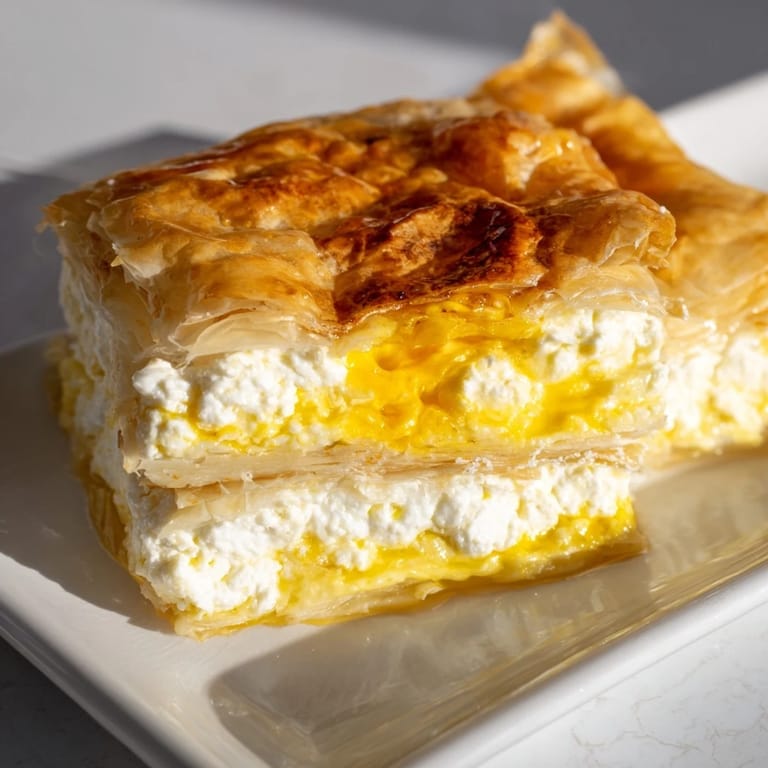
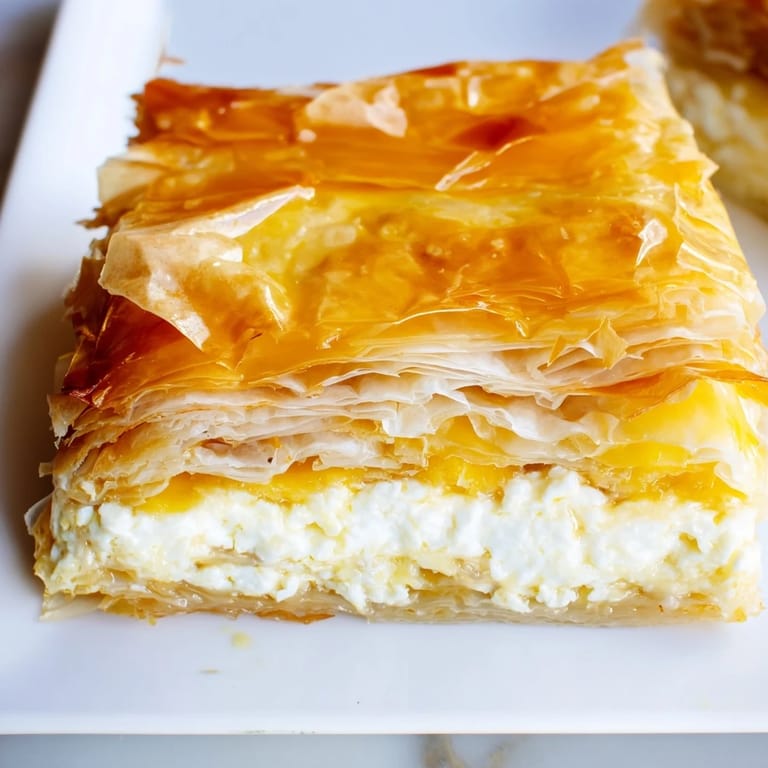
Save My aunt pulled this golden, crackling sheet from her oven on a Sunday afternoon in Belgrade, and I watched the phyllo shatter under her knife like it was made of spun sugar. She'd learned to make gibanica from her mother, who learned it from hers, and when she handed me a still-warm square, the creamy cheese filling was so silky it practically melted before I could swallow. That first bite—the contrast of crispy exterior and tender, custardy cheese—changed how I thought about savory pies entirely. Now whenever I make it, I'm transported back to that kitchen, steam rising from the baking dish while she hummed old folk songs.
I made this for my roommate's family when they visited from out of town, nervous because I wanted to impress them with something authentic and real. When I pulled it from the oven, the whole apartment smelled like toasted butter and tangy cheese, and their faces when they tasted it—that moment when someone closes their eyes because the flavor is unexpected and wonderful—made every careful layer worth it.
Ingredients
- Cottage cheese (300 g): The foundation of your filling; its mild, creamy texture makes the pie tender rather than dense. Don't skip it or substitute with ricotta alone—the cottage cheese is what keeps this light.
- Feta cheese (200 g, crumbled): This brings the salty, tangy backbone that makes you want another bite. Crumble it by hand if you can; it distributes more evenly than pre-crumbled versions.
- Eggs (4 large): They bind everything together and create that silky custard texture. Room temperature eggs mix more smoothly, so pull them out of the fridge while you prep the other ingredients.
- Plain yogurt (100 ml): A little-known secret that adds moisture and a subtle tang that balances the richness of the cheese.
- Sunflower oil (50 ml in filling, 2 tbsp for brushing): Neutral enough to let the cheese shine. Brush it generously between layers; this is what creates those shattering crisp sheets.
- Sparkling water (50 ml): This might sound strange, but it aerates the filling slightly and keeps it from becoming gluey during baking.
- Salt and black pepper: Taste as you go—feta is salty, so you may need less salt than you'd expect.
- Phyllo dough (500 g, about 12 sheets): Make sure it's completely thawed before you start; cold phyllo will crack and tear. Keep it under a damp towel while you work so it doesn't dry out.
- Egg yolk for glazing (optional): Gives the top a deep golden shine if you want that bakery-quality finish.
Tired of Takeout? 🥡
Get 10 meals you can make faster than delivery arrives. Seriously.
One email. No spam. Unsubscribe anytime.
Instructions
- Heat and prepare:
- Preheat your oven to 180°C and lightly oil your baking dish. A hot oven helps the phyllo crisp up quickly without the filling drying out.
- Mix the filling:
- Combine the cottage cheese, crumbled feta, eggs, yogurt, oil, and sparkling water in a bowl. Whisk until it's smooth and creamy—this usually takes a minute or two. Season with salt and pepper, tasting as you go since the feta is already quite salty.
- Layer the base:
- Place one phyllo sheet in your baking dish and brush it lightly with oil. Repeat with two more sheets, brushing each one. This triple layer creates the crispy bottom foundation that won't get soggy.
- Cheese and phyllo dance:
- Spread 3–4 tablespoons of cheese filling over your phyllo base. Then add 2–3 more phyllo sheets, brushing each with oil. Keep alternating—a layer of phyllo, a brush of oil, a spread of filling—until both run out. The rhythm becomes meditative after the first couple of rounds.
- Finish strong:
- Top everything with 2 final phyllo sheets, brushed generously with oil. If you're using the egg yolk glaze, beat it lightly and brush it across the very top for that deep, appetizing golden color.
- Cut before baking:
- Using a sharp knife, score the top into squares or diamonds. This prevents the phyllo from shattering unpredictably when you try to cut it after baking, and it looks more intentional.
- Bake until golden:
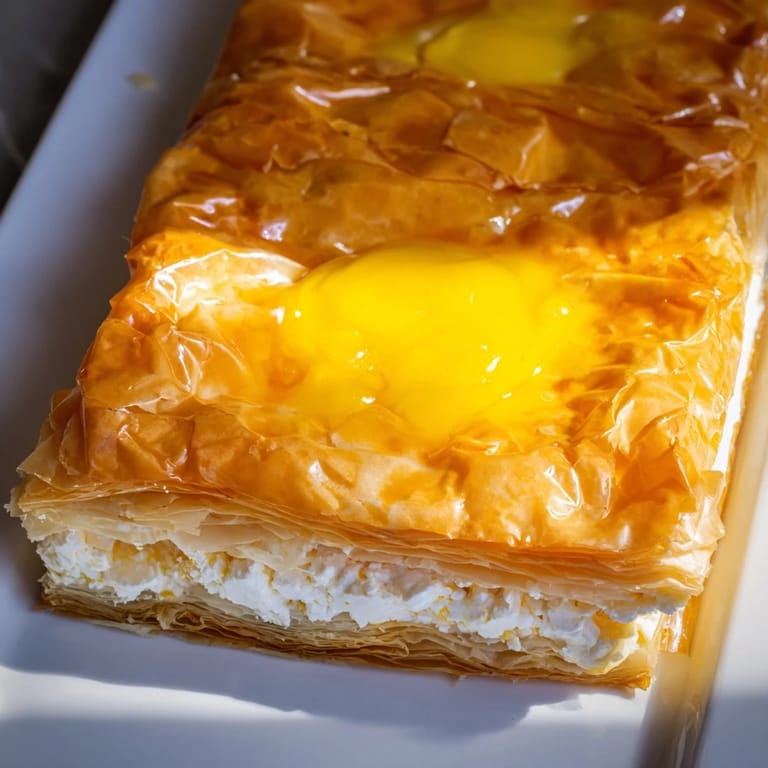
- Bake for 35–40 minutes until the top is deeply golden and sounds crispy when you tap it. If the edges brown too quickly, loosely tent with foil for the last 10 minutes.
- Rest and serve:
- Let it cool for 10 minutes—this gives the filling time to set slightly so it doesn't fall apart on the plate. It's wonderful warm, but honestly, it's equally delicious at room temperature the next day.
 Save
Save The first time someone told me gibanica reminded them of home—a place I'd never been—I understood why my aunt guarded her version so carefully. Food carries memory. This pie tastes like Sunday afternoons, like generosity, like the kind of comfort that comes from knowing exactly where you belong.
The Story Behind Gibanica
Gibanica is as Serbian as they come, a staple that shows up at family tables, celebrations, and quiet weeknight dinners across the Balkans. Every family has their own version—some swear by the sparkling water, others add sour cream or even a hint of dill. What they all share is the philosophy that something this delicious shouldn't require hours of fussing. The beauty of gibanica is its simplicity: good ingredients, patient layering, and an oven that does most of the work. It's humble food elevated to something special, which is maybe the best kind of cooking there is.
Making It Your Own
Once you've made this version, you'll start noticing how flexible it really is. Some cooks brush their phyllo with melted butter instead of oil for a richer taste. Others layer in a handful of fresh dill or parsley between the cheese layers. A spoonful of sour cream stirred into the filling adds a subtle tang that makes people ask what your secret ingredient is. The framework stays the same, but the variations are endless—which is why gibanica has survived this long and will keep being made, reinvented slightly each time, for generations to come.
Serving and Storage Tips
Serve gibanica warm or at room temperature with a simple fresh salad—sliced tomatoes, cucumbers, and a little lemon juice cut through the richness perfectly. Leftovers keep beautifully in an airtight container in the fridge for up to four days, and reheating is simple: cover loosely with foil and warm in a 160°C oven for about 15 minutes until just heated through. If you want to get ahead, you can assemble the whole pie the day before, cover it, and bake it fresh when you're ready. It also freezes well before baking—just add a few extra minutes to the cooking time if you're baking from frozen.
- Pair it with yogurt, ajvar, or a simple tomato sauce if you want something more substantial.
- Cut into smaller squares for appetizers or generous pieces for a satisfying main course.
- If the top is browning too fast during baking, a loose tent of foil will slow it down without affecting the final result.
 Save
Save There's something deeply satisfying about making gibanica, watching it transform from pale raw dough and soft cheese into something golden and magnificent. It's the kind of recipe that rewards patience and care, and then rewards you again when you bite into it.
Recipe FAQ
- → What cheeses are used in this layered pie?
A blend of cottage cheese and crumbled feta provides a creamy and tangy filling.
- → How do you achieve crispy phyllo layers?
Brushing each phyllo sheet with sunflower oil before layering helps create crisp, flaky layers upon baking.
- → Can this dish be served cold?
Yes, it can be enjoyed warm or at room temperature, making it versatile for various occasions.
- → Is there an option for a gluten-free version?
Using gluten-free phyllo dough substitutes allows for a gluten-free adaptation of this dish.
- → What is the best way to store leftovers?
Store leftovers covered in the refrigerator and gently reheat before serving for best texture and flavor.