 Save
Save The first time I made pelmeni, I was standing in my friend Katya's tiny Moscow kitchen on a cold November afternoon, watching her hands move with practiced ease as she folded those delicate little dumplings. She'd invited me over to teach me the family recipe, and I remember thinking how impossible it seemed—folding dough circles into those perfect little parcels that somehow stayed sealed. But by the end of the afternoon, dusted in flour and laughing at my lopsided attempts, I understood why she called them her comfort food. Now, whenever I make a batch, that kitchen comes back to me: the steam rising off the boiling water, the smell of sour cream and dill, and the satisfaction of watching each pelmeni pop up to the surface, ready to eat.
I made pelmeni for a dinner party last winter, and I'll never forget the moment everyone went quiet—not because something was wrong, but because they were too busy eating. One guest, who'd grown up in St. Petersburg, closed her eyes after the first bite and said it tasted like home. That's when I realized these little dumplings were more than just dinner; they were a way of saying I'd been paying attention, that I cared enough to spend time folding something small and perfect for the people I loved.
Ingredients
- All-purpose flour (2 cups/250 g): The foundation of your dough—use fresh flour because stale flour won't develop the right elasticity, and you'll notice the difference in how the dough feels in your hands.
- Cold water (1/2 cup/120 ml): Keep it cold; warm water will make the dough sticky and impossible to work with, which I learned the hard way on my first attempt.
- Large egg: This binds the dough and helps it hold together during kneading; room temperature works fine, but cold is even better.
- Salt (1/2 tsp for dough, plus 1/2 tsp for filling): Salt strengthens the gluten and seasons the dough subtly, so don't skip it even though it's a small amount.
- Ground pork and beef (7 oz each/200 g each): The combination of both meats creates a richer, more interesting flavor than either one alone—this is a lesson in balance that translates to other recipes.
- Small onion, finely grated: Grating the onion instead of mincing it releases its juices, which keep the filling moist and flavorful as the pelmeni cook.
- Garlic (2 cloves, minced): Fresh garlic adds brightness; don't use powder here because the flavor won't be as vibrant.
- Black pepper (1/2 tsp): Freshly ground pepper makes a noticeable difference in the filling, so it's worth taking the extra ten seconds.
- Cold water for filling (2 tbsp): This small amount of water is what makes the filling sticky enough to cling to itself and stay juicy during cooking.
- Sour cream (1 cup/240 g): Full-fat sour cream is essential here—anything else tastes thin and watery by comparison.
- Fresh dill, chopped (1 tbsp, optional but really not optional): Dill brightens the whole dish and connects each bite to that herbaceous, slightly anise-like note that makes pelmeni feel Russian.
Tired of Takeout? 🥡
Get 10 meals you can make faster than delivery arrives. Seriously.
One email. No spam. Unsubscribe anytime.
Instructions
- Make the dough:
- Combine your flour and salt in a large bowl, then crack the egg in and start mixing with one hand while slowly pouring in the cold water. You'll feel the dough come together gradually—it should look shaggy at first, almost like it won't work, but keep going. Knead it for 8–10 minutes until it's smooth and silky, then cover it with plastic wrap and let it rest for 20 minutes while you make the filling; this resting time is what makes the dough relaxed and easy to roll out later.
- Prepare the filling:
- In a medium bowl, combine both ground meats, the grated onion, minced garlic, salt, pepper, and cold water, then mix everything together with your hands until it's sticky and well incorporated. The cold water is crucial—it's what keeps the filling moist during cooking and prevents it from becoming dense and tough.
- Roll and cut:
- On a lightly floured surface, roll your dough out as thin as you can manage—about 1/16 inch thick, which is thinner than you might think, so take your time. Using a 2.5-inch round cutter, cut out circles; if you don't have a cutter, a glass works fine, and you'll see it gets easier after the first few.
- Fill and fold:
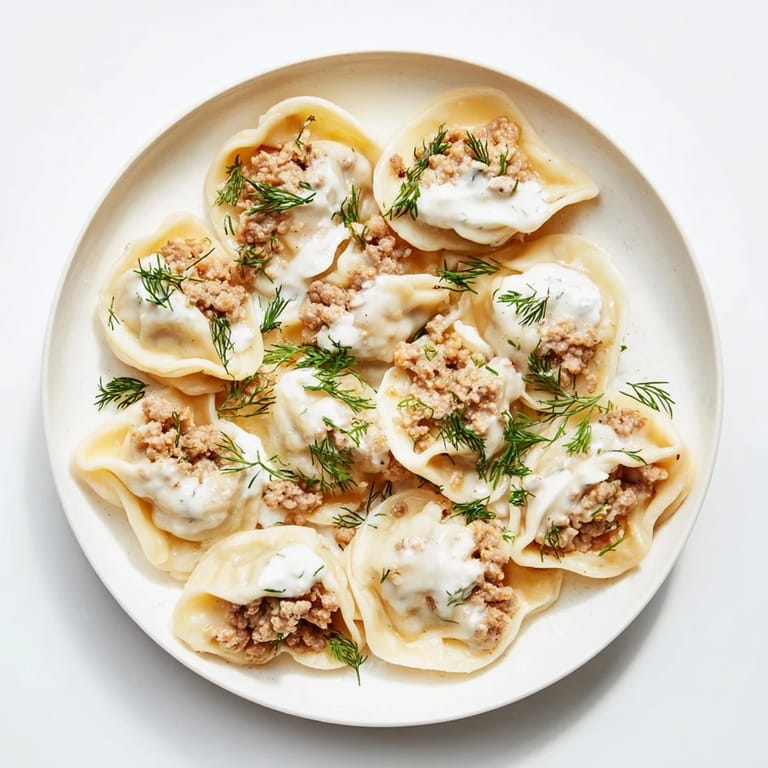
- Place about 1 teaspoon of filling in the center of each dough circle, then fold the dough in half and pinch the curved edge tightly closed. Now comes the signature move: bring the two pointy corners together underneath the dumpling and pinch them to seal, which creates that little purse shape pelmeni are known for.
- Cook the pelmeni:
- Bring a large pot of salted water to a rolling boil, then carefully drop the pelmeni in—work in batches so the water doesn't stop boiling, and give them a gentle stir right away so they don't stick to the bottom. They'll sink at first, then slowly float to the surface after 5–7 minutes; once they float, they're done, and you'll know the filling is cooked through.
- Serve generously:
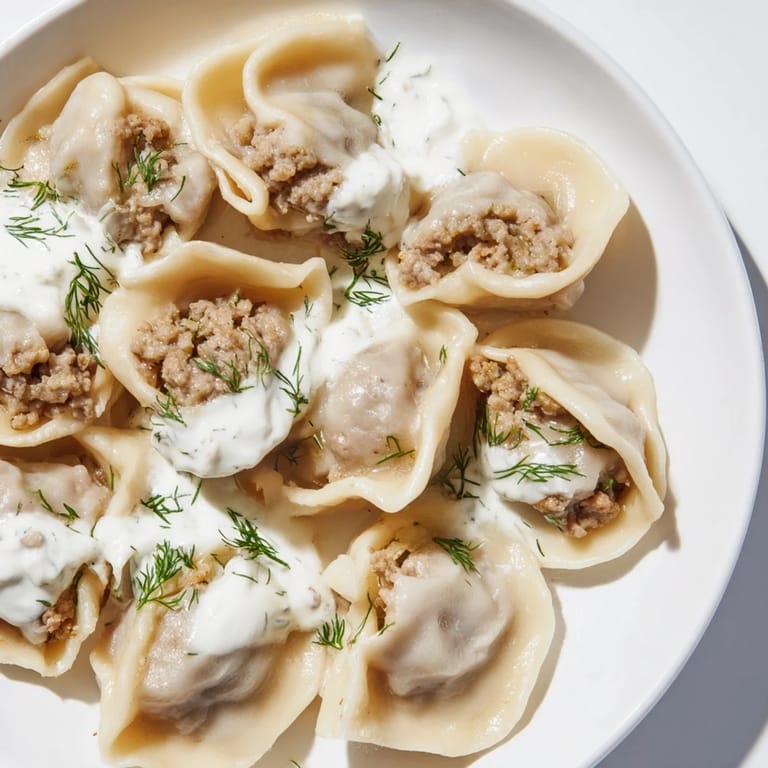
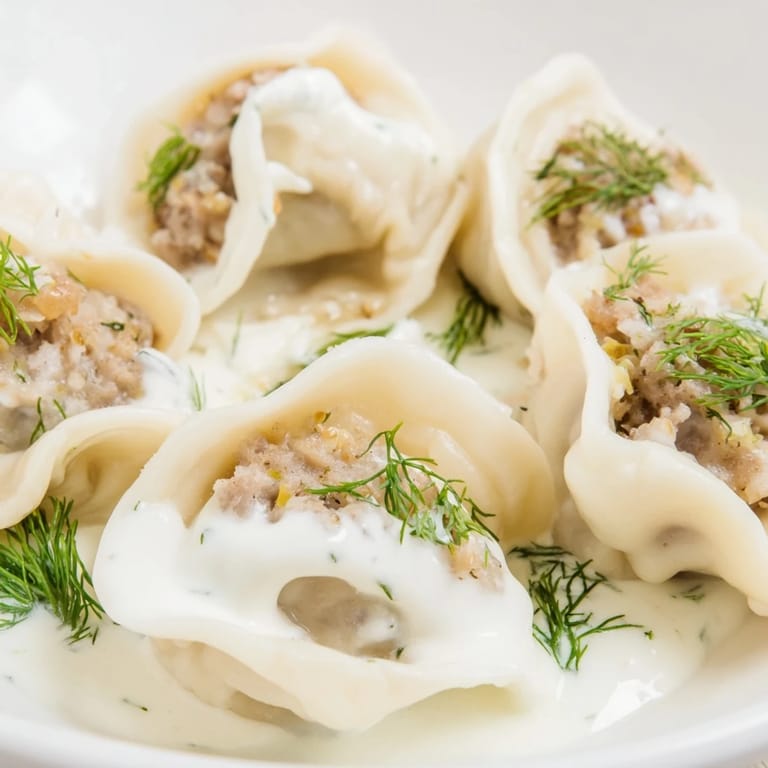
- Remove the cooked pelmeni with a slotted spoon and transfer them to bowls or plates while they're still steaming hot. Top them generously with sour cream and fresh dill, then taste one before you plate the rest—this is the moment when you'll understand why people dream about pelmeni.
 Save
Save There's something almost meditative about folding pelmeni—your hands move the same way, over and over, and your mind quiets down. I've made them on stressful days when nothing else seemed to calm me down, and by the time I finished the batch, everything felt more manageable. My partner jokes that pelmeni are my therapy, and honestly, he's not wrong.
The Art of Freezing
Here's what changed everything for me: instead of cooking pelmeni right away, I started freezing them on a tray before transferring them to a bag, and suddenly I had emergency dinner for the next three months. You can go straight from freezer to boiling water—just add an extra 2–3 minutes to the cooking time, and everything works perfectly. This is game-changing for busy nights when you want something homemade but don't have time to make it.
Playing with Flavor
Once you've made basic pelmeni a few times, you start thinking about variations. A tiny pinch of nutmeg in the filling is traditional and almost invisible—you won't taste nutmeg exactly, but you'll notice the filling suddenly tastes more rounded and complex. Some people add a little ginger or even a whisper of cinnamon, which sounds strange until you try it and realize these spices have been used in Eastern European meat dishes for centuries.
Beyond Sour Cream
Sour cream is the classic, but don't ignore the other options mentioned in traditional recipes. Melted butter with black pepper is wonderful if you want something lighter, and vinegar—just a light drizzle of good vinegar—adds a brightness that cuts through the richness of the meat. I've also made a quick mushroom sauce by sautéing sliced mushrooms and finishing them with sour cream, which turns pelmeni into something you'd serve at a dinner party without apology.
- Try a 50-50 mix of sour cream and melted butter if you find straight sour cream too heavy.
- A squeeze of fresh lemon juice in the sour cream sauce adds unexpected brightness that your guests will taste but won't be able to identify.
- Make extra sauce because you'll always wish you'd made more—pelmeni soak it up like little sponges.
 Save
Save Pelmeni are proof that the simplest foods are often the ones that matter most. They're humble, they're forgiving, and they connect you to people and places and memories every time you make them.
Recipe FAQ
- → What is the dough made of for pelmeni?
The dough consists of all-purpose flour, cold water, a large egg, and salt, kneaded until smooth and elastic.
- → How are the pelmeni shaped before cooking?
Thin dough circles are filled with the meat mixture, folded into half-moons, then pinched together creating the traditional sealed pelmeni form.
- → What meats are used in the filling?
A combination of ground pork and ground beef forms the savory filling, mixed with grated onion, garlic, salt, and pepper.
- → How should pelmeni be cooked?
They are dropped into boiling salted water and cooked for 5 to 7 minutes until floating and fully cooked inside.
- → What is the best way to serve pelmeni?
Serve hot with a generous topping of sour cream mixed with fresh dill for a classic finishing touch.
- → Can pelmeni be frozen before cooking?
Yes, they can be frozen on a tray and then stored in a bag for up to three months for later use.