 Save
Save My grandmother's kitchen always smelled like butter and boiling water on Sunday afternoons, and that's when the pierogi ritual would begin. She'd pull out her worn wooden board and start rolling dough while I sat at the table, watching her hands move with the kind of confidence that comes from making something a thousand times. I didn't appreciate it then, but somewhere between kneading and folding, I understood why these simple dumplings meant so much to our family. Years later, I found myself in my own kitchen, recreating that exact dance, and suddenly it all made sense—pierogi aren't just food, they're a conversation across time.
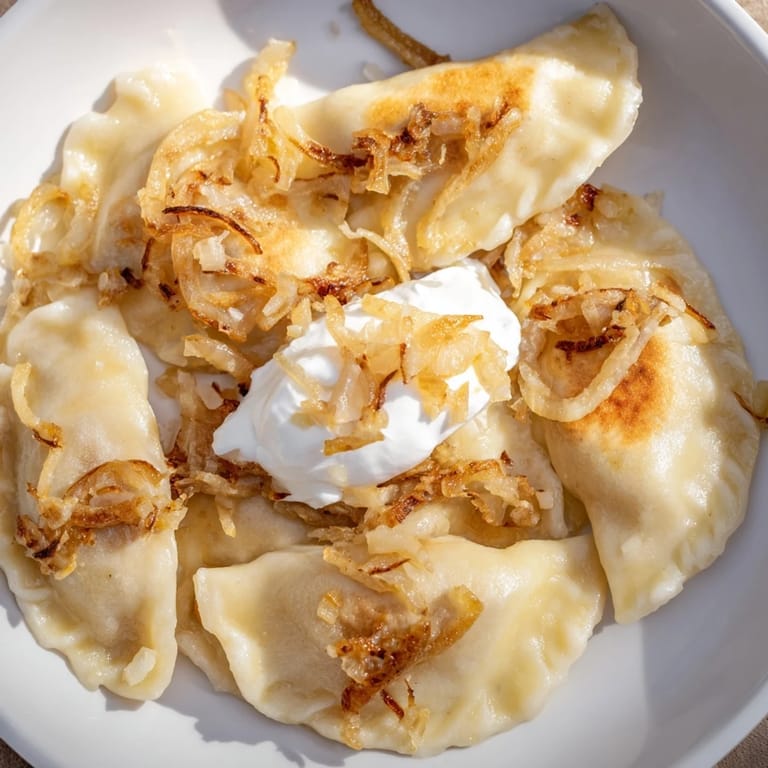
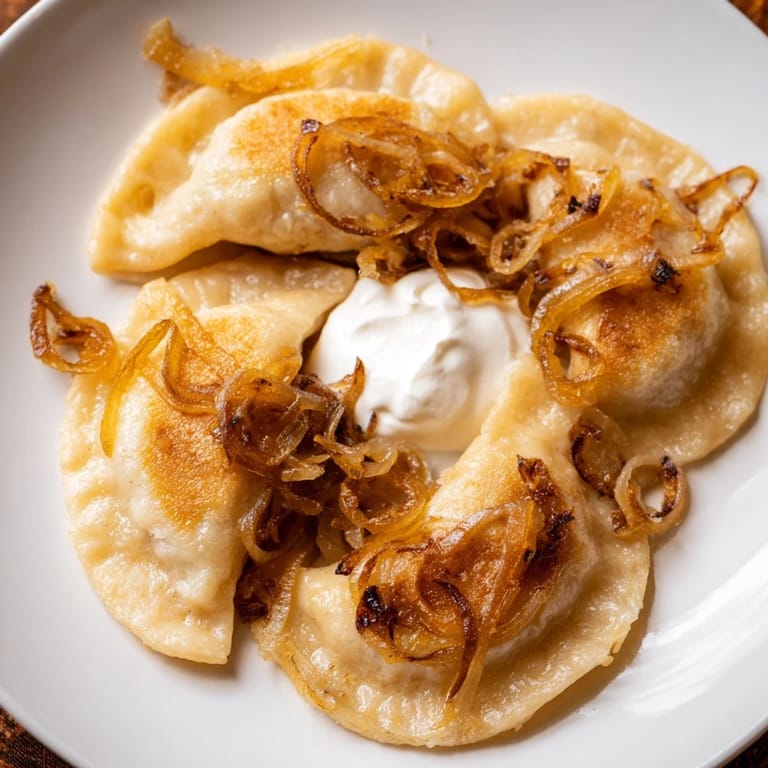
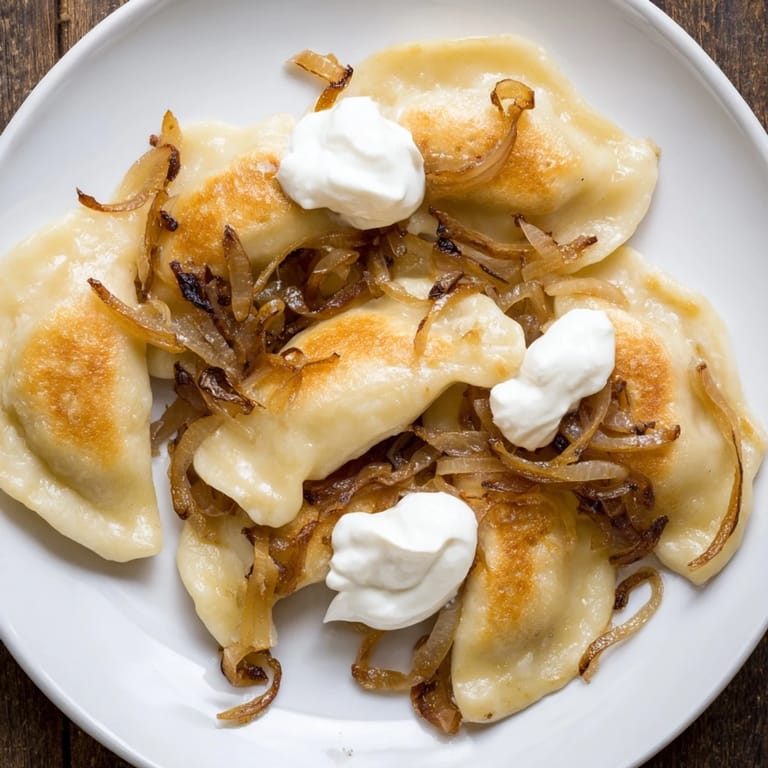
I served these to my partner on a cold Tuesday night after he'd had a rough week, and I watched his whole mood shift with that first bite. There's something about pan-fried pierogi with golden onions and a dollop of sour cream that speaks a language food blogs can't quite capture—it's pure, unpretentious, and somehow exactly what a person needs.
Ingredients
- All-purpose flour: The foundation of tender dough; I learned to measure by weight when I could because it prevents the dense results that come from packing flour into the measuring cup.
- Egg: Binds everything together and adds richness to the dough structure.
- Lukewarm water: Temperature matters more than people think; too hot kills the texture, too cold and you're fighting the dough.
- Sour cream: Creates a subtle tang and makes the dough silkier than water alone ever could.
- Russet potatoes: Their starch content means they mash into that creamy consistency that makes filling taste luxurious.
- Farmers cheese or ricotta: The real secret ingredient; farmers cheese is creamier and less watery than cottage cheese, which I discovered the hard way.
- Sharp cheddar: Adds a salty punch that keeps the filling from tasting one-dimensional.
- Unsalted butter: Using unsalted lets you control the seasoning and prevents the filling from being overly salty.
- Onions for serving: Low and slow caramelization transforms them into something almost like jam—this step is worth the 25 minutes.
Tired of Takeout? 🥡
Get 10 meals you can make faster than delivery arrives. Seriously.
One email. No spam. Unsubscribe anytime.
Instructions
- Build the dough:
- Mix flour and salt, create a well, and pull in your egg, melted butter, sour cream, and water until a shaggy mass forms. Knead on a floured surface for five to seven minutes, and you'll feel when it shifts from rough to elastic—that's the moment you know you're done. Cover it with a damp towel and give it thirty minutes to relax while you prep everything else.
- Prepare the filling:
- Boil cubed potatoes in salted water until they fall apart at a fork's touch, then drain well because excess moisture is the enemy of creamy filling. In a separate skillet, melt butter and coax onions into softness over medium heat, letting them turn golden and sweet. Mash the drained potatoes smooth, fold in the sautéed onion, both cheeses, and season until it tastes bold and savory on its own.
- Shape the pierogi:
- Roll dough thin enough to see your hand through it, cut three-inch circles, and place a rounded teaspoon of filling in the center of each one. Fold into a half-moon and press the edges together firmly so they don't split during boiling. Stack them under a towel so they don't dry out while you work through the rest.
- Boil until they float:
- Bring a large pot of salted water to a gentle boil and work in batches so the water doesn't cool down. Watch for them to rise to the surface, then cook for another minute or two to ensure the dough is fully set. Fish them out with a slotted spoon and set them on a plate; they'll be soft now but that's exactly right.
- Caramelize your onions:
- This is where patience pays off—slice onions thin, melt butter over medium-low heat, and let them cook slowly for twenty to twenty-five minutes, stirring occasionally until they're deep golden and smell almost sweet. Rushing this step changes everything, so don't skip ahead.
- Pan-fry for crispness:
- In the same skillet, add your boiled pierogi in batches and fry until both sides turn golden and crispy, about two to three minutes per side. The contrast between the crispy exterior and creamy filling is what makes them memorable.
- Serve with warmth:
- Pile them on a plate, crown with caramelized onions, add a generous dollop of sour cream, and finish with chopped chives or parsley if you have them. Serve immediately while they're still warm and the onions are still glossy.
 Save
Save The first time I served these to someone outside my family, I was nervous they wouldn't understand why I'd spent two hours in the kitchen for dumplings. But watching someone taste pierogi for the first time—that moment when they realize the dough is soft, the filling is creamy, and the onions are sweet—that's when I knew this wasn't just a recipe, it was a small gift.
Making Pierogi Ahead of Time
One of the best parts about pierogi is that they freeze beautifully, which means you can spend a Saturday wrapping dumplings and then have comfort food ready on a random Wednesday. I learned to freeze them on a tray first so they don't stick together in the bag, and I always date them because even frozen, they're best within two months. There's something satisfying about knowing you have homemade pierogi waiting in your freezer.
Cheese and Filling Variations
While farmers cheese is the traditional choice, I've experimented with different variations depending on what's in my fridge and what I'm craving that day. Cottage cheese works if you drain it extremely well, though it gives a slightly different texture that's a bit grainier but still delicious. Some cooks add a touch of nutmeg to the filling, which feels subtle but changes the whole flavor profile—I save that for when I'm serving them with just sour cream instead of the caramelized onions.
What to Serve Alongside
Pierogi are hearty enough to stand on their own, but a simple green salad with a sharp vinaigrette cuts through the richness beautifully. I've paired them with crisp Polish lager more times than I can count, and the cold beer against the warm, savory dumplings feels like exactly the right call.
- A dollop of sour cream on top is non-negotiable—it's not a garnish, it's essential.
- Fresh dill or chives add a bright note that keeps the dish from feeling heavy.
- If you want to make them even richer, crispy bacon bits scattered over the top transform them into something almost decadent.
 Save
Save These pierogi carry something that transcends the recipe itself—they're an invitation to slow down and make something real. Every time I make them, I think of my grandmother's hands and my own hands moving through the same motions, and that thread of continuity is what makes them matter.
Recipe FAQ
- → What type of cheese works best for pierogi filling?
Farmers cheese or well-drained ricotta blended with sharp cheddar creates a creamy, flavorful filling that melts well inside the dough.
- → How do you prevent pierogi from sticking during cooking?
Adding enough flour while rolling out the dough and gently placing pierogi into boiling salted water helps prevent sticking. After boiling, transfer carefully with a slotted spoon.
- → What is the purpose of pan-frying boiled pierogi?
Pan-frying after boiling adds a crisp, golden crust that contrasts with the soft filling and tender dough for enhanced texture and flavor.
- → How are the onions prepared for serving?
Thinly sliced onions are slowly cooked in butter over low heat until deeply golden and sweet, creating rich caramelized onions that complement the dumplings.
- → Can pierogi dough be prepared ahead of time?
Yes, the dough can rest covered for 30 minutes before shaping, and uncooked pierogi can be frozen on trays for up to two months to maintain freshness.