 Save
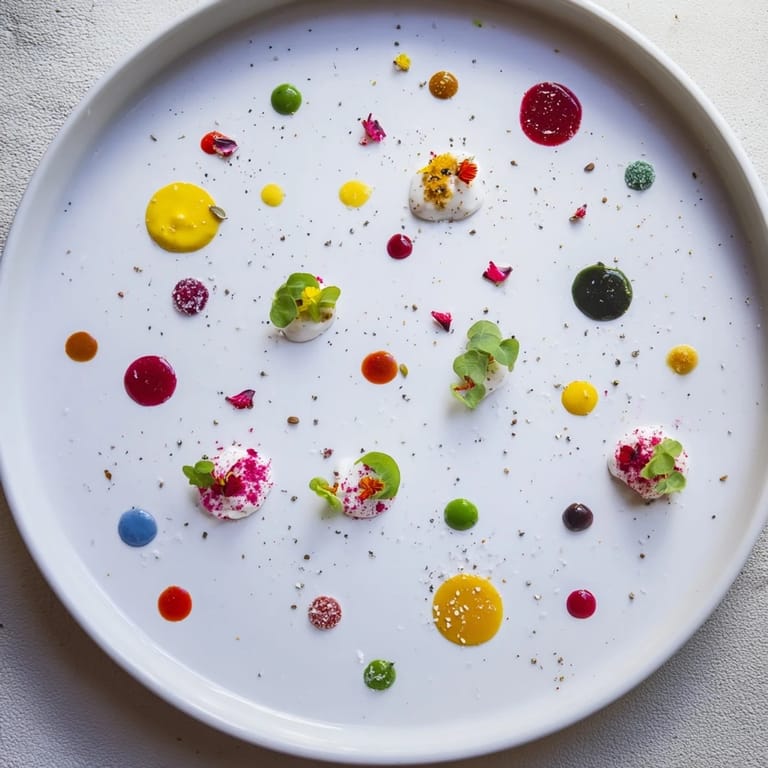
Save I'll never forget the afternoon I wandered into a contemporary art gallery and stood mesmerized before a Seurat painting, watching how thousands of tiny dots merged into a breathtaking whole. That evening, I rushed home inspired and spent hours in the kitchen reimagining what a plate could be—not just food, but edible art. The Pointillism Dot Matrix was born from that moment of wonder, a dish where every element is intentional, where colors dance together like paint on canvas, and where each spoonful becomes a small discovery.
I served this dish at my best friend's surprise birthday dinner, and watching her face light up when the plate arrived—before she even tasted it—was pure magic. She actually gasped, pulled out her phone, and spent a full minute just photographing it from different angles. That's when I realized: this isn't just appetizer, it's an experience, a conversation starter, a moment that lingers long after the last bite.
Ingredients
- Beetroot puree (80g): The deep crimson that anchors your palette—it's earthy and grounding, reminding everyone that beauty starts with nature. I learned to squeeze out excess moisture after pureeing so the dots stay defined and don't bleed into their neighbors.
- Carrot puree (80g): The warm golden voice in this symphony, bringing natural sweetness that plays beautifully against sharper elements. Always cook your carrots until completely tender so the puree is silky, not grainy.
- Green pea puree (80g): Fresh, vibrant, slightly herbaceous—this is the bright surprise that makes people pause mid-bite and smile. The secret is to blend them while still warm and immediately pour into your piping bag; cold pea puree can separate.
- Yellow bell pepper puree (80g): The optimistic sun of the dish, bringing a delicate sweetness and sunshine color. Roasting before pureeing deepens the flavor and gives it a subtle caramelized richness that raw pepper simply can't match.
- Greek yogurt (60g): Your creamy canvas, tangy and sophisticated, it catches the light beautifully when piped in tiny clouds. Use full-fat; it holds its shape better and tastes considerably richer.
- Crème fraîche (40g): More luxurious than yogurt, with a subtle tang that's almost buttery—it's what makes people close their eyes after their first taste. If you can't find it, a blend of sour cream and heavy cream works, though it's not quite the same magic.
- Basil pesto (1 tbsp): Herbaceous and bold, it's the moment when fresh basil memory floods in—gardens, summer, simplicity. Make your own if you can; store-bought will work but homemade has a brightness that transforms this dish.
- Red pepper coulis (1 tbsp): Smooth, slightly sweet, with a whisper of heat—this adds sophistication and a professional restaurant touch. It's just roasted red peppers blended with a touch of stock and passed through a fine sieve.
- Balsamic reduction (1 tbsp): Dark, glossy, with a complex sweet-tart intensity—a single dot of this catches the light like a jewel. Reducing it yourself concentrates the flavor dramatically; don't skip this step.
- Pickled red onions (20g, finely diced): The acidic bright note that wakes up your palate—each dice-sized piece is a small flavor bomb. The pickling liquid matters as much as the onions; it should smell of vinegar and promise.
- Microgreens: Delicate, peppery, impossibly tender—these are the brushstrokes that finish the painting. Buy them the day you're serving; they wilt in a heartbeat.
- Toasted black sesame seeds (1 tbsp): Nutty, mysterious, they add textural contrast and look strikingly dramatic against the bright purees. Toast them yourself in a dry pan for about two minutes—the aroma tells you exactly when they're ready.
- Pomegranate seeds: Jewel-like and juicy, they burst with tart-sweet surprise and add elegant texture. Fresh pomegranate is non-negotiable here; those bottled versions won't give you the same textural joy.
- Sea salt flakes: The final whisper of sophistication that ties everything together. Use fleur de sel or Maldon; regular salt doesn't have the same crystalline appeal or flavor complexity.
- Freshly ground black pepper: Never, ever skip the fresh grinding. The moment you crack into peppercorns, you release volatile oils that make the entire dish sing.
Tired of Takeout? 🥡
Get 10 meals you can make faster than delivery arrives. Seriously.
One email. No spam. Unsubscribe anytime.
Instructions
- Create Your Puree Palette:
- Begin by preparing each vegetable puree in complete isolation. Cook your beetroot, carrots, and peas until they're tender enough to mash between two fingers—this usually takes about 15-20 minutes depending on how you cut them. Meanwhile, roast your yellow bell pepper until the skin blisters and blackens slightly; this is crucial for developing depth. Once cooled, peel away the charred skin, then blend each vegetable separately with just a pinch of salt and a few drops of olive oil until you achieve a smooth, pourable consistency. Taste each puree and adjust seasoning—remember that these will be piped in tiny dots, so the flavor should be concentrated and clear. Transfer each into a piping bag and set in a cool place; you can prepare these up to four hours ahead.
- Prepare Your Sauce Arsenal:
- While your purees cool, fill separate piping bags with the yogurt and crème fraîche, and place your pesto, red pepper coulis, and balsamic reduction into squeeze bottles for more precise control. This organization is everything—you don't want to be fumbling around looking for ingredients when your hands are poised over the plate. Arrange these in the order you'll use them, ideally on a small side table dedicated entirely to plating. A moment of chaos here translates to chaos on the plate.
- Begin the Pointillism:
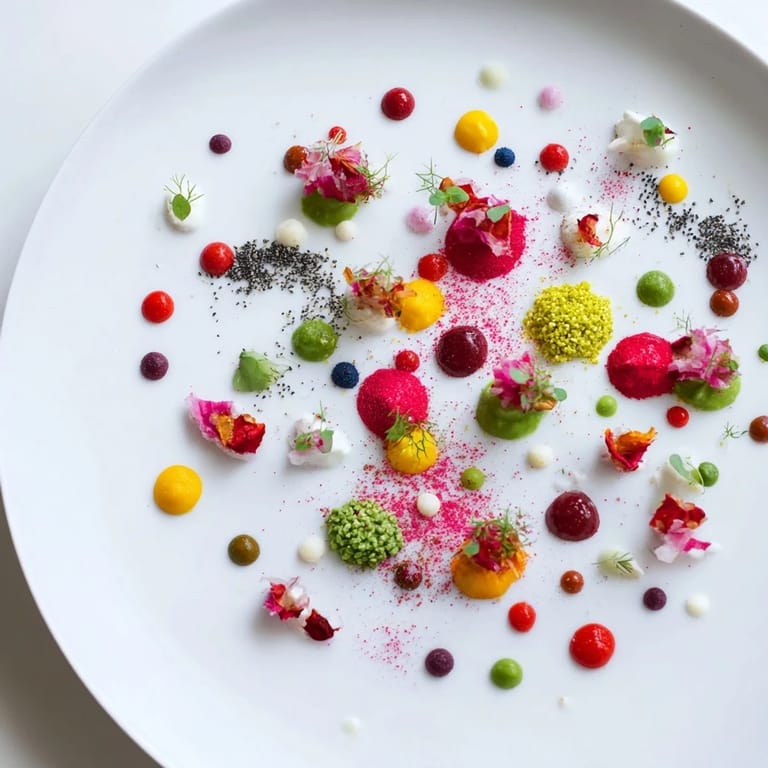
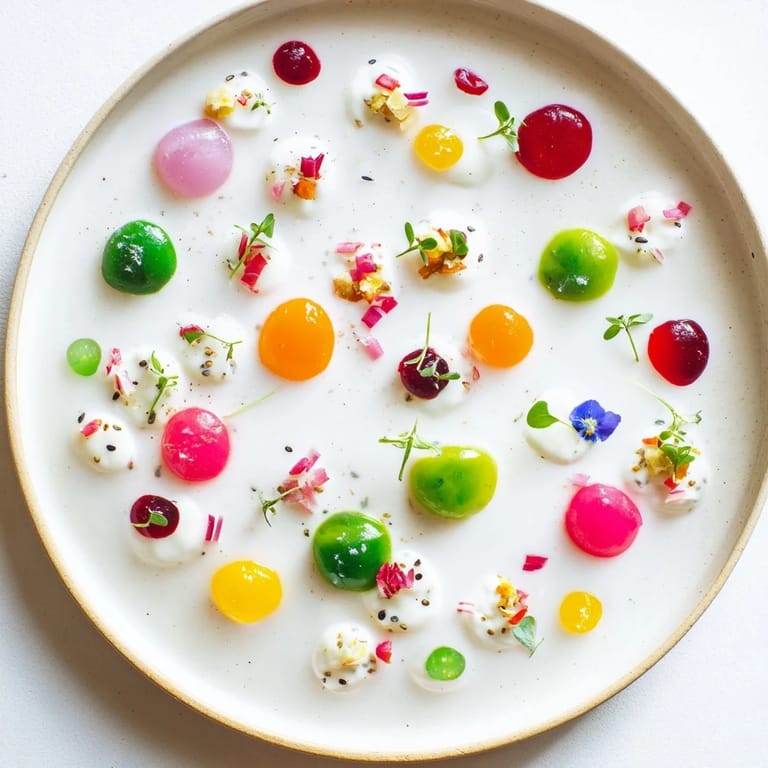
- Take your first plate and imagine it's a blank canvas. Starting with the purees, begin piping small dots and delicate mounds across the surface, varying their size from pea-sized to thumbnail-sized. Work deliberately—this isn't rushed. Leave clear space between each dot so they don't muddy together. Think of yourself as painting with flavor; distribution matters as much as visual balance. Alternate colors to create harmony: don't put all the red beside all the green. Step back occasionally and look at your work with fresh eyes.
- Layer Your Sauces:
- Now introduce the yogurt and crème fraîche, creating small clouds in the negative space between the vegetable purees. These creamy elements should look intentionally placed, like they're floating on the plate. Follow with tiny dots of pesto, coulis, and balsamic reduction—these have big personalities, so they deserve restraint. Each sauce should announce itself without overwhelming its neighbors. Squeeze bottles give you the control that feels almost meditative; take your time here.
- Compose Your Accents:
- This is where the plate comes alive. Scatter the pickled red onions with a light hand, letting each piece find its own small island. Arrange the microgreens in clusters, as if they've naturally gathered in certain spots. Toast the sesame seeds one more time in a dry pan to release their fragrance, then sprinkle them with precision—they're dark and dramatic, so they work as visual anchors. Add the pomegranate seeds last, positioning them where they'll catch the light and provide juicy surprise.
- Crown Your Creation:
- Finally, finish with a whisper of sea salt flakes and several grinds of fresh black pepper. These aren't afterthoughts—they're the final brushstrokes that bring everything into focus. If using edible flowers, add them in the final moments. Take a breath, step back, and admire your work before serving. This dish must be eaten immediately while the visual impact is at its peak and nothing has begun to separate or wilt.
 Save
Save My sister called me after her dinner party where she served this dish and said something I'll never forget: "People actually put their forks down and just looked at the plates for a moment before eating. It felt like we were in an art gallery." That's when I understood—this recipe isn't about impressing people with technique, though it certainly does that. It's about creating a moment where food becomes art, where your kitchen becomes a studio, and where everyone at your table feels like they've been invited somewhere special.
The Philosophy of Modern Plating
There's something deeply satisfying about plating like a painter, rather than plating like someone rushing to finish dinner. When you approach the plate as a canvas, you slow down. You think about composition, about contrast, about how each element will look beside its neighbor. I've discovered that this mindfulness extends beyond just how things look—it actually changes how you taste. When you've placed something intentionally, you savor it differently. The plate becomes a dialogue between you and your guests, a conversation that starts before anyone takes a single bite.
Vegetable Purees: The Foundation of Everything
The secret that changed everything for me was understanding that purees are more forgiving than you'd think, but only if you respect the vegetables themselves. Overcooked vegetables produce dull, lifeless purees—you want them tender, not disintegrated. Cook them with the intention of serving them this way, and suddenly you're seeing them with new eyes, understanding their individual personalities. The beetroot becomes earthy and grounding, the carrot reveals hidden sweetness, the pea gives you spring in a spoon, and the pepper offers sun-warm sophistication. Each one is distinct, and that's the entire point.
The Magic of Micro-Details
This is where obsessive detail becomes your greatest ally. Everything matters: the temperature of your plate (slightly warm is ideal), the exact moment you begin service (seconds count), the angle of your piping bag, even the humidity in your kitchen (dry air is your friend). I learned these things through trial and error—through plates that looked slightly tired because I started plating five minutes too early, through dots that lost their definition because I used a piping bag that was just slightly too large. The accumulation of small choices creates the difference between a good-looking plate and one that actually stops people mid-conversation.
- Pre-chill your serving plates in the freezer for 15 minutes before plating; the cold helps sauces maintain their shape and keeps everything looking crisp longer
- Have a damp cloth nearby to wipe the edges of your plate after plating, creating a clean frame around your artistry
- If you make a mistake with a piped dot, gently wipe it away with a small offset spatula while the sauce is still wet; most purees forgive imperfection if you catch it immediately
 Save
Save Every time I make this dish, I'm reminded why I fell in love with cooking in the first place—it's not really about feeding people, it's about creating moments they'll remember. This plate does that effortlessly.
Recipe FAQ
- → How do I prepare the vegetable purees?
Cook each vegetable until tender, then blend with a pinch of salt and a few drops of olive oil until smooth to create vibrant purees ready for plating.
- → What is the best method for arranging the dots and mounds?
Use piping bags or squeeze bottles to place varying sizes of purees and sauces in a scattered, non-touching pattern across the plate for a visually striking effect.
- → Can this dish be adapted for a vegan diet?
Yes, substitute plant-based yogurt for Greek yogurt and omit the crème fraîche to make a vegan-friendly version without compromising flavor.
- → What garnishes enhance the flavor and presentation?
Pickled red onions, microgreens, toasted black sesame seeds, pomegranate seeds, and edible flower petals add texture and vibrant color contrasts.
- → Are there suggested pairings for this dish?
A crisp Sauvignon Blanc complements the fresh and vibrant flavors beautifully, and serving with crisp crackers or sourdough makes an excellent accompaniment.