 Save
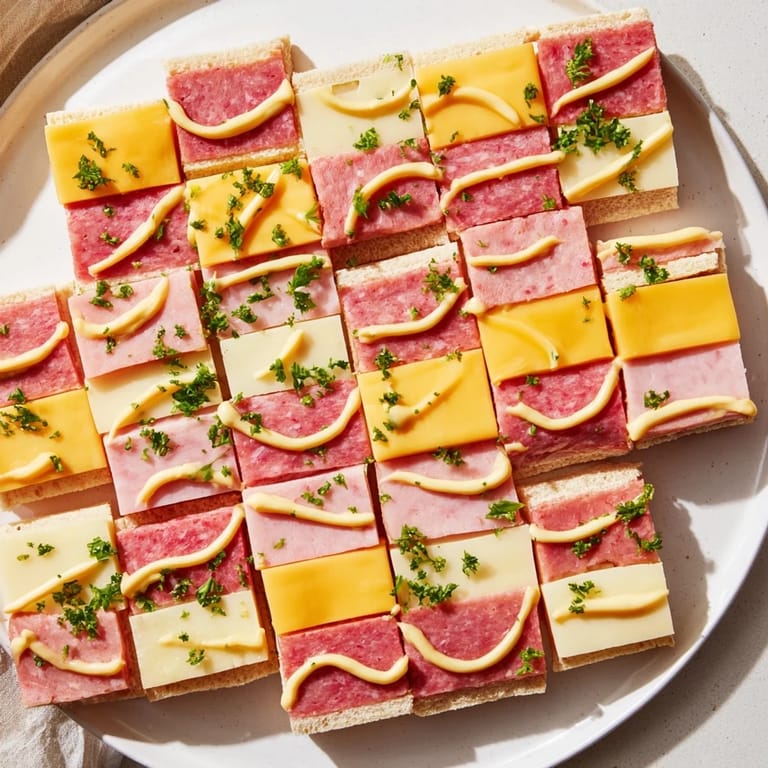
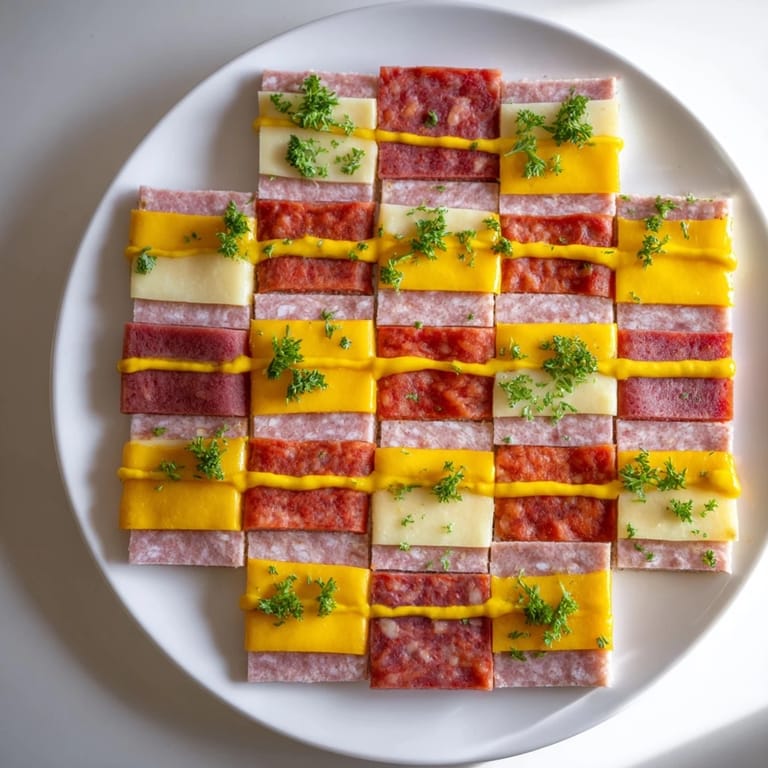
Save I stumbled upon the idea for this one while organizing my charcuterie board supplies and realizing I had way too many beautiful meats and cheeses to fit into a traditional arrangement. My neighbor happened to stop by, took one look at everything spread out, and said, "Why don't you make it look like a quilt?" That simple comment sparked something, and within minutes I was cutting squares and laying them out like a edible textile. Now whenever I serve it, people can't resist playing with the little squares, poking at the mustard lines, and turning what's usually a passive snacking experience into something interactive and fun.
I made this for my sister's book club last spring, and it became the thing people talked about more than the actual books we were supposed to discuss. One woman asked to take a photo of it before touching anything, which felt like the highest compliment. By the end of the evening, only a few stray cheese squares were left, and someone had already asked for the recipe before dessert arrived.
Ingredients
- Smoked turkey breast, 100 g sliced: The lightest player here—it brings a subtle smokiness without overpowering the mustard or cheese.
- Salami, 100 g sliced: This is where the richness lives; the marbling and spice make it visually striking when cut into squares.
- Ham, 100 g sliced: Adds a classic note and slightly sweet undertone that balances the sharpness of the cheeses.
- Swiss cheese, 100 g sliced: Those tiny holes make it instantly recognizable and give you that mild, slightly nutty flavor.
- Sharp cheddar, 100 g sliced: The bold color and bite here prevent the whole thing from feeling too gentle or one-dimensional.
- Provolone, 100 g sliced: It's the bridge—creamy enough to soften the edges between the spicy and sharp elements.
- Whole grain mustard, 2 tbsp: The texture of the seeds creates visual depth and a satisfying little pop when you hit one with your bite.
- Dijon mustard, 2 tbsp: Smooth, sharp, and slightly spicy—the perfect foil to the whole grain's rustic feel.
- Fresh parsley or chives, finely chopped (optional): A whisper of green that makes the whole thing feel less like a board and more like a garden scene.
Tired of Takeout? 🥡
Get 10 meals you can make faster than delivery arrives. Seriously.
One email. No spam. Unsubscribe anytime.
Instructions
- Cut everything into uniform squares:
- Aim for 2-inch squares—small enough to be one-bite friendly but large enough to showcase the color and texture of each ingredient. A sharp knife makes this satisfying; dull blades will tear the delicate meats.
- Arrange your patchwork:
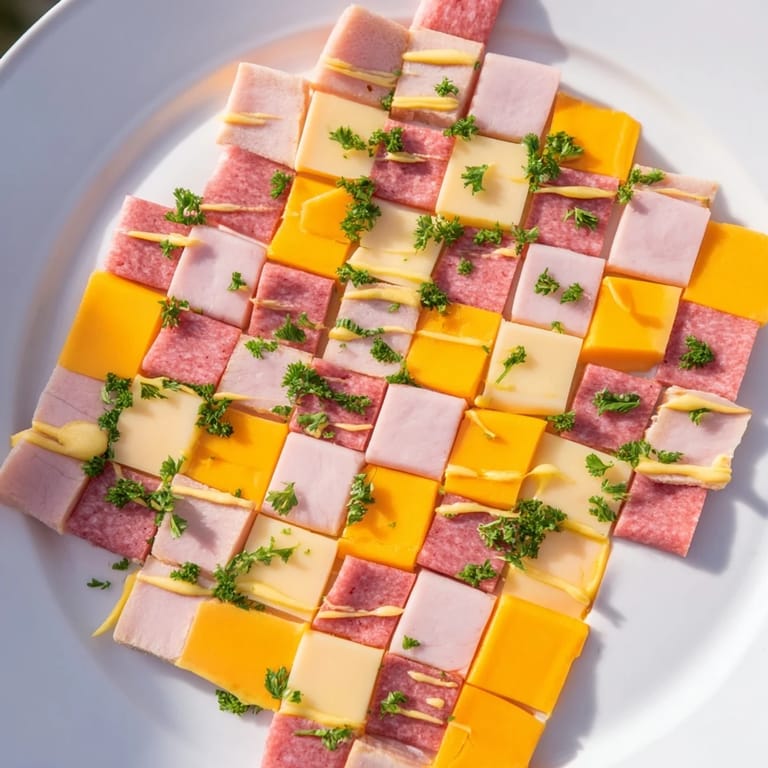
- Start from the center of your platter and work outward, alternating meats and cheeses in a checkerboard that feels intentional but not rigid. Step back a few times to check the balance of colors and make sure no two of the same ingredient sit next to each other.
- Stitch it together with mustard:
- Load a squeeze bottle or piping bag with whole grain mustard and draw lines between the rows, then switch to Dijon for the perpendicular lines. Think of it like stitching seams; the contrast between the two mustards should be visible and intentional.
- Finish and serve:
- A light sprinkle of fresh herbs adds a color pop and a hint of freshness against all the rich, savory elements. Provide toothpicks for guests to easily grab squares without their fingers getting lost in the arrangement.
 Save
Save There's a moment, right after I finish the last mustard line and step back to survey the whole thing, where I feel genuinely proud of something so simple. It's not complicated cooking, but it's thoughtful arrangement, and somehow that matters more than a perfectly seared steak for making people feel welcomed.
Choosing Your Cast of Characters
The beauty of this recipe is that it's entirely customizable based on what you find beautiful and delicious. I usually stick with three meats and three cheeses to keep it balanced, but I've seen versions with roasted vegetables tucked in—beets, roasted peppers, sun-dried tomatoes all work beautifully. The key is varying color and texture so that from a distance, the patchwork actually reads as a pattern and not just a jumble. Think about what colors you want to see repeated across the platter, and choose your ingredients with that visual goal in mind.
The Mustard Moment
Those mustard lines are doing real work beyond just looking pretty. They create little flavor pockets and make each square feel like a complete bite when eaten with the surrounding mustard. I've learned that whole grain mustard, despite looking rustic, pairs best with the richer meats like salami, while Dijon's smooth sharpness complements the creamier cheeses. You could experiment with other condiments too—a sharp horseradish cream, a tangy hot sauce, even herbed aioli would create different visual and flavor effects.
Making It Your Own
The Patchwork Quilt is forgiving enough that you can play with it, but intentional enough that it still feels special. I once added very thin slices of raw vegetables—cucumber, radish, thinly sliced red onion—scattered throughout, which added a fresh crunch and broke up the richness in an unexpected way. Another time, I drizzled a honey mustard between sections to hint at a sweet note. The platter is really your canvas.
- Chill the meats and cheeses for 30 minutes before slicing so they hold their shape and cut cleanly.
- If you're serving this hours ahead, cover it loosely with plastic wrap and arrange it as close to serving time as possible to keep everything looking fresh.
- Always taste one piece before guests arrive—nothing worse than discovering the mustard is off or the cheese too strong only after everyone's already started eating.
 Save
Save This dish proves that entertaining doesn't require hours in the kitchen—sometimes the most memorable moments come from a simple arrangement done with intention and a touch of playfulness. Serve it alongside a crisp white wine or cold beer, and watch people light up the moment they see it.
Recipe FAQ
- → What meats are used in the patchwork arrangement?
Smoked turkey breast, salami, and ham are sliced into uniform squares for layering.
- → Which cheeses complement the meats in this dish?
Swiss, sharp cheddar, and provolone cheeses provide a balanced flavor and texture contrast.
- → How is the mustard applied for the stitch effect?
Lines of whole grain and Dijon mustard are piped between the squares using a squeeze bottle or piping bag.
- → Are there garnishes recommended for presentation?
Freshly chopped parsley or chives can be sprinkled on top for added color and aroma.
- → What serving suggestions pair well with this platter?
Serve with sliced baguette, crackers, and light beverages like white wine or beer to enhance the experience.