 Save
Save I still remember the first time I arranged an Ouroboros Circle for a dinner party—I'd just learned about the concept of the ouroboros snake eating its own tail, and I was captivated by the idea of creating something edible that embodied that beautiful, never-ending cycle. My hands trembled a little as I fanned those first crackers, imagining how guests would see this platter and understand that some things are meant to be endlessly elegant, endlessly generous, endlessly circular. It became my signature move, the thing people started asking me to bring to gatherings.
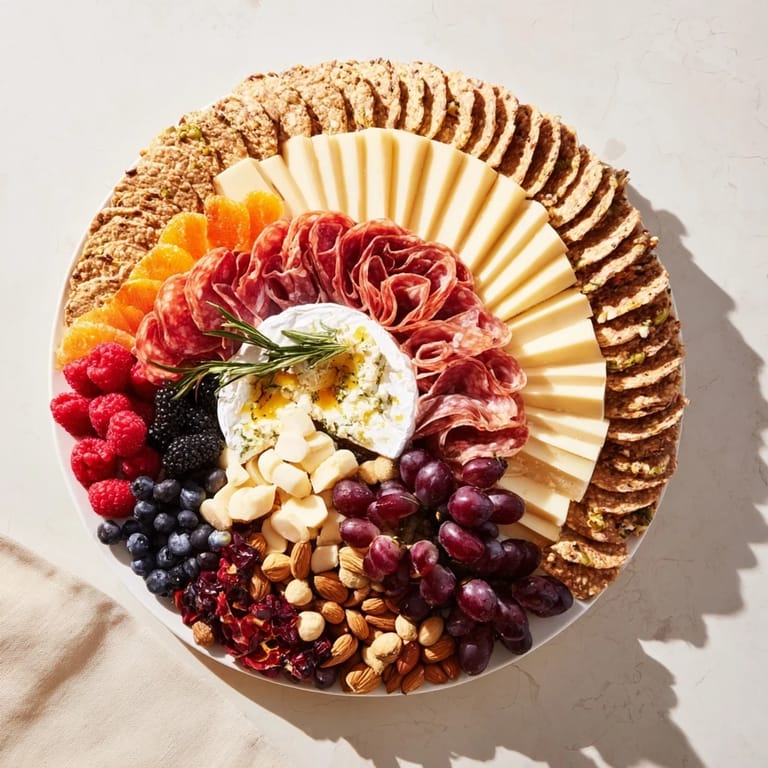
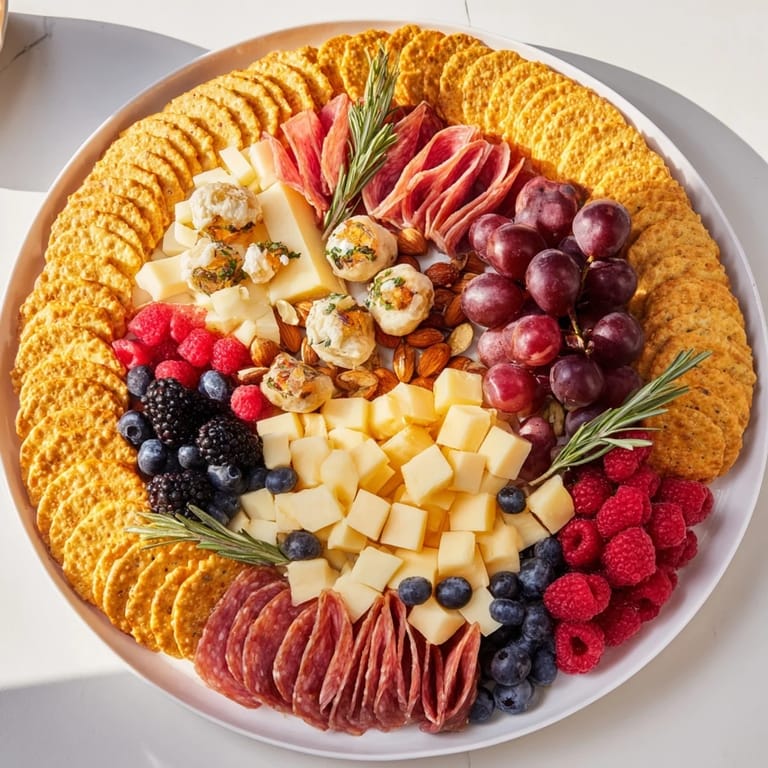
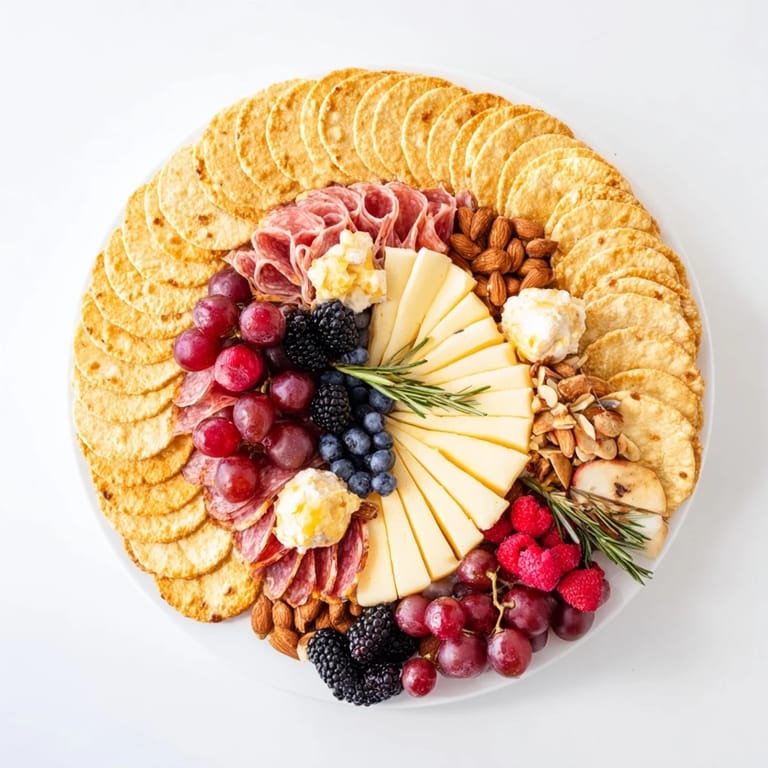
I made this for my best friend's birthday last spring, and watching her face when she saw the complete circle—with those fanned crackers as the head and the red grape clusters as the tail—I knew I'd created something she'd remember. She called it the most beautiful thing she'd ever eaten, and honestly, that's when I realized presentation isn't superficial; it's love made visible on a platter.
Ingredients
- Brie, sliced (100 g): The creamy anchor that makes people close their eyes when they taste it. Slice it just before serving so it doesn't dry out, and let it sit at room temperature for a few minutes—it transforms.
- Aged cheddar, cubed (100 g): Brings a sharp, complex note that cuts through the richness of softer cheeses. The firmness lets it hold its shape beautifully in the arrangement.
- Goat cheese, rolled into small balls (80 g): These little pearls of tang are your visual anchors—they photograph beautifully and taste like a moment of brightness.
- Prosciutto, thinly sliced (80 g): Skip this if you're going vegetarian, but if you're including meat, prosciutto adds a delicate saltiness and silky texture. Fold it loosely so it catches light.
- Salami, folded (80 g): Another optional layer of savory depth. Fold the slices into quarters so they stand up slightly and create visual interest.
- Artisanal crackers, fanned (1 handful): This is your head, your statement. Choose crackers with interesting shapes or textures. Fanning them takes practice—overlap slightly and curve them gently, like a peacock's tail.
- Baguette slices, small (6): The humble bridges that connect sections. Toast them lightly if you want them to last longer without going soft.
- Red grapes in small clusters (1 cup): These are your tail, your visual counterpoint. Keep them in their natural clusters—it's more striking than loose grapes and easier to grab.
- Mixed berries (1 cup): Blueberries, raspberries, and blackberries are your jewels, filling gaps with color. Use them to hide any bare spots on the board.
- Sliced fig, optional: A touch of elegance, but only if figs are in season and beautiful. A mediocre fig is worse than no fig.
- Roasted almonds (1/3 cup): Everyday almonds, but they ground the platter in comfort and crunch.
- Marcona almonds (1/3 cup): These buttery, softer almonds are the luxury edition. They taste like Spanish afternoons and make people ask what they are.
- Honey (2 tbsp): Drizzle this over the goat cheese. It transforms the tang into something honeyed and harmonious. Warm it slightly so it flows but doesn't soak in.
- Fresh rosemary sprigs (1 tbsp): Just a whisper of this herb scattered over the honey adds sophistication and aroma. Don't overdo it—this isn't an herb board, it's an accent.
Tired of Takeout? 🥡
Get 10 meals you can make faster than delivery arrives. Seriously.
One email. No spam. Unsubscribe anytime.
Instructions
- Choose your stage:
- Find a large round platter or wooden board—this is your canvas. If it's wood, make sure it's food-safe and ideally a little weathered; that character matters. Step back and imagine the circle complete before you place anything.
- Create the head:
- Start with those fanned crackers at the top of your imaginary circle. Overlap them gently, angling them outward like a crown or a peacock display. This is your anchor point—get it right and everything else flows from here.
- Build the ring in sections:
- Moving clockwise, place your cheeses and optional meats in alternating sections. Think of it like a pie divided into slices, but curved and organic rather than geometric. The brie should catch light, the cheddar cubes should create structure, and the goat cheese balls should dot the circle like little pearls.
- Add bread as connectors:
- Tuck baguette slices into any gaps, curving them along the flow of the circle. These are your bridges, your transitions. They should feel natural, not forced.
- Place the tail:
- Opposite the cracker head, arrange your red grape clusters. Let them tumble slightly, as if they're cascading. This should feel like the snake's tail mid-curl—natural, beautiful, alive.
- Fill the spaces with intention:
- Mix berries, fig slices, and nuts into remaining gaps. Step back frequently. This isn't about filling every millimeter; it's about leaving just enough white space to let each element breathe.
- Finish with shine and aroma:
- Warm your honey just enough that it flows like liquid gold. Drizzle it over those goat cheese balls in a thin, generous spiral. Scatter the rosemary sprigs as you go—each one placed, not scattered carelessly.
- Complete the circle:
- Make sure the head and tail nearly touch, suggesting that the snake is eternally closing in on itself. This moment—when you see it complete—is why you did all this.
- Serve with ceremony:
- Tell your guests the story of the ouroboros if they're interested, or just let them break the circle with their hands. Either way, you've given them something to remember.
 Save
Save My grandmother used to say that food arranged beautifully tastes better because your eyes eat first. I didn't understand until I made this platter for my nephew's graduation, and I watched his friends stand around it, almost afraid to break it. By the time they dug in, that platter had become a memory before it even became a meal. That's the moment I understood: sometimes the presentation isn't just decoration, it's the heart of what you're offering.
Seasonality and Adaptation
The beauty of the Ouroboros Circle is that it bends to the season without losing its soul. In summer, I lean into stone fruits—apricots, plums, nectarines—and swap berries for what's brightest at the farmer's market. Autumn invites dried figs, candied pecans, and warmer cheeses like an aged gouda. Winter is when I add pomegranate seeds and dried cranberries for that jewel-tone richness. Even the herbs shift: basil in summer, thyme or oregano in autumn, rosemary year-round. The circle remains; only its details transform.
Hosting with Intention
When you serve this platter, you're not just feeding people; you're creating a focal point, a moment where everyone gathers and pauses. That pause is where connection happens. I've learned to pair it with soft music, good lighting, and the confidence to let the platter speak for itself. People will ask questions, will linger, will remember. If you want to elevate it further, pair it with wine—a crisp Sauvignon Blanc makes the citrus notes in the fruit sing, while a sparkling rosé adds celebration to every bite.
The Art of Breaking the Circle
There's something almost ceremonial about the moment when the first guest reaches for a piece. I always offer them the choice: break the circle with the cracker head, or start with the tail? Some people want to respect the symbol and eat mindfully. Others want to dive in and let it be joyfully destroyed. Both are perfect. The platter exists to be enjoyed, to be consumed, to literally feed the people you care about. That's the real ouroboros—the endless cycle of giving and receiving, of creating and sharing.
- Have small plates nearby so guests don't stand there holding crackers and cheese, uncertain what to do next.
- Keep a small bowl of extra honey and a tiny spoon at the edge for those who want more sweetness on their goat cheese.
- If something falls or gets jostled during serving, quietly replace it or accept the beautiful imperfection—nobody notices what you notice.
 Save
Save Every time I make this platter, I'm struck by the elegance of the concept—something that represents infinity, made tangible and edible and meant to be shared. That's the real magic here. Enjoy making it.
Recipe FAQ
- → What cheeses work best for this platter?
Soft brie, aged cheddar, and creamy goat cheese provide a balance of textures and flavors that complement the fresh fruits and nuts.
- → Can this be made vegetarian or vegan?
Omit the meats for a vegetarian version or substitute plant-based cheeses and skip animal products to make it vegan-friendly.
- → How should the platter be arranged?
Place fanned crackers at one segment to form a 'head', arrange cheeses and optional meats around the circle, then position grape clusters opposite to create a 'tail'. Fill gaps with berries, nuts, and bread slices.
- → What pairs well with this platter?
A crisp white wine like Sauvignon Blanc or a sparkling rosé complements the mix of savory cheeses and sweet fruits beautifully.
- → How to add extra visual appeal?
Include edible flowers or seasonal fruits to enhance color and texture for a more decorative presentation.