 Save
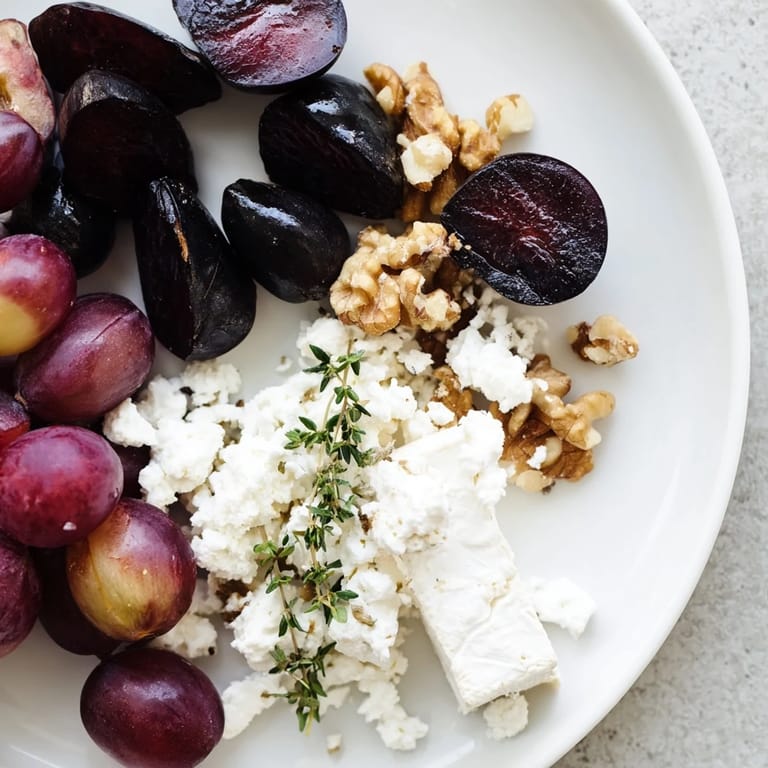
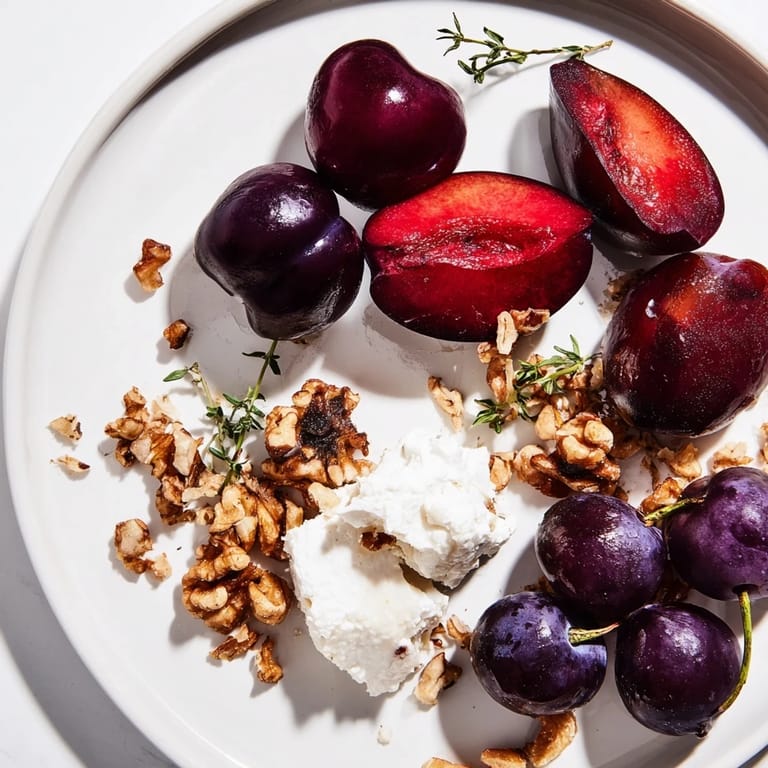
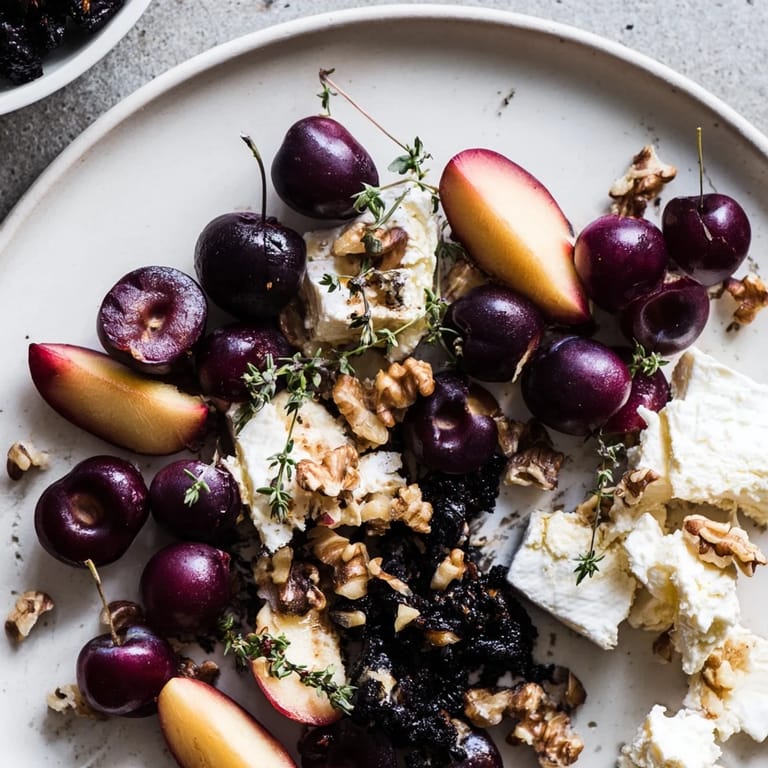
Save I discovered this platter completely by accident one evening when I was supposed to be making dessert but found myself with a stunning collection of late-summer fruit and a wedge of that gorgeous black-ashed goat cheese I'd been saving. Rather than overthinking it, I arranged everything on my grandmother's old ceramic platter and something just clicked—the deep purples against the creamy white, the tartness of the cheese meeting the sweetness of the fruit. My guests that night kept reaching for just one more grape, one more bite of that tangy cheese, and I realized I'd stumbled onto something that felt both effortless and unforgettable.
I remember serving this at a late-night gathering on a balcony overlooking the city, and someone asked if it was from a restaurant. I laughed because I was still wearing my apron, but there was something about the way the thyme caught the light and how the colors seemed to deepen as evening fell that made it feel genuinely special. It became my go-to move for those moments when you want to impress without the stress.
Ingredients
- Dark cherries: The deeper the color, the more complex the flavor—look for ones that feel heavy for their size, which means they're juicy.
- Ripe plums: Gently squeeze them before buying; they should yield just slightly, not rock-hard.
- Purple grapes: These are sweeter than green ones and their color adds drama to the platter.
- Black-ashed goat cheese: This cheese's tangy, creamy texture is essential; the ash coating gives it visual interest and a slightly earthy note.
- Toasted walnuts: The warmth from toasting brings out their nuttiness and creates a textural contrast against the soft fruit.
- Honey: A drizzle adds shine and a subtle sweetness that bridges the gap between the cheese's tang and the fruit.
- Fresh thyme: It's purely decorative but smells incredible and hints at the sophistication of the whole arrangement.
Tired of Takeout? 🥡
Get 10 meals you can make faster than delivery arrives. Seriously.
One email. No spam. Unsubscribe anytime.
Instructions
- Prep your fruit with intention:
- Pit and halve the cherries first—this is meditative work, and you'll want clean hands. Slice your plums into wedges, and halve the grapes lengthwise so they nestle nicely against other elements.
- Create your composition:
- Arrange each fruit in its own gentle cluster on your platter, leaving room for the cheese. Think of it like painting; you're building visual interest through color and grouping, not cramming everything together.
- Position the cheese:
- Slice or crumble your goat cheese and place it where it'll catch the light—usually in the center or along one edge, wherever feels balanced to your eye.
- Add the finishing layer:
- Scatter toasted walnuts if you're using them, then give a light, judicious drizzle of honey. Too much honey and it becomes sticky; just enough and it glistens like you meant it.
- Garnish and serve:
- Tuck fresh thyme sprigs around the platter in a way that feels natural, not rigid. Serve immediately so everything is at its peak.
 Save
Save I'll never forget watching someone I'd just met reach for the goat cheese and fruit together for the first time, and their whole face lit up at that unexpected pairing. That's when I understood this platter wasn't just about hunger—it was about creating these tiny moments of discovery on a plate.
The Art of Arrangement
The magic of this platter is that it lives or dies by how it looks. I learned this the hard way after my first attempt, where I just dumped everything in the middle and wondered why it didn't feel special. Now I think of the platter as a canvas: odd numbers work better (three clusters of fruit rather than four), and leaving white space is just as important as filling it. The eye naturally travels around a well-composed platter, and guests unconsciously linger longer because it's beautiful.
Wine Pairings and Serving Moments
A dry sparkling wine is my first choice—the acidity cuts through the richness of the cheese while the bubbles feel celebratory. A light red like Pinot Noir works beautifully too, especially if the evening is cool. I've learned that this platter becomes the entire appetizer course on nights when I want people to arrive hungry but not desperate; it sets a tone of leisure and conversation rather than rushing toward the main event.
Making It Your Own
Once you understand the basic principle—dark, sweet fruit against creamy, tangy cheese—you can improvise endlessly. I've done versions with fresh figs, blackberries, and even a drizzle of aged balsamic. The beauty is that this platter is forgiving; there's no precise recipe to follow, just an idea to build on. Every time you make it, you're actually making it new.
- Add thin slices of toasted baguette or gluten-free crackers for anyone who wants texture and something to spread the cheese on.
- A plant-based ash-coated cheese works beautifully if you're serving vegans, though be transparent about your goat cheese for those who want to know.
- Prep everything except the honey drizzle up to two hours ahead and keep it covered on the counter; cold cheese can taste muted.
 Save
Save This platter has become my answer to the question of how to make something feel restaurant-quality without restaurant stress. It's proof that elegance sometimes just means knowing when to stop arranging and let beautiful ingredients speak for themselves.
Recipe FAQ
- → What cheeses pair well with dark cherries and plums?
Soft, creamy cheeses like black-ashed goat cheese complement the tartness of dark cherries and ripe plums beautifully, adding smooth texture and earthy notes.
- → Can toasted walnuts be substituted in this platter?
Yes, alternatives like toasted pecans or almonds work well to add crunch and a nutty flavor while maintaining texture contrast.
- → How should the fruit be prepared for serving?
Dark cherries should be pitted and halved, plums sliced into wedges, and grapes halved to ensure easy eating and visual appeal.
- → Is there a vegan option for the cheese included?
Using a plant-based ash-coated cheese can maintain the distinctive flavor and appearance while fitting vegan dietary needs.
- → What beverages pair well with this fruit and cheese arrangement?
Dry sparkling wines or light-bodied reds are excellent choices, enhancing the natural sweetness and creaminess of the platter.