 Save
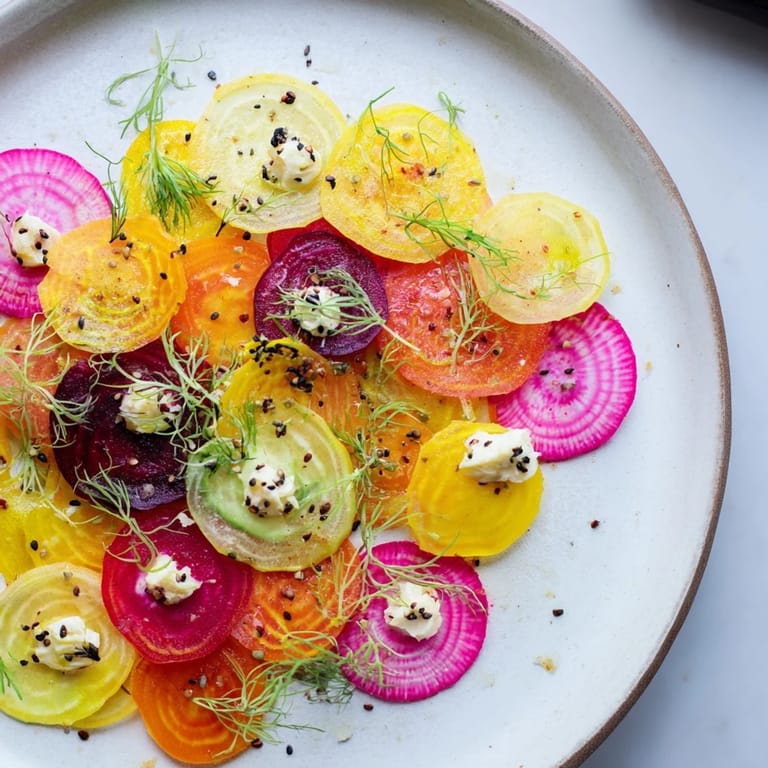
Save I still remember the afternoon I discovered that food didn't have to sit still to be beautiful. I was flipping through a design magazine, mesmerized by photographs of motion blur—that artistic trick where movement gets frozen and scattered across a frame. It hit me suddenly: why not cook like that? Why couldn't a plate tell the story of energy and momentum through ingredients? That's when I created this dish, arranging vegetables like they were caught mid-dance, dense and vibrant on one end, then gradually releasing into scattered, delicate wisps on the other. It's become my favorite way to remind myself that the best meals are the ones that make people pause and really look.
I made this for the first time when my partner's parents visited unexpectedly. I wanted to cook something that showed I cared without disappearing into the kitchen all afternoon. As they watched me arrange those colored vegetables—golden beets flowing into reds, then watermelon radish creating that beautiful pink—something shifted in the room. Suddenly we were all gathered around the platter before I'd even finished the dressing, talking and laughing. That's when I knew this dish was special. It wasn't just food; it was an experience we were all part of creating.
Ingredients
- Golden beet: Its sweet earthiness anchors the whole arrangement, and when sliced thin, it becomes almost translucent—learn to use a mandoline here, it changes everything
- Red beet: The dramatic jewel tone that makes people lean in closer; same slicing technique keeps it delicate
- Watermelon radish: This is the secret weapon—those pale pink and white rings create natural movement, like ripples frozen in time
- Persian cucumber: Cool, crisp, and it won't weep water like regular cucumbers; this matters more than you'd think
- Baby carrots: Slice them on a bias so they catch the light differently than the other vegetables, adding depth to your motion effect
- Creamy goat cheese: Let it sit out for 30 minutes before you start—cold cheese won't dot smoothly, and smooth is everything here
- Toasted hazelnuts: Toast them yourself if you can; that nutty warmth brings unexpected richness to something so light and fresh
- Black sesame seeds: They add visual weight and a subtle nuttiness that ties everything together
- Microgreens: These are your motion blur, your fade-out; they're delicate, so add them last
- Fresh dill: Feathery and bright, it softens the geometric precision of the sliced vegetables
- Extra virgin olive oil: This is where quality actually matters; it's not hidden in sauce, it's tasted in every bite
- Fresh lemon juice: Never use bottled; the brightness you need can't come from anything but fresh
- Honey: Just a teaspoon balances the acidity and whispers sweetness without announcing itself
Tired of Takeout? 🥡
Get 10 meals you can make faster than delivery arrives. Seriously.
One email. No spam. Unsubscribe anytime.
Instructions
- Make the dressing first, then forget about it:
- Whisk together your olive oil, lemon juice, honey, salt, and pepper in a small bowl. Set it aside and let those flavors get to know each other while you focus on the beautiful work ahead. This dressing is simple by design—it's meant to enhance, not distract.
- Create your dense cluster:
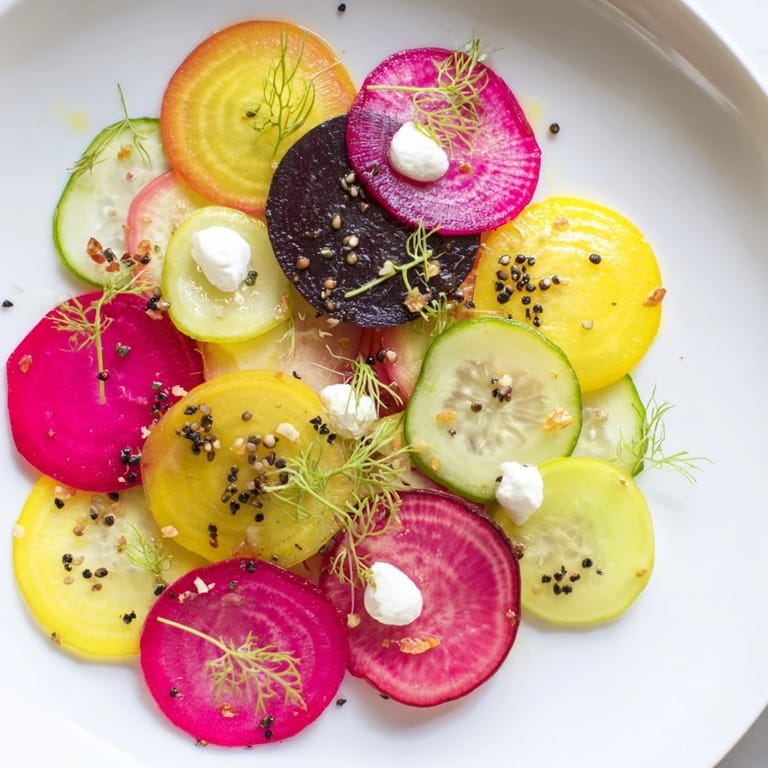
- Start on one side of your platter, overlapping those vegetable slices like you're building something that matters. Golden beets, then red beets, then watermelon radish—watch how the colors speak to each other. This isn't random; you're creating the visual heart of the dish where everything is close and concentrated and alive with color.
- Begin your fade:
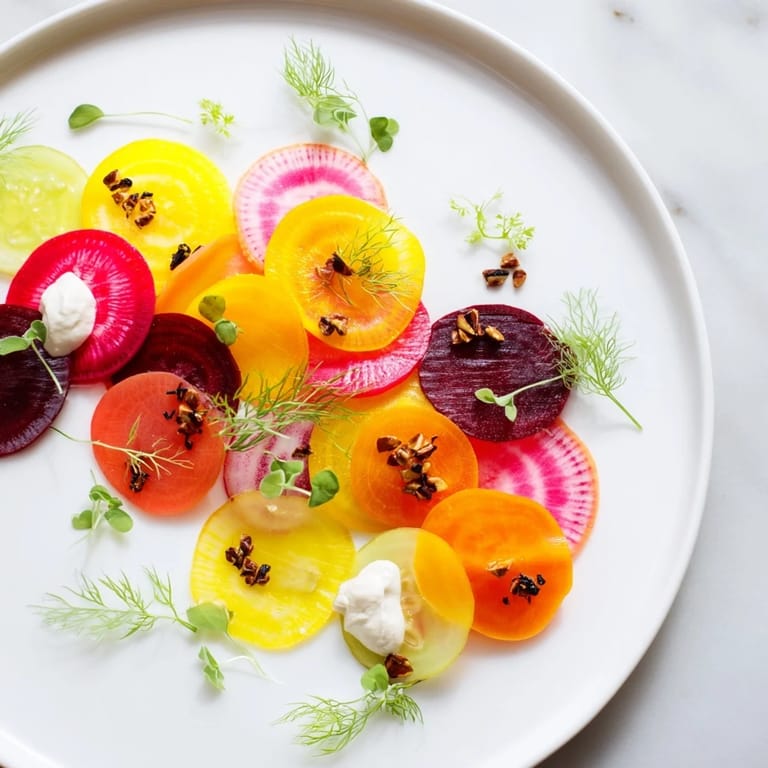
- As you move toward the opposite edge of the platter, slowly space those slices out more. This is where the magic happens, where you're deliberately creating distance and suggesting motion. It should feel intentional, like the vegetables are moving across the plate in slow motion.
- Dot in the goat cheese:
- Now drop small, generous dollops of that room-temperature goat cheese among the densest cluster—let it nestle between the vegetable slices. As you move toward the sparse side, use fewer and fewer dollops. The goat cheese is your anchor of creaminess against all that fresh crispness.
- Scatter your nuts and seeds with intention:
- Sprinkle toasted hazelnuts and black sesame seeds with the same logic—more concentration on the dense side, gradually fading out. This reinforces the motion effect and adds texture that surprises you in the best way.
- Finish with your greens and herbs:
- Scatter microgreens and dill fronds last, again respecting the fade from dense to sparse. These delicate elements are your final gesture, your whisper at the end of a beautiful sentence.
- Drizzle with intention:
- Pour the dressing evenly across most of the platter, but use less on the sparse side. The dressing is part of your visual story—it catches light differently where it pools and where it's sparse.
- Serve immediately:
- This is not a dish that waits. Bring it to the table while the vegetables are crisp and the colors are singing their brightest.
 Save
Save What I've learned is that this dish is more than just an appetizer. It's permission to play with your food, to think about it as art without apologizing, to understand that presentation and flavor don't have to be separate conversations. Every time I make it, it becomes a small event—people gather differently, they talk more, they actually taste what they're eating instead of just consuming it. That's what keeps bringing me back to the kitchen to arrange vegetables like they're telling a story of motion and light.
The Mandoline Is Your Best Friend
If you don't have a mandoline, now is the moment to consider getting one. Those thin, even slices are what make this dish work—they're what create that watercolor effect where colors blend and play off each other. A chef's knife will work, and I've been there, but a mandoline changes the game. The consistency of thickness means everything cooks and tastes evenly, and visually, it creates that unified motion effect that makes the whole arrangement sing. Use the guard, always use the guard.
Playing with Seasonal Variations
The beauty of this dish is its flexibility. In spring, I've swapped in shaved asparagus and thinly sliced radishes with their greens still attached. Summer calls for heirloom tomatoes, paper-thin zucchini, and edible flowers scattered across the sparse side. Fall brings roasted beets, thinly sliced apple, and pumpkin seeds instead of hazelnuts. Winter is where I lean into root vegetables—parsnips, turnips, colorful carrots in every variety I can find. The structure stays the same; only the vegetables change. It keeps the dish alive and tied to what's actually good right now.
Wine Pairings and Serving Ideas
This is a dish that wants good company. A crisp Sauvignon Blanc with its bright acidity cuts through the richness of the goat cheese and echoes the freshness of the vegetables. Dry sparkling wine works too—that slight effervescence feels celebratory somehow, appropriate for a dish that's basically organized joy on a platter. Serve it as the opening course, the moment that sets the tone for the meal ahead. Or make it the centerpiece of a light lunch with good bread and a cheese board alongside. It's adaptable because it's confident about what it is.
- For a vegan version, try cashew cream whipped with lemon and nutritional yeast instead of goat cheese—you'll barely miss the dairy
- Add thin slices of smoked salmon or trout if you want to turn this into something more substantial, arranging them with the same motion-blur logic
- Cold grilled fish—halibut or sea bass—adds protein and still respects the lightness of the arrangement
 Save
Save This dish taught me that sometimes the most memorable meals are the simple ones where you've paid attention to every detail. There's something deeply satisfying about arranging vegetables like you're creating art, and then watching people taste it and suddenly understand that food can be both beautiful and delicious without choosing between the two.
Recipe FAQ
- → What vegetables create the kinetic blur effect?
Thinly sliced golden beet, red beet, watermelon radish, Persian cucumber, and baby carrots are arranged densely on one side and scatter outward to create the blur effect.
- → How is the dressing prepared?
Whisk together extra virgin olive oil, fresh lemon juice, honey, salt, and freshly ground black pepper until combined, then drizzle lightly over the dish.
- → Can this dish be adapted for vegan preferences?
Yes, substitute the creamy goat cheese with a plant-based cheese alternative to keep the flavors balanced.
- → What nuts and seeds add texture here?
Toasted hazelnuts provide richness while black sesame seeds add subtle crunch and earthy flavor throughout the arrangement.
- → Which herbs complement the ingredients best?
Fresh dill fronds and microgreens like arugula or radish bring a fresh, slightly peppery contrast to the creamy and nutty components.