 Save
Save There's something about cooking with white that strips away pretense. Years ago, at a gallery opening in the city, I watched a chef plate something ethereal—chicken, cream, and barely-there mushrooms arranged like a whisper. I went home that night and spent hours trying to recreate the feeling on my own plate. This dish became my answer to that moment: elegance without fussing, sophistication without showing off.
I made this for my sister's birthday dinner last spring, and what I remember most isn't the compliments—it was her laughing as she tried to describe the taste without looking at her plate. She kept saying things like 'it tastes pale' and 'this is what quiet feels like.' That's when I knew the dish had done exactly what it was supposed to do.
Ingredients
- Chicken breasts: Four small ones cook faster and poach more gently than larger cuts, staying tender instead of stringy.
- Cauliflower: The base of everything creamy here; it becomes luxurious with butter and cream, not heavy.
- White button mushrooms: Their mild flavor disappears into the background, but their earthiness anchors the whole dish.
- Heavy cream and cream cheese: The cream cheese adds a subtle tang that keeps the purée from feeling one-dimensional.
- Chicken broth: Low-sodium matters because you're not reducing it; you want it to stay clear and pale.
- Black pepper: Freshly cracked, not ground—the chunks create actual shadows on the white plate.
- Butter and olive oil: Butter goes into the purée for richness; olive oil keeps the mushrooms from sticking.
- Garlic and onion: Cooked gentle and slow so they meld into the mushrooms rather than asserting themselves.
Tired of Takeout? 🥡
Get 10 meals you can make faster than delivery arrives. Seriously.
One email. No spam. Unsubscribe anytime.
Instructions
- Poach the chicken gently:
- Bring the broth to barely a simmer—you want lazy, small bubbles, not a rolling boil that turns the meat stringy. The chicken should be cooked through in 12 to 15 minutes, no more.
- Turn cauliflower into clouds:
- Boil until it's almost melting, then blend with warm cream and butter until it's like silk. Taste and adjust salt carefully; this bland-seeming step is where all the flavor lives.
- Sauté mushrooms until they soften:
- Start with the onions to build a base, then add mushrooms when the pan is hot enough to sear them lightly. You want them golden but still pale, about 5 to 6 minutes of stirring now and then.
- Build your plate with intention:
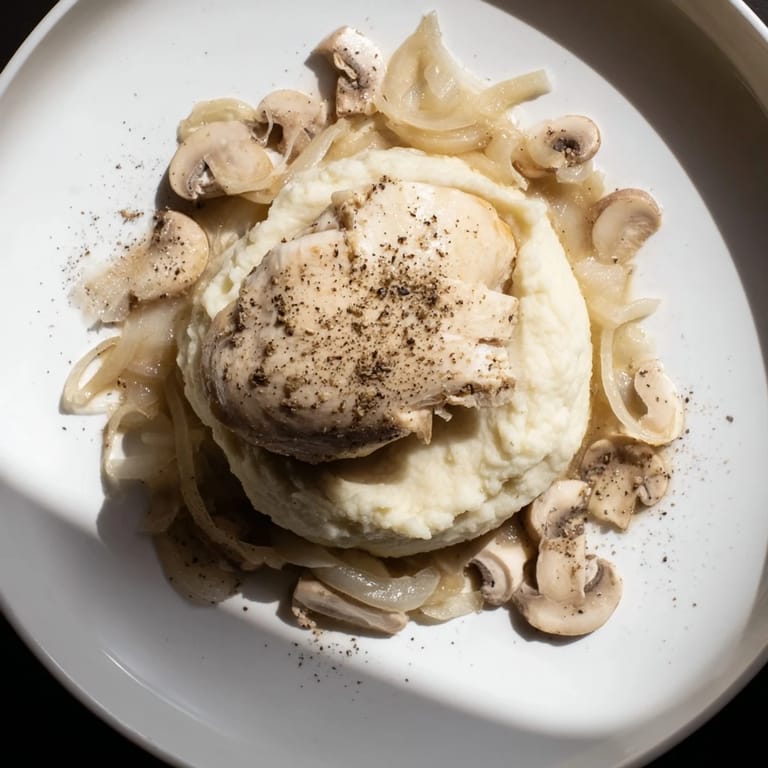
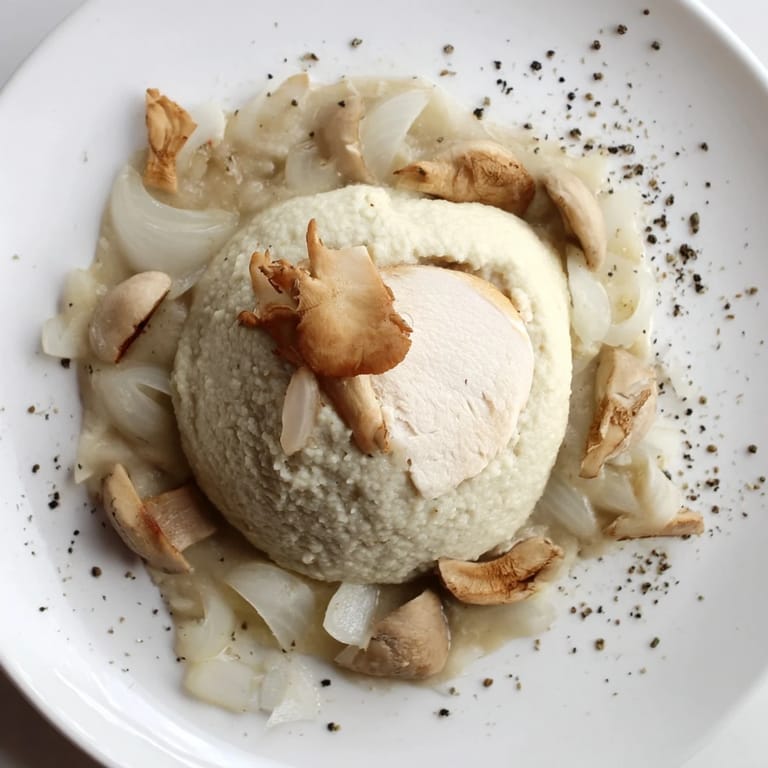
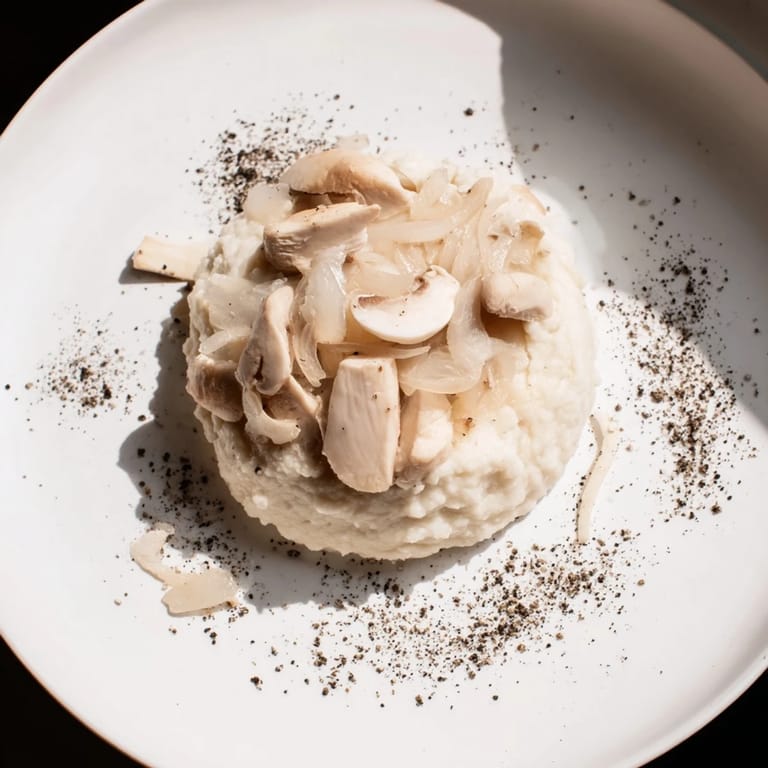
- The purée is your canvas. The chicken sits proud. The mushrooms scatter like they fell there by accident, and the black pepper creates the whole mood at the end.
 Save
Save What moves me about this dish is how it asks so little but gives so much back. The quiet of it, the restraint—it made me realize that sometimes the most striking thing you can cook is something almost invisible, something that tastes better than it looks.
The Power of Pale
Cooking in white taught me something unexpected: there's nowhere to hide. No burnished edges or caramelized depth to cover imperfection. Every element has to shine on its own terms. The chicken must be perfectly tender. The purée must be genuinely silky. The mushrooms have to taste like themselves, not like a backup singer. This constraint is actually a gift because it forces you to focus on the fundamentals—technique, timing, ingredient quality. Once you master cooking without color, colored food feels easier.
Timing and Temperature Matter
The three components—chicken, purée, mushrooms—each need their own pace. Start the broth first, then begin your cauliflower about ten minutes later. The mushrooms should hit the pan last, so everything lands on the plate still warm and the flavors aren't sitting around cooling into flatness. I've learned to keep the purée in a warm pot and the mushrooms in the skillet, both on their lowest settings, while I plate. This orchestration is easier than it sounds once you've done it once.
Variations Worth Trying
I've made this dish shift and transform based on what was in my kitchen. In summer, I've replaced the sautéed mushrooms with barely-wilted white corn and made it feel almost sweet. Once, out of desperation, I used roasted celeriac instead of chicken and actually prefer it sometimes—the earthiness is deeper. The frame is strong enough to hold surprises. If you go vegetarian, use vegetable broth instead and give your substitute (celeriac, thick tofu, cauliflower steaks) the same gentle poaching time. The dairy remains, but the protein changes, and somehow it still sings.
- Roasted celeriac holds its shape better than tofu and absorbs the broth like a dream.
- A whisper of white miso in the purée adds complexity without color.
- Cold leftovers transform into a silky soup with a splash of broth and cream.
 Save
Save Cook this when you want to impress someone quietly, without the usual flourish. It's the kind of dish that lingers in memory not because of how it looked, but because of how it made someone think about food differently. That's the whole reason I still make it.
Recipe FAQ
- → What is the best way to poach the chicken?
Use a gentle simmer with low heat in seasoned chicken broth, poaching the breasts covered for 12–15 minutes until just cooked through to retain tenderness and moisture.
- → How can I achieve a silky smooth cauliflower purée?
Cook the cauliflower until very tender, then blend with cream, butter, and cream cheese until silky. Season lightly and keep warm before plating.
- → What technique is used to create the black pepper shadows?
Freshly cracked black pepper is sprinkled around the plate (not on the food) to cast dramatic shadows that enhance the visual presentation.
- → Can the mushroom sauté be prepared ahead of time?
Yes, sauté the mushrooms and onions just before serving to maintain their delicate texture and pale color, reheating gently if needed.
- → Are there good alternatives for the chicken in this dish?
Thick slices of roasted celeriac or tofu poached in vegetable broth provide a satisfying vegetarian alternative maintaining texture and flavor balance.