 Save
Save I still remember the moment I decided to turn science into something you could actually eat. It was at a friend's birthday party where they'd just finished their biology degree, and I wanted to create something that would make everyone smile the moment they walked into the room. That's when the Double Helix was born—an appetizer that looks like it belongs in a laboratory but tastes like a celebration of fresh, beautiful ingredients arranged in perfect harmony.
When I first made this for that biology party, I watched people approach the platter with curiosity, then lean in closer to understand what they were looking at. Someone said, 'Wait, is this actually DNA?' and the whole table erupted. That moment—when food became a conversation, when science and flavor merged—taught me that the best recipes are the ones that make people pause and smile before they even taste them.
Ingredients
- Black olives, pitted and sliced (100 g): These form one of your DNA strands with their deep, sophisticated color. The briny flavor is the backbone of the entire piece.
- Cherry tomatoes, halved (100 g): Their bright red creates the visual pop that makes the DNA helix instantly recognizable. They're sweet and juicy—the perfect counterpoint to the olives.
- Cucumber, cut into thin half-moons (100 g): This keeps things fresh and light. I learned to slice these thin enough to curve slightly, which somehow makes them fit the helix shape more naturally.
- Roasted red peppers, sliced (100 g): Silky and slightly sweet, these add another layer of color and a subtle depth that ties everything together beautifully.
- Smoked salmon or marinated tofu strips (100 g, optional): This is your protein element. Use whichever fits your guests' preferences—the salmon adds richness, the tofu adds a plant-based elegance.
- Mozzarella cheese, cut into thin strips or small cubes (150 g): These are your connection points, your DNA base pairs. Fresh mozzarella melts slightly from room temperature, which actually works in your favor here.
- Cheddar cheese, cut into thin strips or small cubes (100 g): This adds color contrast to the rungs and a sharper, more pronounced cheese flavor that balances the milder mozzarella.
- Fresh basil leaves (50 g): These aren't just decoration—they're aromatic punctuation marks that elevate the entire arrangement with their subtle anise notes.
- Crackers or gluten-free crackers (50 g, optional): These give your guests a vehicle for the ingredients, a way to make the DNA piece even more interactive.
- Olive oil (1 tbsp): A light drizzle ties everything together and adds a silky finish that makes the colors shine.
- Freshly ground black pepper: The final seasoning that says, 'this was made with intention.'
Tired of Takeout? 🥡
Get 10 meals you can make faster than delivery arrives. Seriously.
One email. No spam. Unsubscribe anytime.
Instructions
- Start with your canvas:
- Choose a large, clean serving board or platter—something that feels a little special, because this is art. Make sure it has enough space to create two long, parallel lines that will twist slightly, like the strands of an actual helix. If you're nervous, you can lightly draw the pattern with a piece of basil first as a guide.
- Lay down your first strand:
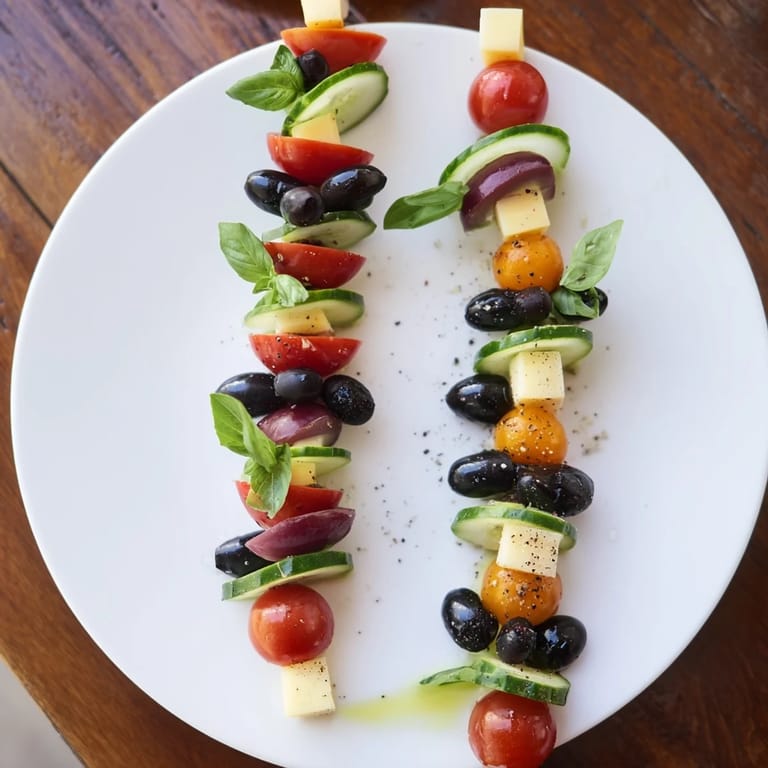
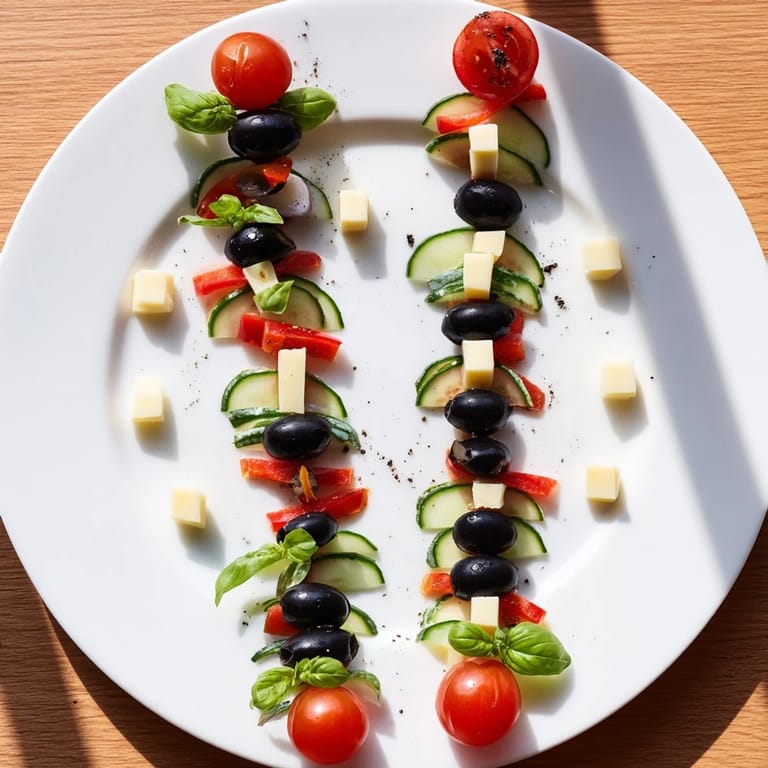
- Starting at one end of your board, begin arranging your black olives in a long, gently undulating line. Don't make it perfectly straight—real DNA twists and turns, so let your line have some movement. Space them close enough that they create a continuous visual line, but far enough apart that there's room for the connectors.
- Create the contrasting strand:
- Parallel to your olive line, create a second line using the cherry tomato halves. The contrast between the deep black and the bright red is what will make people recognize this as DNA at first glance. Keep the spacing consistent with your first line so the rungs will connect evenly.
- Enhance the strands:
- Now you're going to add depth and visual richness. Weave cucumber slices, roasted pepper strips, and if you're using it, smoked salmon or tofu into and around your olive and tomato lines. Think of this as shading—you're creating texture and visual interest while keeping the two main parallel lines recognizable. This is where the appetizer transforms from a simple pattern into something that feels almost 3D.
- Add your cheese rungs:
- Here's where the magic happens. Starting at one end, connect your two strands with perpendicular rungs of alternating mozzarella and cheddar. These represent the base pairs of DNA. Place them at regular intervals—I aim for about 2 to 3 inches apart. Vary the cheese types so each rung has both colors, or alternate whole rungs between the two cheeses. This is meticulous work, but it's also incredibly satisfying.
- Tuck in the basil:
- This is the final touch before seasoning. Gently nestle fresh basil leaves along both strands and between the cheese rungs. They should look organic and placed with intention, not scattered randomly. The green brings the whole composition to life.
- Season and finish:
- Drizzle the entire arrangement very lightly with olive oil—you want just enough to make everything gleam slightly under the light. Then grind black pepper over the whole piece. This isn't just seasoning; it's a visual statement that says this is ready to eat.
- Final presentation:
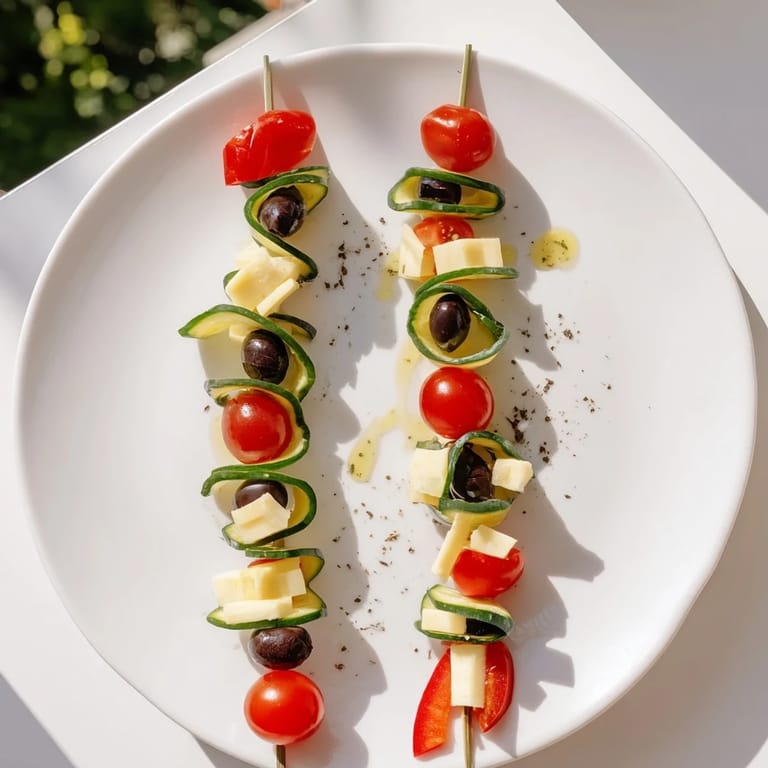
- Step back and look at your creation. If you're using crackers, arrange them beside the DNA helix rather than on top of it, so the visual impact remains clear. If using mini skewers, you can gently place them horizontally through the cheese rungs to add dimension and keep everything stable if the appetizer needs to travel.
 Save
Save I'll never forget when my nephew, who's in sixth grade and currently obsessed with science, came to a family gathering and saw this appetizer sitting on the table. His face lit up in a way that only happens when kids see something that bridges the gap between learning and play. He spent the next ten minutes studying it before eating anything, and then he went around explaining the double helix structure to everyone who would listen, crackers in hand. That's when I realized this recipe is really about something bigger than food—it's about creating moments where learning and eating and joy all happen at exactly the same time.
Making This Your Own
The beauty of the Double Helix is that it's infinitely adaptable to what you have on hand or what your guests prefer. If you're cooking for vegetarians, the marinated tofu rungs are just as striking as smoked salmon and add a completely different flavor profile. If someone has a dairy allergy, plant-based cheeses work beautifully—they might not melt quite the same way, but they create perfectly valid DNA rungs. The formula stays the same: two contrasting lines, connected by something creamy or hearty, with fresh elements tucked throughout. Once you understand the structure, you're free to riff.
The Science of Serving
Timing matters more than you might think with this appetizer. Because nothing is cooked, it stays fresh for about two hours at room temperature, which is perfect for a party window. If you need to prepare it earlier, keep the components separate and assemble everything 30 minutes before guests arrive. The cheese will soften slightly from room temperature, and the vegetables will release just enough moisture to make everything feel integrated rather than placed. I've learned that the moment right before serving, when everything is set but hasn't been touched yet, is almost as important as the eating—that's when people see it and react.
Pairing and Presentation
This appetizer reaches its full potential when paired thoughtfully with drinks and other foods. The brightness of the vegetables and cheese sings alongside crisp white wines—Sauvignon Blanc or Pinot Grigio are ideal. Sparkling water with lemon is perfect if you want to keep it non-alcoholic. If you're serving a full spread, position the DNA helix somewhere that's visible when people first arrive, because it's almost always the conversation starter.
- Consider the height of your serving board—if it's at eye level or slightly above, the spiral pattern becomes even more dramatic and recognizable.
- Use a platter with a neutral background so the colors of the ingredients really pop and the pattern is unmistakable.
- If the appetizer will sit out for a while, lightly cover the top with plastic wrap that you remove right before service to keep everything fresh-looking.
 Save
Save Every time I make this, I'm reminded that the best recipes are the ones that do more than nourish—they surprise, they delight, they create moments worth remembering. This Double Helix is exactly that kind of recipe.
Recipe FAQ
- → How do I assemble the double helix lines?
Arrange the sliced olives, cherry tomatoes, cucumber, and roasted peppers in two parallel lines on a serving board, twisting gently for a curved effect.
- → What cheese works best for the rungs?
Mozzarella and cheddar cut into thin strips or cubes work well to connect the lines, adding both texture and flavor contrast.
- → Can I make a vegan version?
Yes, substitute smoked salmon with marinated tofu and use plant-based cheeses to maintain flavor and structure.
- → What are good serving suggestions?
Serve with gluten-free or regular crackers, and pair it with crisp white wine or sparkling water with lemon for a refreshing combination.
- → How to keep the cheese rungs in place?
Using mini skewers or toothpicks can help secure the cheese strips between the parallel lines.