 Save
Save I remember the first time I saw a recipe that treated food like a canvas. It was at a gallery opening in a converted warehouse, where a chef friend had transformed simple vegetables into an edible art installation. The cucumber slices weren't just sliced—they were geometric fragments. The beets became prisms. I stood there, wine in hand, realizing that presentation could be just as important as flavor. That night inspired me to recreate the experience at home, and The Cubist Deconstruction was born from that single moment of culinary inspiration.
I made this for my sister's art opening last summer, and I watched something magical happen. People who usually rushed through appetizers paused. They studied the arrangement. They asked questions. A lawyer spent ten minutes discussing color theory with a painter, all because of how those golden beets caught the light next to the watermelon radish. Food stopped being fuel and became conversation.
Ingredients
- 1 small cucumber, peeled: Choose one that's firm and fresh, not watery. The cucumber provides a cool, clean note that balances the earthiness of the beets. Peel it thinly to preserve as much flesh as possible.
- 1 medium golden beet, cooked and peeled: Cook your beet ahead of time—wrapping it in foil and roasting for about 45 minutes until tender makes peeling effortless. Golden beets are sweeter and less staining than red ones, which matters when you're creating a precise composition.
- 1 medium watermelon radish, peeled: This is the star of the visual show with its pink and white concentric rings. Find one at a farmers market if possible. The peppery bite cuts through the richness of the feta beautifully.
- 1 ripe avocado: Test ripeness by gently squeezing near the stem. It should yield slightly. Cut it just before serving to prevent browning, and have some lemon juice ready to brush the exposed flesh.
- 100 g feta cheese, block not crumbled: Start with a block so you can cut it into precise geometric shapes. Feta's salty tang is essential—it's what keeps this from tasting like a vegetable salad.
- 1 ripe mango, peeled: A sweet element that surprises. Smell the stem end for that floral sweetness that indicates ripeness. The mango's golden color adds warmth to the arrangement.
- 2 tbsp extra virgin olive oil: This is tasted directly, so use something you actually enjoy. The quality matters here more than in cooked dishes.
- 1 tbsp lemon juice: Freshly squeezed, please. It brightens everything and prevents the avocado from oxidizing too quickly.
- Flaky sea salt and cracked black pepper, to taste: These should be applied at the very end, right before serving, so the salt stays crisp rather than dissolving into the vegetables.
- Microgreens or fresh herbs like basil or cilantro: Choose whatever looks most vibrant at your market. These aren't decoration—they're the final flavor note and the finishing touch that makes it feel intentional.
Tired of Takeout? 🥡
Get 10 meals you can make faster than delivery arrives. Seriously.
One email. No spam. Unsubscribe anytime.
Instructions
- Get your vegetables ready:
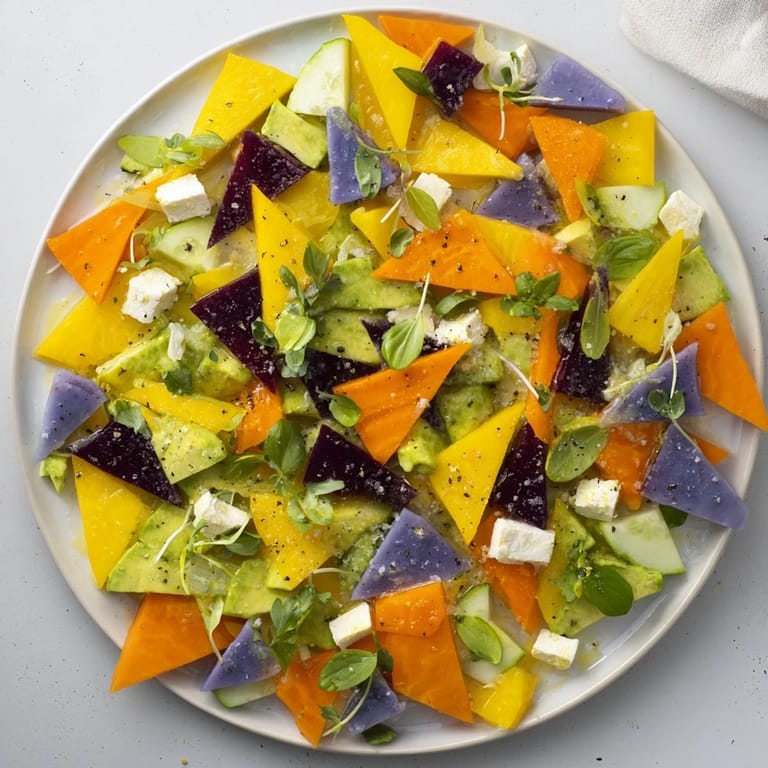
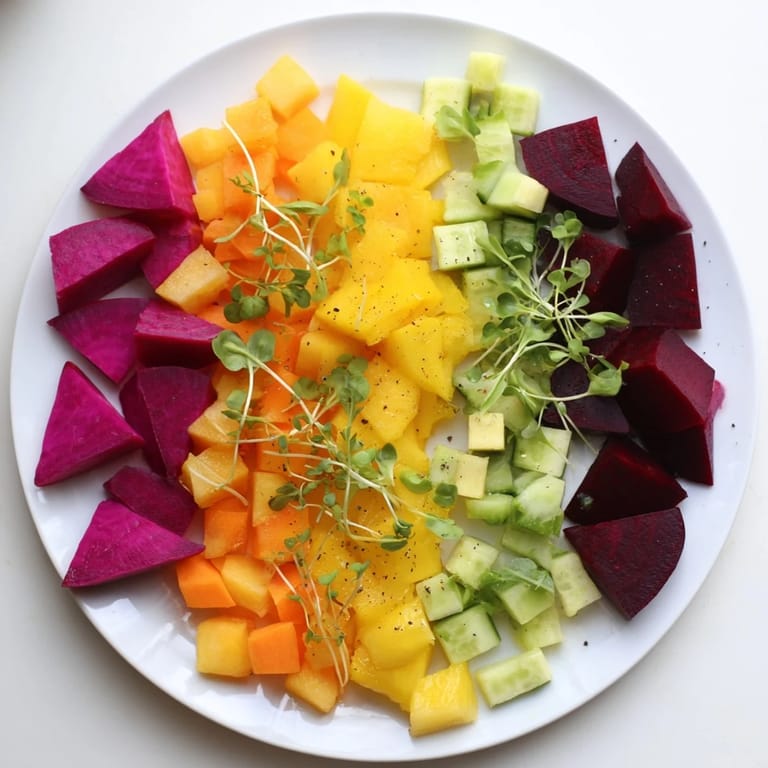
- Lay out all your vegetables in front of you like you're about to perform surgery. Take your sharpest knife—and I mean this—if your knife is dull, stop and sharpen it now. You want clean cuts without crushing the delicate flesh. Start with the cucumber, the most forgiving ingredient. Cut it into triangles, parallelograms, whatever geometric shapes appeal to you. Aim for pieces about 1 cm thick. If you have small cookie cutters, this is where they shine. The goal here is visual interest through variation, not perfection.
- Work through your vegetables systematically:
- Move to the golden beet. Its cooked texture is firmer, which means you have more freedom with angles and shapes. Try cutting parallelograms and irregular polygons. Watch how the light hits each facet differently. The watermelon radish cuts beautifully into any shape because its firm flesh holds the knife cleanly. This is where you might want to show off a little with hexagons or other complex shapes. Don't rush this part—the knife work IS the art.
- Prepare the delicate pieces:
- Peel and slice your mango into geometric shapes. Its softer texture means you'll want slightly thicker pieces, around 1.5 cm, so they don't fall apart. Cut your avocado in half, remove the pit, scoop out clean sections, and then slice into geometric pieces. Work quickly with the avocado and have your lemon juice standing by to brush any exposed surfaces. The avocado pieces are the most fragile, so handle them last and with care.
- Cut your cheese into architectural elements:
- Cut your feta block into cubes, prisms, or any geometric shape that matches your theme. Feta is crumbly by nature, so cut decisive strokes with a sharp, slightly damp knife. Feta pieces should be substantial enough to stand out against the vegetables, roughly 1 cm cubes or slightly larger.
- Assemble your edible mosaic:
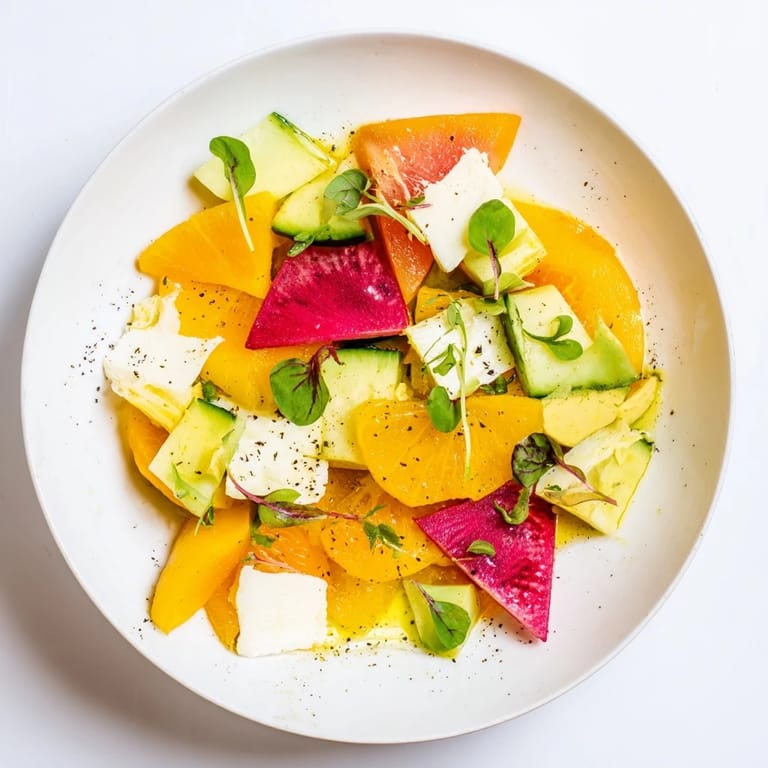
- This is the moment that matters most. Choose a large, flat platter—white ceramic works beautifully but isn't necessary. Arrange all your pieces close together, side by side, without overlapping. Think of it like a puzzle where every color and shape has a purpose. Create a rhythm with colors—don't let all the orange mango pieces cluster together. Distribute the different textures evenly. This should feel intuitive, like you're creating something you want to look at. Step back frequently and view it from different angles. You'll know when it's right because it will draw your eye naturally through the composition.
- Dress and garnish with intention:
- Drizzle your extra virgin olive oil evenly across the entire arrangement in a light, even pattern. Follow immediately with the lemon juice. The liquid should catch the light slightly. Sprinkle flaky sea salt across everything—this is the final seasoning, and the flakes should remain visible and crisp. Crack fresh black pepper generously but not chaotically over the surface. Finally, scatter your microgreens or fresh herbs in clusters. These add color contrast and signal to everyone that this is a finished, intentional dish, not just vegetables on a plate.
- Serve immediately:
- The moment these components touch the liquid is when flavors begin to meld and the presentation begins to soften. If you're serving at a party, assemble everything right before guests arrive. The magic of this dish is partly visual, and that magic fades slightly as it sits. Have cocktail picks nearby for easy tasting, which also serves the practical purpose of preventing people from using their fingers and disrupting your careful arrangement.
 Save
Save My mother tasted this dish at a dinner party and cried. She said it was the first time in years that a meal made her stop and think rather than just eat. That single moment—watching her engage with food as art—reminded me why cooking matters. It's not about the ingredients. It's about creating a moment where people see something differently.
The Philosophy of Plating as Storytelling
Every time you make this dish, you're making a choice about how to tell a story with food. The geometric shapes aren't arbitrary—they represent control, intention, and the idea that beauty can exist in simplicity. The Cubist Deconstruction challenges the assumption that fancy cooking requires elaborate techniques or rare ingredients. Instead, it asks: how can I make something familiar feel completely new? This question drives innovation in every kitchen.
Variations and Substitutions Without Losing the Vision
The most liberating aspect of this recipe is how adaptable it is. The structure remains, but the ingredients can shift with the seasons. In spring, substitute pencil-thin asparagus spears and baby radishes. In fall, add roasted purple carrots, golden beets, and perhaps some crispy root vegetable chips for texture contrast. For a vegan version that's just as stunning, swap the feta for firm tofu cut into geometric prisms—the contrast of white against jewel-toned vegetables becomes even more striking. For a protein-forward version, add seared scallops or thin slices of smoked salmon to the arrangement. Each iteration tells a different story while maintaining the same artistic principle.
Pairing and Presentation Moments
This dish demands a beverage that's equally thoughtful. A crisp Sauvignon Blanc with its grassy notes mirrors the freshness of the vegetables. Alternatively, a light rosé with delicate stone fruit flavors complements the mango beautifully. If you're serving this as a more casual appetizer, prosecco works wonderfully—the bubbles add a festive element. Offer cocktail picks or small forks so guests can easily sample individual pieces without disrupting the visual composition. The presentation isn't just about what's on the plate—it's about creating a moment where everyone pauses, looks, and then tastes with intention.
- Chill your platter in the freezer for 10 minutes before assembling to keep vegetables fresher longer
- If you're serving this at a warm venue, assemble on a bed of ice hidden under a cloth, then place your platter on top
- Have a backup of one or two ingredients ready in case a piece breaks during transport or presentation
 Save
Save This recipe is an invitation to see cooking as something more than sustenance. It's a reminder that we eat with our eyes first, and when you take time to make something beautiful, people taste that intention.
Recipe FAQ
- → What vegetables work best for this appetizer?
Cucumber, golden beet, and watermelon radish provide fresh, crisp textures and vibrant colors that complement the geometric presentation.
- → Can the feta cheese be substituted?
Yes, firm tofu can be used as a dairy-free alternative while maintaining the cubist shape and texture contrast.
- → How should the ingredients be cut?
Slice vegetables and fruit into various geometric shapes like triangles, hexagons, and parallelograms, about 1 cm thick, using a sharp knife or small cutters.
- → What seasoning enhances the flavor?
A simple drizzle of extra virgin olive oil and lemon juice, along with flaky sea salt and cracked black pepper, complements the ingredients without overpowering them.
- → How should the appetizer be served?
Arrange pieces tightly on a flat platter to form a colorful mosaic, garnish with microgreens or fresh herbs, and serve immediately to preserve freshness and sharp lines.
- → Is this dish suitable for gluten-free diets?
Yes, all ingredients used are naturally gluten-free, making this a suitable option for gluten-sensitive individuals.