 Save
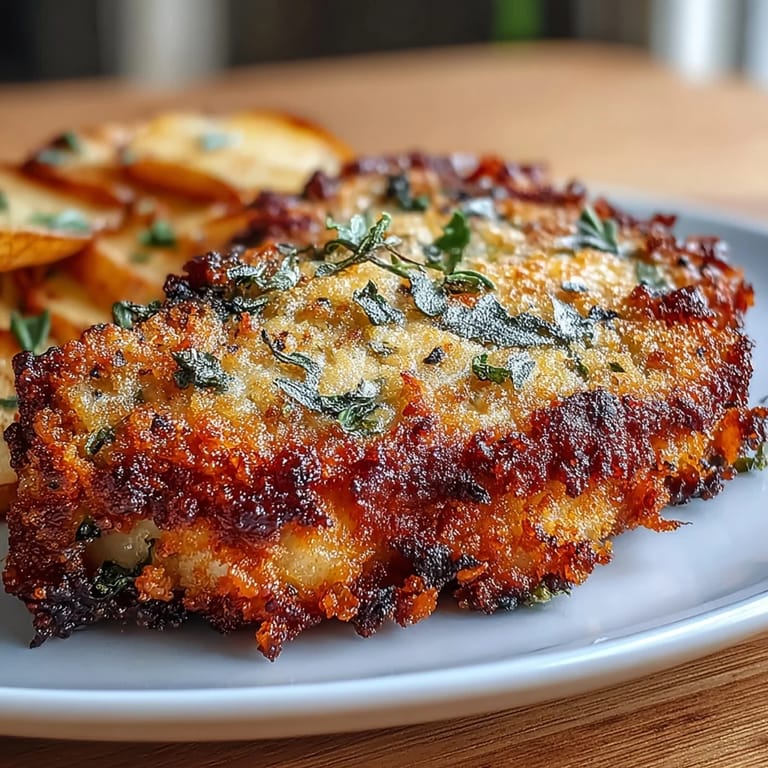
Save The first time the aroma of sage mingled with the faint sweetness of caramelizing apples in my kitchen, I realized that pork chops could be far more exciting than the rushed weeknight suppers I grew up with. There was something unexpectedly showy about dipping chops in a parmesan-rich crust, with the cheese clinging to my fingers and forming a generous layer that crackled in the pan. I didn't intend anything fancy that evening—just a new rotation for dinner—but my housemate wandered in, nose up, and said it "smelled like fall and comfort." That moment convinced me that taking a little extra care with the breading could utterly transform a meal. Sometimes the best magic happens when you follow your curiosity.
I’ll never forget making these chops when my partner’s parents drove in after a long afternoon on the road. I was a little nervous, so I fussed over every detail, but the sight of everyone grinning around the table as the sage-scented steam rose took all the edge off. No awkward silences, just the clink of forks and requests for seconds—a small reminder that good food speaks for itself.
Ingredients
- Boneless pork chops: Choose chops that are at least 1 inch thick—they stay juicy and don’t dry out, even when breaded and baked.
- Grated Parmesan cheese: The cheese is the secret to a flavorful, crispy crust, and I’ve learned that freshly grated melts better than the stuff in the green can.
- Panko breadcrumbs: Panko stays crunchier than regular breadcrumbs and makes the coating light and crisp instead of dense.
- Garlic powder: A subtle savory backbone that doesn’t overpower the apples or sage.
- Black pepper & salt: Use kosher salt if you have it—it helps the seasonings stick and brings out the flavors in the crust.
- Fresh sage: Freshly chopped sage is best for a mellow, woodsy fragrance, but a little dried works too if you rub it between your fingers first to wake up the oils.
- Smoked paprika: I love the faint smokiness, but regular paprika is fine if that’s all you have—just adds color and a touch of depth.
- Eggs and milk: Whisking these together makes everything tacky so the crust won’t flake off during cooking.
- Apple: Tart varieties like Granny Smith or Honeycrisp balance the richness of the pork, and thin slices cook evenly without going mushy.
- Butter: A little butter in the pan lends a glossy finish to the apples and helps with caramelization.
- Olive oil: Use just enough to ensure the crust gets golden and the pan doesn’t scorch.
- Fresh sage leaves & extra Parmesan (garnish): Both optional, but they make everything look and taste extra inviting on the plate.
Tired of Takeout? 🥡
Get 10 meals you can make faster than delivery arrives. Seriously.
One email. No spam. Unsubscribe anytime.
Instructions
- Set up your kitchen:
- Get your oven preheated to 400°F (200°C) and line a baking sheet with parchment or foil for an easy cleanup.
- Mix the crunchy coating:
- Combine the grated Parmesan, panko, spices, and sage in a shallow bowl—use your fingers to break up clumps and blend everything so you get an even crisp on each chop.
- Prepare the wet dip:
- Whisk together the eggs and milk in another bowl until they're fully combined and a bit frothy.
- Bread the pork chops:
- Pat the chops dry with paper towels, dip first in egg, then press into the Parmesan mixture, letting your hands gently pack the coating on for best crunch.
- Brown the chops:
- Heat a large ovenproof skillet with 2 tablespoons olive oil until it sizzles when you flick in a breadcrumb; fry the chops for 2-3 minutes per side until gorgeously golden.
- Bake to perfection:
- Slide the skillet into the oven or transfer the chops to your lined baking sheet, baking 12-15 minutes until they reach 145°F (63°C) in the center.
- Sauté the apples:
- Melt butter with the last spoonful of olive oil in a separate pan over medium heat, then let the apple slices cook until tender, fragrant, and just a little caramelized, stirring so nothing sticks.
- Finish and serve:
- Plate the pork, heap with warm apples, scatter on fresh sage and extra Parmesan if you like, and serve piping hot.
 Save
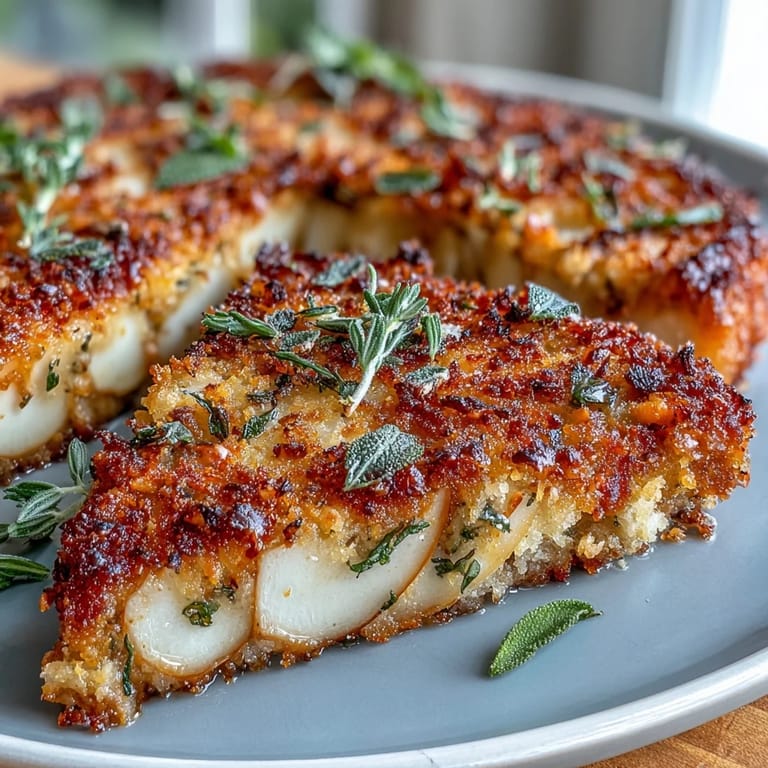
Save The night this recipe got its first real applause was during a casual fall dinner with friends—my playlist was too loud, we spilled a little wine, and laughed between bites as the apples sizzled on the stove. That was the moment I saw how easily a homemade meal could turn an ordinary evening into a mini-event, just by putting a little extra care (and a rind of parmesan) into the mix.
Making the Most of Your Chops
I’ve found that starting with room-temperature chops is the not-so-secret move for tender, evenly cooked meat. Cold pork goes tough or cooks unevenly, while a brief rest on the counter lets the inner juices relax and redistribute. Plus, the crust sticks much better—no unpleasant surprises when you cut in at the table!
Swapping in Other Flavors
If you’re in a creative mood, feel free to swap pears for apples or even try a dusting of rosemary for the sage. Sometimes I’ll use a squeeze of lemon on the apples just before serving for a zippy finish. The beauty of this formula is it adapts to whatever you have and never feels the same two times in a row.
Planning Ahead and Leftover Notes
Cooled leftovers hold up surprisingly well for lunch, especially wrapped in foil and reheated in a toaster oven to revive the crunch. If I know I’ll be busy, I pre-slice the apples and chop the sage so everything comes together in a flash the next day.
- Store leftovers in an airtight container in the fridge for 2 days.
- To keep the crust crispy, reheat in an oven, not the microwave.
- Chop leftover pork for salads or sandwiches—the crust is still delicious cold.
 Save
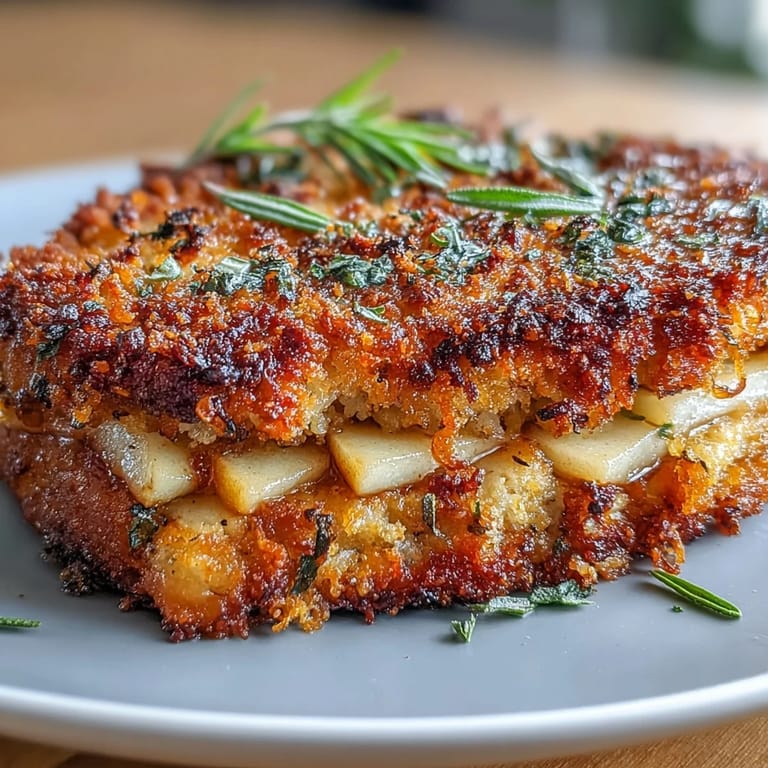
Save If you try these once, they’ll probably nudge their way into your regular dinner rotation. I hope you get to enjoy those little "wow" moments around the table too.
Recipe FAQ
- → How do I ensure the pork chops stay juicy?
Pat the pork chops dry before breading and avoid overcooking by baking until the internal temperature reaches 145°F (63°C). Resting the meat briefly helps retain juices.
- → Can I substitute fresh sage with dried sage?
Yes, dried sage works well in the breading mixture but use half the amount compared to fresh to avoid overpowering the flavors.
- → What type of apple is best for caramelizing?
Granny Smith or Honeycrisp apples hold their shape and offer a balanced tartness that complements the rich pork and parmesan crust.
- → Is it better to pan-sear or bake the pork chops first?
Pan-searing first creates a crispy, golden crust, followed by baking to cook the pork evenly and maintain tenderness.
- → Can I prepare the breading mix in advance?
Yes, mix the parmesan, panko, and spices ahead of time and store in an airtight container to save prep time on cooking day.