 Save
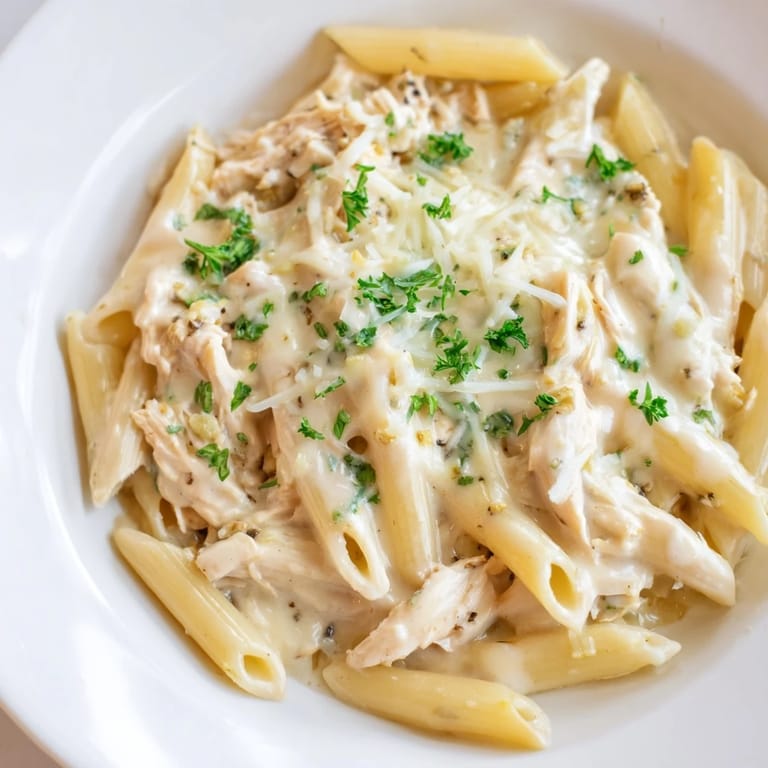
Save There's something about the way cream swirls into a hot pan that makes you pause and just watch for a moment. I discovered this pasta on a quiet Tuesday evening when I had leftover rotisserie chicken and an oddly specific craving for something silky and warming without wanting to fuss too much. Twenty-five minutes later, I was twirling penne on my fork, and it hit me—this is the dish you make when you want to feel like you've done something special, but really you've just let good ingredients do the talking.
I made this for my sister when she came home after a long stretch away, and I remember her taking that first bite and just closing her eyes. We didn't need to talk much that evening—the pasta said everything, warm and generous on the table between us. That's when I realized this dish carries a kind of quiet generosity, the way it wraps around you when you need it most.
Ingredients
- 400g penne pasta: The ridged tubes catch and hold the cream sauce beautifully, so avoid thin spaghetti here—the shape really matters.
- 2 cups cooked shredded chicken: Rotisserie chicken saves time and honestly tastes better than what most of us would roast at home; the convenience isn't cheating, it's smart.
- 2 tbsp unsalted butter and 1 tbsp olive oil: This combination gives you richness from the butter and keeps the sauce from breaking, which is a small trick that makes a real difference.
- 3 cloves garlic and 1 small onion: Mince them fine so they melt into the sauce rather than announcing themselves—you want flavor, not texture.
- 250ml heavy cream: Don't skim on the quality here; the sauce is basically this ingredient showing off, so let it be good.
- 120ml chicken broth: This keeps the sauce from being one-dimensional and prevents it from coating your mouth in a way that's too heavy.
- 60g each Parmesan and mozzarella cheese: Parmesan brings salt and sharpness while mozzarella melts into something almost custard-like; together they're magic.
- ½ tsp dried Italian herbs: Fresh herbs would be beautiful too, but dried works perfectly here and doesn't add another step.
- Salt, pepper, and pasta water: Keep that pasta water nearby—it's your secret weapon if the sauce needs loosening.
Tired of Takeout? 🥡
Get 10 meals you can make faster than delivery arrives. Seriously.
One email. No spam. Unsubscribe anytime.
Instructions
- Start the pasta:
- Bring a large pot of salted water to a rolling boil—you want it aggressive and ready. Add penne and stir occasionally as it cooks until it bends slightly when you bite it but still has resistance in the center, which usually takes about 9-11 minutes depending on the brand. Drain it through a colander but keep that cooking water; it's liquid gold for later.
- Build the flavor base:
- Heat butter and olive oil together in a large skillet over medium heat, listening for that gentle sizzle. Add finely chopped onion and let it soften and turn translucent, stirring every minute or so, which usually takes 2-3 minutes—you're not browning it, just coaxing out sweetness.
- Wake up the garlic:
- Add minced garlic and cook for just about 60 seconds until the smell hits you and becomes almost floral; any longer and it turns bitter, which would be a shame.
- Deglaze with broth:
- Pour in chicken broth and use a wooden spoon to scrape up any flavorful bits stuck to the bottom of the pan. Let it simmer for a couple of minutes so those flavors concentrate and marry together.
- Add the cream carefully:
- Reduce heat to low, then pour in heavy cream slowly while stirring constantly—this prevents any chance of curdling or breaking. The sauce should look like it's embracing itself as everything combines.
- Melt the cheeses:
- Add grated Parmesan and shredded mozzarella, stirring constantly until they've completely melted and the sauce becomes glossy and smooth. It'll look like something you couldn't possibly make at home, and then you realize you just did.
- Season and combine:
- Sprinkle in Italian herbs, then taste and adjust salt and pepper—remember the pasta and cheese are both salty, so go gently. Add shredded chicken and cooked penne, tossing everything together until every strand and piece is coated in that silky sauce.
- Finish and serve:
- If the sauce clings too tightly to the pasta, add a splash of reserved pasta water and toss again; you're looking for sauce that clings but still flows a little. Serve right away while everything is hot, topped with fresh parsley and extra Parmesan.
 Save
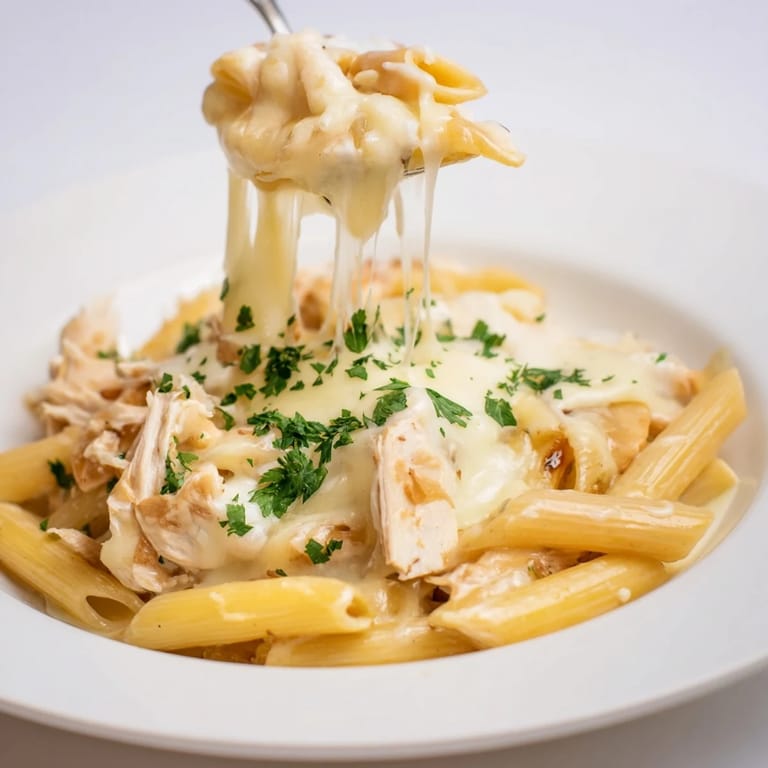
Save There's a moment right before you plate this dish when the kitchen smells like garlic and butter and cream, and you know you've created something good. It's not fancy or complicated, but it's the kind of meal that stays with people because it feels both indulgent and honest at the same time.
Why This Pasta Works as Comfort Food
Cream sauces get dismissed sometimes as heavy or old-fashioned, but there's a reason they've stuck around—they wrap around you like a warm blanket. This particular sauce doesn't try to be anything other than what it is: rich, garlicky, and absolutely devoted to coating every piece of pasta. The two cheeses make it feel luxurious without tasting artificial, and the chicken broth keeps it from becoming one-dimensional, which is the mark of a sauce that's actually been thought through. Making this dish reminds me that sometimes the most satisfying meals are the ones that embrace butter and cream without apology.
How to Adjust This for Your Kitchen
The beautiful thing about this recipe is how forgiving it is to customization without losing its soul. You can absolutely swap heavy cream for half-and-half if you want something lighter, though you'll notice the sauce becomes a little less luxurious and clingy—it's still delicious, just different. Fresh spinach stirred in at the end becomes almost creamy itself, while sun-dried tomatoes add a subtle sweetness and tang that wakes everything up. Red pepper flakes are my personal addition, adding just enough heat to make you notice, and they pair surprisingly well with the garlic and cheese. The key is not overthinking it; this sauce is sturdy enough to handle these additions without falling apart.
Wine and Table Tips
Pairing this with something to drink is worth a moment of thought, because the creaminess really sings when you have something crisp cutting through it. Pinot Grigio is the obvious choice and absolutely works, but honestly any dry white wine with good acidity will do the job beautifully. On the plate, I've learned to leave a little space—this sauce is rich, and you want room to breathe between bites rather than piling it high. Serve it in wide, shallow bowls if you have them, because they let the sauce pool around the pasta in a way that feels intentional and beautiful.
- Grate your Parmesan fresh if possible; the pre-grated versions have anti-caking agents that make the sauce slightly less smooth.
- Warm your bowls under hot water right before serving so the pasta stays hot longer and the cream sauce keeps its silky consistency.
- Don't let it sit once plated—this dish is best eaten immediately while everything is still steaming.
 Save
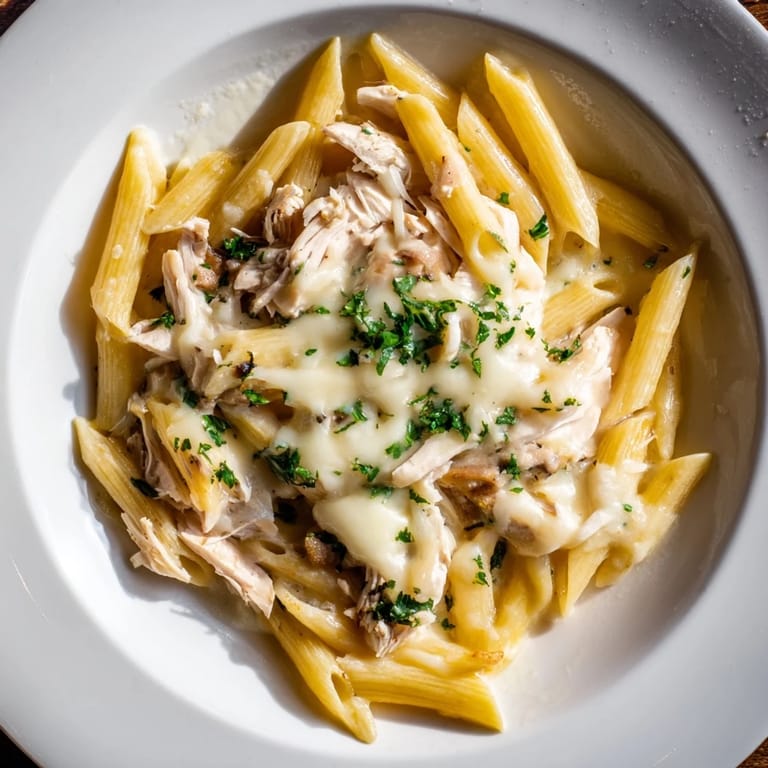
Save This is the kind of recipe that sits quietly in your back pocket until you need it, and then you make it and remember why you loved it in the first place. It asks so little of you and gives back so much.
Recipe FAQ
- → How can I prevent the sauce from splitting?
Make sure to cook the sauce over low heat once cream is added, and stir continuously. Adding reserved pasta water gradually can help maintain a smooth texture.
- → Can I use a different pasta shape?
Yes, any short pasta like fusilli or rigatoni works well, as they hold the creamy sauce nicely.
- → What can I add for extra flavor?
Incorporate red pepper flakes for heat, or mix in spinach or sun-dried tomatoes to enhance the dish's complexity.
- → Is using rotisserie chicken better than homemade?
Rotisserie chicken offers convenience and flavor, but freshly cooked shredded chicken provides control over seasoning and texture.
- → How do I make the dish lighter?
Substitute heavy cream with half-and-half and reduce the amount of cheese slightly for a lighter version without sacrificing creaminess.