 Save
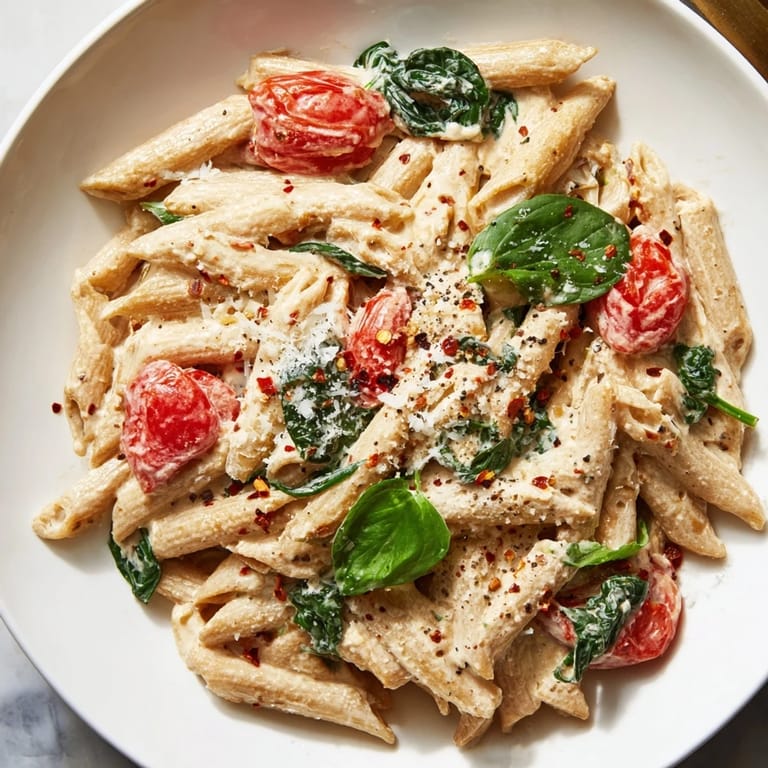
Save I discovered this pasta quite by accident one Thursday evening when I opened my fridge to find a tub of cottage cheese staring back at me—expiration date looming—and absolutely nothing else that felt dinner-worthy. My first instinct was to toss it, but something made me wonder: what if I blended it instead of eating it plain? Twenty minutes later, I was twirling silky, protein-packed noodles and realizing I'd stumbled onto something genuinely special. It's become one of those dishes I make when I want something nourishing without the fuss, or when I'm feeding people who don't realize they're eating something this good for them.
I made this for my roommate on a night when she was stressed about an exam, and watching her face as she realized the creamy sauce wasn't heavy cream or butter was worth more than any compliment. She asked for the recipe immediately, and now it's in her regular rotation too. There's something about serving someone a dish that's both comforting and actually good for them that feels like a small act of care.
Ingredients
- Whole wheat or regular pasta (12 oz): The vehicle that holds everything together; use whatever shape you love, though I find that curly shapes like fusilli trap the sauce beautifully.
- Low-fat cottage cheese (1 1/2 cups): This is your secret weapon—blended smooth, it becomes something entirely different from what you'd eat with fruit, almost like ricotta's more protein-forward cousin.
- Milk (1/2 cup): Thinning the sauce to the right silky consistency; dairy or plant-based both work, though oat milk adds a subtle sweetness I've grown fond of.
- Parmesan cheese (1/4 cup): The umami anchor that makes you wonder what just happened to your taste buds.
- Garlic (2 cloves): Two cloves is the right amount—enough to whisper rather than shout, letting other flavors breathe.
- Extra-virgin olive oil (2 tbsp): A small amount goes a long way toward making the sauce feel luxurious rather than austere.
- Salt and pepper: Season as you taste, not just as the recipe says, because every blender behaves differently.
- Red pepper flakes (pinch, optional): A gentle heat that creeps in at the end if you choose to invite it.
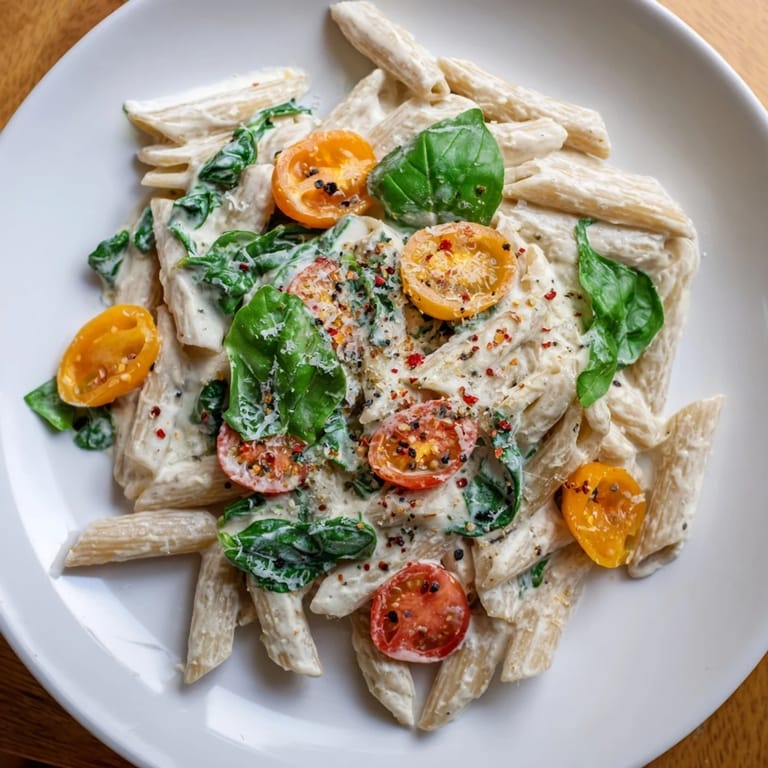
- Baby spinach (2 cups, optional): Wilts down to almost nothing but adds color and a nutritional bump without changing the flavor profile.
- Cherry tomatoes (1/2 cup, halved, optional): A burst of brightness that cuts through the richness, though the dish is equally lovely without them.
- Fresh basil and extra Parmesan for finishing: These final touches wake everything up and make it feel intentional rather than hurried.
Tired of Takeout? 🥡
Get 10 meals you can make faster than delivery arrives. Seriously.
One email. No spam. Unsubscribe anytime.
Instructions
- Get the water boiling:
- Fill a large pot with salted water and bring it to a rolling boil—the water should taste like the sea, which seems excessive until you taste it in the pasta. While you wait, use this time to prep everything else, so there's no scrambling once things start moving fast.
- Cook the pasta:
- Add your pasta and stir occasionally so nothing sticks. Fish out a piece a minute before the package says it's done and taste it; you're looking for that tender-but-still-has-a-tiny-bit-of-resistance feel. Before you drain, scoop out about half a cup of that starchy cooking water and set it aside—you'll thank yourself in a moment.
- Make the magic sauce:
- While the pasta does its thing, add the cottage cheese, milk, Parmesan, garlic, olive oil, salt, pepper, and red pepper flakes if using to your blender or food processor. Blend until completely smooth; this might take longer than you think, so be patient and scrape the sides if needed. The transformation from chunky and suspicious-looking to silky and luxurious is genuinely satisfying to watch.
- Bring it all together:
- Return your drained pasta to the pot over the gentlest heat. Pour in that sauce and start tossing, adding splashes of reserved pasta water as you go until you reach your ideal consistency—it should coat every strand without being pooling liquid at the bottom. This is where the starch in the water becomes your friend, creating something glossy.
- Add the vegetables:
- Toss in the spinach and tomatoes, if using, and cook just until the spinach softens and the tomatoes warm through, which takes about a minute or two. You're not trying to cook these into submission, just wake them up.
- Plate and finish:
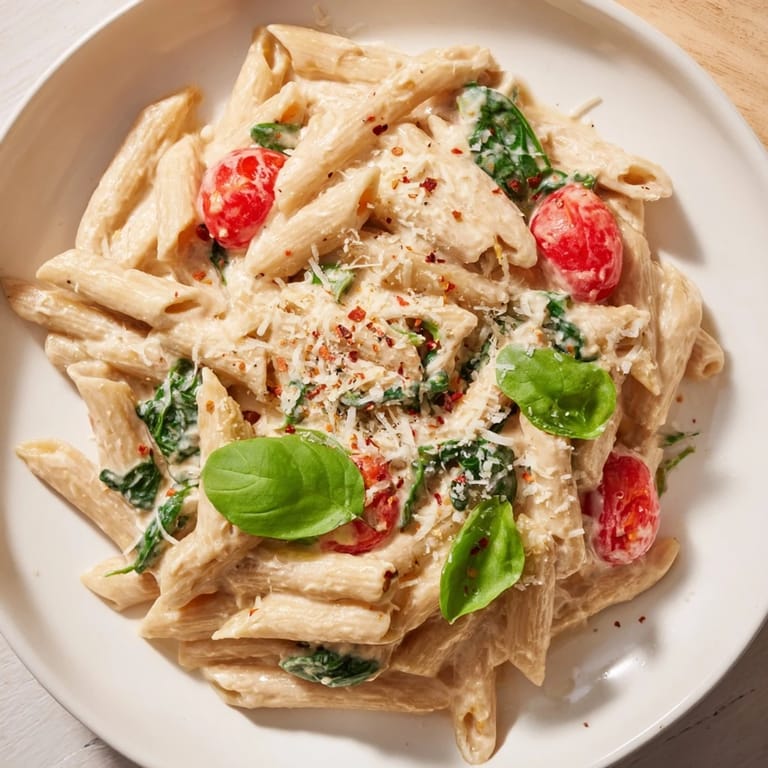
- Transfer to bowls while everything's still hot, scatter fresh basil and a bit more Parmesan over the top, and serve before anyone asks if you're sure there's no cream in this.
 Save
Save The moment that made this recipe stick for me was when my nephew, who's never eaten cottage cheese willingly, asked for seconds without realizing what was in the sauce. His mom and I exchanged a look that said everything—sometimes the best dishes are the ones that work their magic quietly, with no pretense.
Flavor Combinations That Work
This sauce is oddly flexible despite how simple it is. I've stirred in sautéed mushrooms and fresh thyme on a quiet Sunday, which made it feel almost earthy and sophisticated. Another time, I added roasted red peppers from a jar and a pinch of smoked paprika, and suddenly it tasted like something entirely different—still creamy, still gentle, but with a whisper of something deeper. The beauty is that cottage cheese acts like a blank canvas, ready to play nicely with almost any vegetable, herb, or subtle spice you want to introduce. You could fold in pine nuts and sun-dried tomatoes, or keep it minimal with just garlic and fresh herbs. The sauce holds its own no matter what direction you take it.
Why This Works as Comfort Food
There's something about a creamy pasta that feels indulgent, even when it's made from cottage cheese and practically whispers nutrition. It satisfies that deep craving for something warm and enveloping without the heaviness that cream-based sauces sometimes leave behind. The high protein content means you actually feel full afterward, not just temporarily satisfied, which changes everything about how you feel an hour later. It's the kind of dish that works equally well when you're cooking for yourself on a quiet night or when you're feeding a group and want to feel like you've done something special without turning your kitchen into a disaster zone.
Smart Variations and Add-Ons
Once you understand how this sauce works, you can build around it endlessly. Stir in cooked chicken breast or crispy tofu if you want even more protein stacked on top of what's already there. Swap the spinach for arugula, kale, or even peas depending on the season and what you're craving. The sauce behaves beautifully with almost any vegetable, so treat this as a starting point rather than a strict blueprint. I've added roasted broccoli, sautéed zucchini, and even caramelized onions on nights when I wanted something heartier. The pasta water ratio is your real friend here—adding it gradually means you're never more than a splash away from the exact consistency you want.
- Try garlic-infused olive oil if you want to increase the garlic flavor without adding more cloves to the blender.
- Finish with a crack of fresh black pepper and a tiny sprinkle of sea salt right before serving, tasting as you go.
- This keeps well in the refrigerator for a couple of days, though it's best eaten the same day you make it.
 Save
Save This pasta has quietly become one of those dishes that appears on my table more often than I expected, and I think it's because it asks so little while giving so much. It's the kind of meal that feeds both your body and your need for something comforting, all in the time it takes to boil water.