 Save
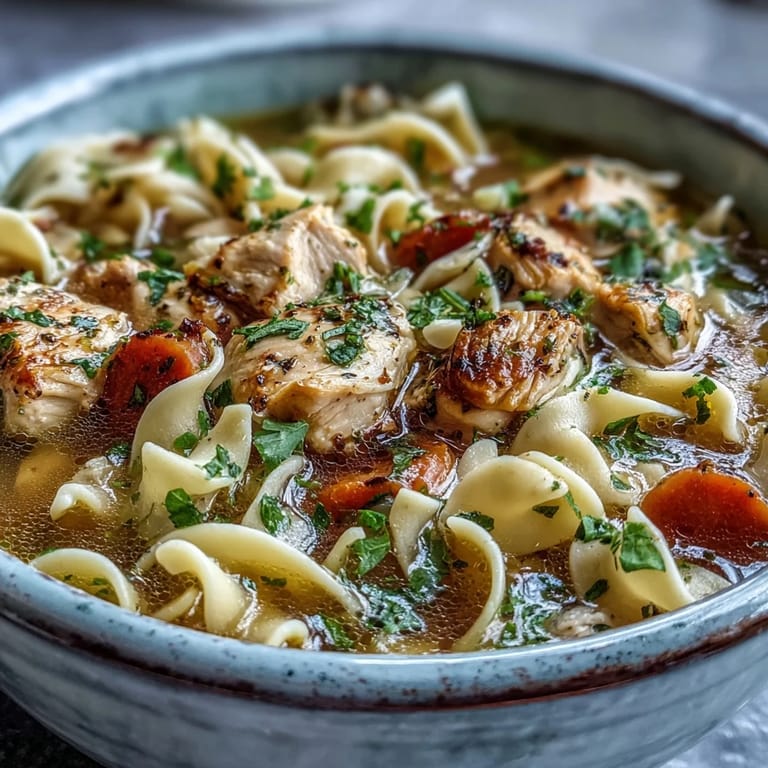
Save My neighbor knocked on the door one February afternoon with snow still clinging to her boots, asking if I had anything warm on the stove. I didn't, but watching her shiver gave me an idea—within minutes, I had chicken sizzling in a pot and the whole kitchen smelling like home. That soup became our standing joke: the one she'd text about when the weather turned cold, as if I'd promised to have it ready. It's not fancy or complicated, but there's something about a bowl of this that makes everything feel manageable again.
The first time I made this for my daughter's book club, I almost burned the garlic while trying to remember everyone's names. One of her friends came into the kitchen, saw the steam rising, and said it smelled like her grandmother's kitchen—and suddenly I understood that this recipe isn't about impressing anyone, it's about creating a moment where people feel welcomed and cared for.
Ingredients
- Chicken breasts: Boneless and skinless makes this quick, but bone-in thighs would give you deeper flavor if you have the extra time to shred them afterward.
- Onion, carrots, and celery: This trio is called mirepoix for a reason—they're the foundation that makes even simple broth taste like it knows what it's doing.
- Garlic: Two cloves keeps it subtle; if you're a garlic devotee like some people I know, add a third without guilt.
- Chicken broth: Low-sodium is key here because you're controlling the salt level yourself, and it prevents that canned, overly salty aftertaste that can ruin an otherwise perfect bowl.
- Egg noodles: The humble star of this show—they absorb the broth like little flavor sponges and give the soup its actual substance.
- Bay leaf, thyme, and parsley: These dried herbs are workhorses; fresh would be prettier but won't change the soul of the soup.
- Olive oil: Use the kind you'd actually eat plain, not the expensive stuff you're saving, but not the cheapest either.
Tired of Takeout? 🥡
Get 10 meals you can make faster than delivery arrives. Seriously.
One email. No spam. Unsubscribe anytime.
Instructions
- Sauté the vegetables:
- Heat olive oil in your largest pot over medium heat and add the onion, carrots, and celery. You want them soft and starting to turn golden at the edges—listen for that gentle sizzle and don't rush this part, as these five minutes are building your foundation.
- Wake up the garlic:
- Stir in the minced garlic and let it perfume the pot for exactly one minute; any longer and it turns bitter and regretful.
- Cook the chicken:
- Add the diced chicken and stir it constantly for three to four minutes until the outside loses its pink blush. You're not fully cooking it here—just getting it started so it finishes gently in the broth.
- Build the broth:
- Pour in all that chicken broth and add your bay leaf, thyme, parsley, salt, and pepper. Bring it to a gentle boil and let the smell fill your kitchen like an apology and a promise at the same time.
- Simmer and infuse:
- Turn the heat down and let everything bubble softly for ten minutes—this is when the flavors get to know each other and become something greater than their individual selves.
- Add the noodles:
- Stir in the egg noodles and simmer for eight to ten minutes, stirring occasionally so they don't stick together. This is the moment to step away, breathe, and let the pot do its thing.
- Finish and taste:
- Fish out that bay leaf, take a spoon, and actually taste it—this is your chance to whisper in a little more salt or pepper if it needs encouragement.
- Serve with intention:
- Ladle into bowls, finish with a sprinkle of fresh parsley, and hand it to someone who needs it.
 Save
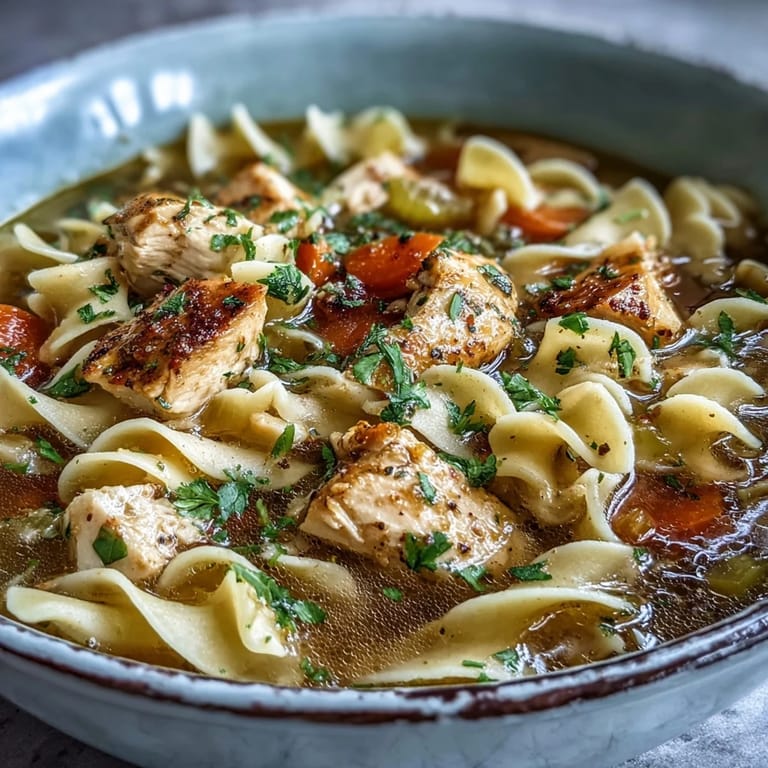
Save There's a photograph on my phone of my son holding a bowl of this soup, grinning because he was sick and I'd promised him my version would fix it. It didn't cure the cold, obviously, but something about being handed something made with that kind of attention shifted everything for him. I think that's what this soup actually does—it listens, and then it answers.
The Secret to Silky Broth
The real magic happens when you resist the urge to boil everything aggressively. A gentle, steady simmer extracts flavor from those vegetables and herbs without turning the broth cloudy or tough. Once I understood that patience made better soup than heat and hurry, everything changed.
Customizing Without Losing Your Way
This recipe is forgiving enough to bend without breaking. I've added frozen peas, swapped in diced potatoes, thrown in spinach at the very end, and even cracked in an egg for richness. The bones of the recipe stay the same—vegetables, chicken, broth, noodles—and the spirit stays intact no matter what improvisation you layer on top.
Making It Your Own
Some mornings I make this with extra garlic and a squeeze of lemon juice because that's what tastes right that day. Other times I simmer bone-in chicken for the deeper notes and shred it, turning it into something my grandmother might recognize. The point isn't to follow me exactly—it's to follow your instincts and let the soup taste like your kitchen, your choices, your story.
- A splash of fresh lemon juice stirred in at the end brightens everything without making it taste sour.
- Keep the bay leaf visible so you remember to remove it—forgetting it is embarrassing and easy to do when you're distracted.
- This freezes beautifully for up to three months, though add fresh noodles when you reheat it so they don't turn to paste.
 Save
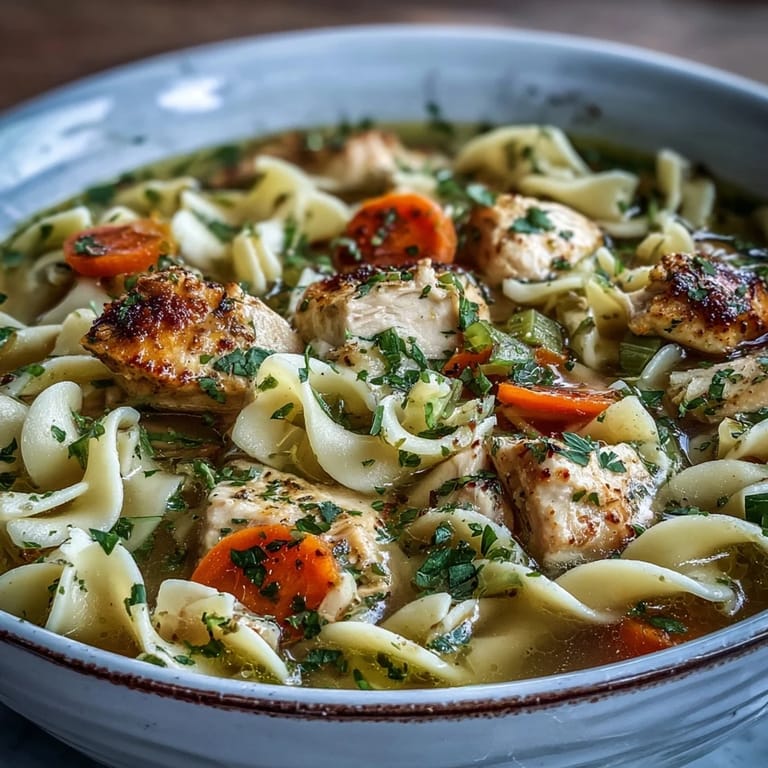
Save This soup has become the thing I make when I don't know what else to do, which turns out to be exactly when it's most needed. I hope it does the same for you.
Recipe FAQ
- → How long does it take to make?
From start to finish, this takes about 40 minutes total. Preparation requires 15 minutes, followed by 25 minutes of cooking time.
- → Can I use rotisserie chicken instead?
Absolutely. Shredded rotisserie chicken works well—just add it during the last 5 minutes of simmering to warm through without overcooking.
- → What noodles work best?
Egg noodles are traditional, but you can substitute with pasta shells, fusilli, or gluten-free alternatives depending on dietary needs.
- → How should I store leftovers?
Keep in an airtight container in the refrigerator for up to 4 days. The noodles may absorb more liquid as they sit—just add a splash of broth when reheating.
- → Can I freeze this soup?
Yes, though it's best to freeze without the noodles. Cook and add fresh noodles when reheating for better texture.