 Save
Save There's a particular kind of quiet satisfaction that comes from that moment when a chicken cutlet hits hot oil and the kitchen suddenly fills with the most incredible aroma. I discovered chicken katsu on an ordinary weeknight when I was craving something that felt both comforting and a little bit special, and it's been a go-to ever since. The beauty of this dish is how it transforms simple pantry staples into something that tastes like you've spent hours in the kitchen, even though it takes less time than ordering takeout. That golden, crackling crust gives way to impossibly tender chicken inside, and the tangy tonkatsu sauce ties everything together in the most satisfying way.
I made this for my sister during a spontaneous dinner visit, and watching her cut into that golden crust, seeing the steam rise up, and hearing her say it tasted better than the katsu place down the street made the whole thing worth it. She started asking me to make it regularly after that, which is maybe the highest compliment a home cook can get.
Ingredients
- Boneless, skinless chicken breasts: Four breasts at about 150 grams each give you the perfect size for pounding to an even thickness, which is the secret to even cooking and that satisfying bite.
- All-purpose flour: This is your foundation layer and helps the egg wash stick properly to the meat.
- Eggs: Two large eggs beaten with a tablespoon of water become your adhesive, creating the perfect medium for the panko to cling to.
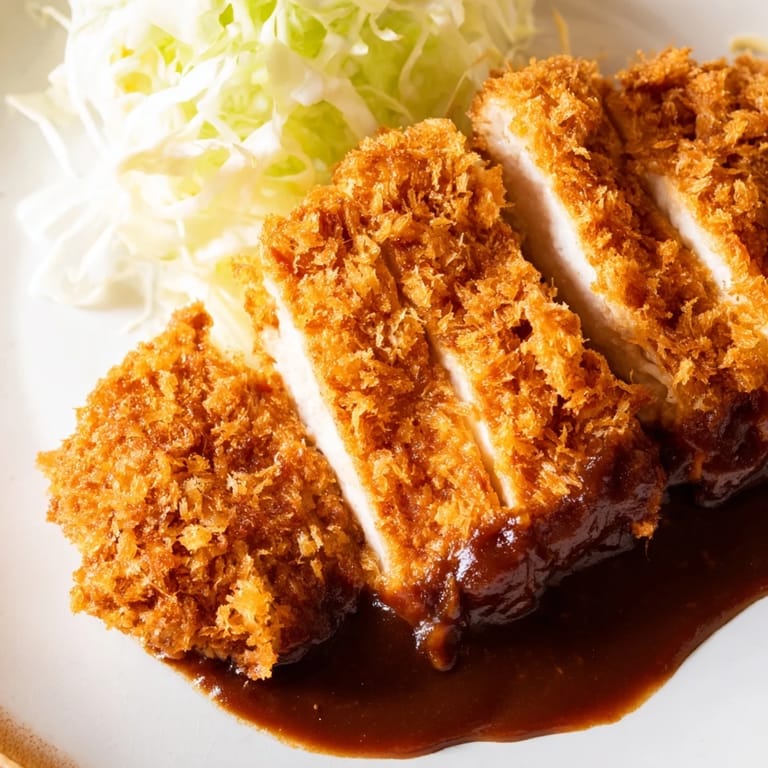
- Panko breadcrumbs: The larger, airier structure of panko is what gives you that distinctive crackle and light, crispy texture that regular breadcrumbs just can't match.
- Vegetable oil: A full cup allows for shallow frying that cooks the chicken evenly and gives you that gorgeous golden-brown exterior.
- Ketchup: The base of your tonkatsu sauce, bringing sweetness and a familiar umami note.
- Worcestershire sauce: This adds depth and a subtle savory tang that makes people wonder what the secret ingredient is.
- Soy sauce: A splash brings saltiness and additional umami that ties the whole sauce together.
- Mirin: This Japanese sweet rice wine adds gloss and a delicate sweetness, though honey works in a pinch if you don't have it on hand.
- Dijon mustard: Just a teaspoon adds complexity and prevents the sauce from tasting one-dimensional.
- Sugar: Balances the savory elements and helps the sauce come together as a cohesive flavor.
Tired of Takeout? 🥡
Get 10 meals you can make faster than delivery arrives. Seriously.
One email. No spam. Unsubscribe anytime.
Instructions
- Pound the chicken to even thickness:
- Place each breast between two sheets of plastic wrap and pound gently with a meat mallet or rolling pin until it's about half an inch thick throughout. This matters because uneven chicken cooks unevenly, and you want that tender center alongside the crispy crust.
- Season your cutlets:
- Sprinkle both sides with salt and pepper right after pounding, so the seasoning has a moment to start permeating the meat.
- Build your breading station:
- Three shallow dishes lined up in order: flour in the first, beaten eggs with a tablespoon of water in the second, and panko breadcrumbs in the third. Having everything ready means you can work quickly and your hands won't get too sticky.
- Bread each cutlet carefully:
- Dredge in flour, shake off excess, dip in egg wash, then press firmly into panko breadcrumbs on both sides, letting the coating really adhere to the surface. This is where patience pays off with a thicker, crunchier crust.
- Rest the breaded cutlets:
- Let them sit for ten minutes if you have the time before frying, which helps the coating set and get even crispier. If you're in a hurry, you can go straight to frying, but the rest really does make a difference.
- Heat your oil to the right temperature:
- You want it shimmering and just barely smoking at around 340 to 350 Fahrenheit, which takes about five minutes in a large skillet over medium heat. Test it by dropping a single breadcrumb into the oil; if it sizzles immediately, you're ready.
- Fry with confidence:
- Place cutlets in the pan and resist the urge to move them around; let them sit for three to four minutes per side until the crust turns a deep golden brown and the meat is cooked through. You'll know it's done when the juices run clear if you cut into a thicker part, or a meat thermometer reads 165 Fahrenheit.
- Drain on a wire rack:
- Transfer to a wire rack or paper towel-lined plate immediately, which keeps the bottom from getting soggy as it cools.
- Whisk your tonkatsu sauce:
- Combine ketchup, Worcestershire, soy sauce, mirin, mustard, and sugar in a small bowl, whisking until completely smooth and glossy. Taste it and adjust; if it's too sweet, add more Worcestershire, or if it's too savory, a touch more ketchup balances it.
- Plate and serve:
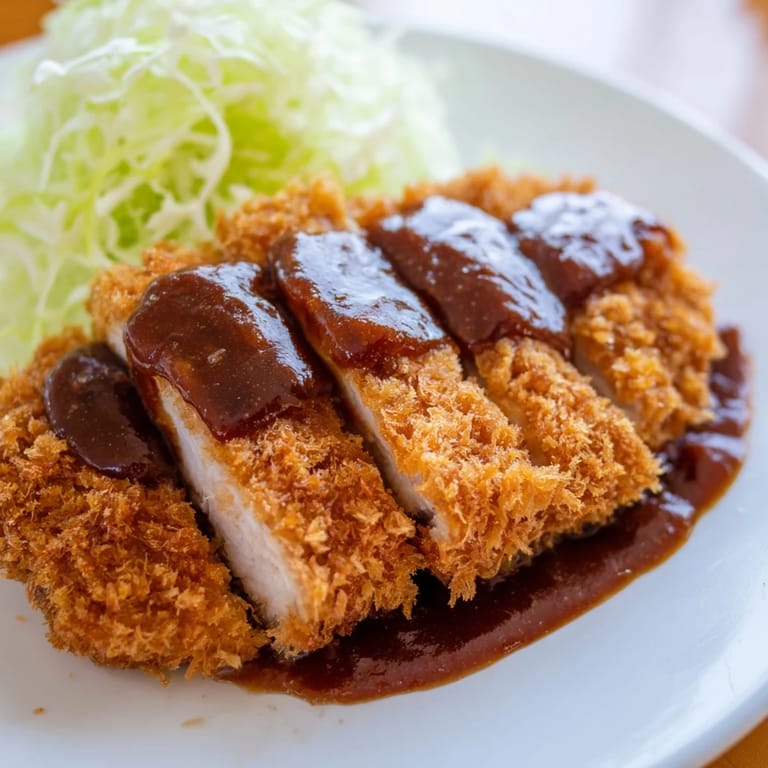
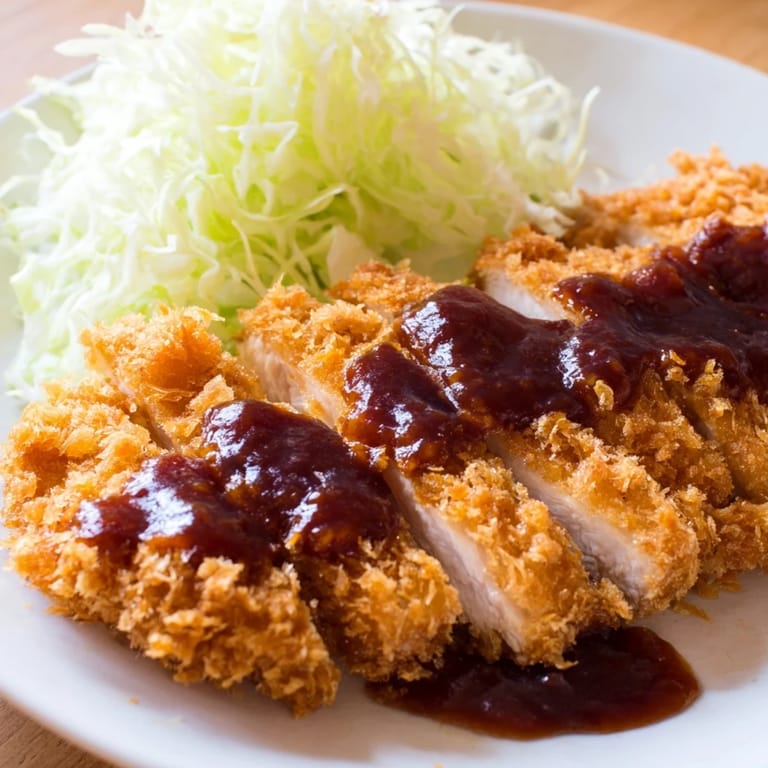
- Slice the chicken katsu into strips if you'd like, arrange on a plate with shredded cabbage, lemon wedges, steamed rice, and a generous pour of that gorgeous tonkatsu sauce alongside.
 Save
Save There's something almost meditative about the ritual of breading and frying, the way your hands develop a rhythm, and how the kitchen transforms with that first batch of golden cutlets. It's one of those dishes that makes cooking feel like both an art and a moment of genuine presence.
The Tonkatsu Sauce Secret
The tonkatsu sauce is what elevates this from a simple fried chicken cutlet into something memorable, and the balance matters. I've learned that tasting as you go is essential; everyone's condiments are slightly different, so your ketchup might be sweeter or your Worcestershire more assertive than mine. The Dijon mustard is the magic component that most people don't expect, but it's what keeps everything from tasting flat or one-note.
Serving and Pairing Ideas
Shredded cabbage isn't just a side dish; it's a textural contrast that keeps every bite interesting and a little acidic from the rice vinegar often mixed through it. Fresh lemon wedges let people squeeze their own brightness onto the plate, and steamed rice soaks up the sauce beautifully. I've served this for casual weeknight dinners and for slightly fancier occasions by plating everything more deliberately, and it works equally well in both contexts.
Making It Your Own
Once you master the basic technique, you can experiment with the sauce or the protein without losing what makes this dish work. Pork cutlets follow the exact same method and are actually traditional in Japan, giving you a slightly different flavor profile that's just as delicious. The technique itself is incredibly adaptable, and I've used this same breading and frying method for fish, eggplant, and even tofu with great results.
- Make a spicy version by adding sriracha or chili oil to your tonkatsu sauce.
- Try adding a teaspoon of rice vinegar to the sauce for extra brightness and tang.
- If you have panko at home but no patience, this works with regular breadcrumbs, though the texture won't be quite as extraordinary.
 Save
Save This is the kind of dish that tastes like it took tremendous effort but actually asked very little of you, which is maybe the best kind of cooking there is. It's become one of those recipes I turn to when I want to feel like I've made something special without the complicated techniques or long ingredient lists.
Recipe FAQ
- → What is the best way to ensure a crispy crust?
Let the breaded chicken rest for about 10 minutes before frying. This helps the coating adhere better and develop a crunchier texture.
- → Can I substitute the chicken breasts with another cut?
Yes, pork cutlets can be used as a traditional alternative, yielding similar results when breaded and fried.
- → What oil is recommended for frying?
Vegetable oil is ideal for shallow frying because it withstands medium heat well and delivers even browning.
- → How do I make the tangy sauce?
Combine ketchup, Worcestershire sauce, soy sauce, mirin (or honey), Dijon mustard, and sugar. Whisk until smooth to create the sauce.
- → Is there a suggested side to balance the dish?
Shredded cabbage, lemon wedges, and steamed rice all complement the flavors and add refreshing or neutral notes to the dish.