 Save
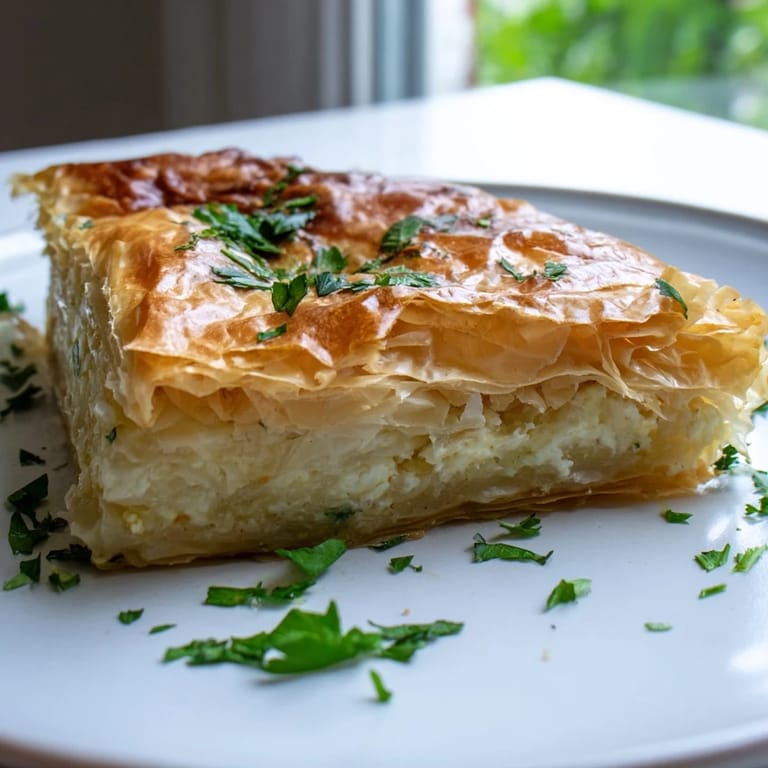
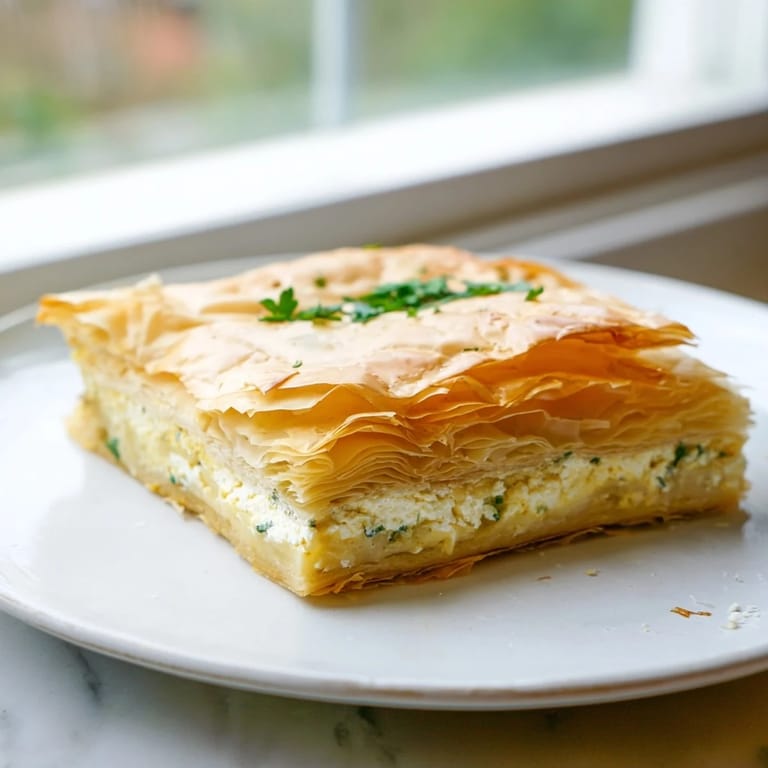
Save The first time I watched my grandmother pull a golden banitsa from her kitchen oven, I understood why this dish holds such a place in Bulgarian hearts. The phyllo crackled under her fork, releasing a wisp of steam that carried the scent of melted butter and salty feta straight into the morning. She'd been making it the same way for decades, yet she treated each layer with the care of someone discovering the recipe for the first time. That's when I realized banitsa isn't just pastry—it's a conversation between patience and heat, between ancient technique and humble ingredients.
I learned this recipe properly during a chaotic family gathering where my cousin insisted on helping, asking questions about every single step while my aunt laughed from the sidelines. By the time we pulled it from the oven, the three of us were covered in butter and phyllo crumbs, but the banitsa emerged so perfectly golden that even my notoriously critical uncle asked for seconds without his usual commentary. That's when I knew I'd finally nailed it.
Ingredients
- Feta cheese, crumbled (400 g): The soul of banitsa—use the saltiest, crumbliest feta you can find, because the yogurt and eggs will mellow it out.
- Plain yogurt (250 ml): This isn't just a binder; it adds that distinctive tang that makes people pause and ask what's different about your version.
- Eggs (4 large): They transform the filling from dry crumbles into something creamy and luxurious as it bakes.
- Whole milk (50 ml): A small amount keeps the filling from setting up too dense.
- Unsalted butter, melted (60 g): Each sheet of phyllo needs just a whisper of butter—too much and it becomes greasy, too little and it shatters instead of crisps.
- Phyllo dough (about 400 g): Thaw it completely at room temperature; frozen phyllo will crack and tear, and that's a frustration you don't need.
- Salt (1/2 tsp) and freshly ground black pepper (1/4 tsp): Season lightly—the feta brings plenty of salt on its own.
Tired of Takeout? 🥡
Get 10 meals you can make faster than delivery arrives. Seriously.
One email. No spam. Unsubscribe anytime.
Instructions
- Set up your space:
- Preheat the oven to 180°C (350°F) and lightly butter a 23 x 33 cm baking dish. Having everything ready before you touch the phyllo is the difference between calm and chaos.
- Build the filling:
- Whisk together the eggs, yogurt, milk, salt, and pepper until completely smooth, then gently fold in the crumbled feta so you don't crush it further. The mixture should look almost creamy, dotted with flecks of cheese.
- Protect your phyllo:
- Unroll the dough and immediately drape a barely damp towel over it—phyllo dries out faster than you'd think. Work with one sheet at a time and keep the rest covered.
- Layer the base:
- Lay one phyllo sheet in the baking dish and brush it lightly with melted butter using gentle, sweeping strokes. Repeat with three more sheets, buttering each one, until you have a sturdy base.
- Add the first filling layer:
- Spread about one-quarter of the cheese-egg mixture evenly over the phyllo base, leaving just a tiny edge around the borders. Resist the urge to pack it down.
- Continue the layers:
- Top with 3–4 more phyllo sheets, buttering each, then spread another portion of filling. Keep repeating this rhythm—phyllo, butter, filling, phyllo, butter, filling—until the filling is gone.
- Finish with a crown:
- Top everything with 3–4 final phyllo sheets, buttering each one generously. This is the face of your banitsa, so make it count.
- Cut and add final butter:
- Using a sharp knife, cut the assembled banitsa into squares or diamonds in a deliberate pattern. Pour any remaining melted butter evenly over the top so every piece has a chance to turn golden.
- Bake until magic happens:
- Bake for 30–35 minutes until the top is a deep golden brown and you can hear the phyllo crackling when you move it. The kitchen will smell incredible.
- Rest and serve:
- Let it cool for 10 minutes—this resting period lets everything set just enough so it doesn't fall apart when you lift a piece. Serve warm or at room temperature with whatever you're drinking.
 Save
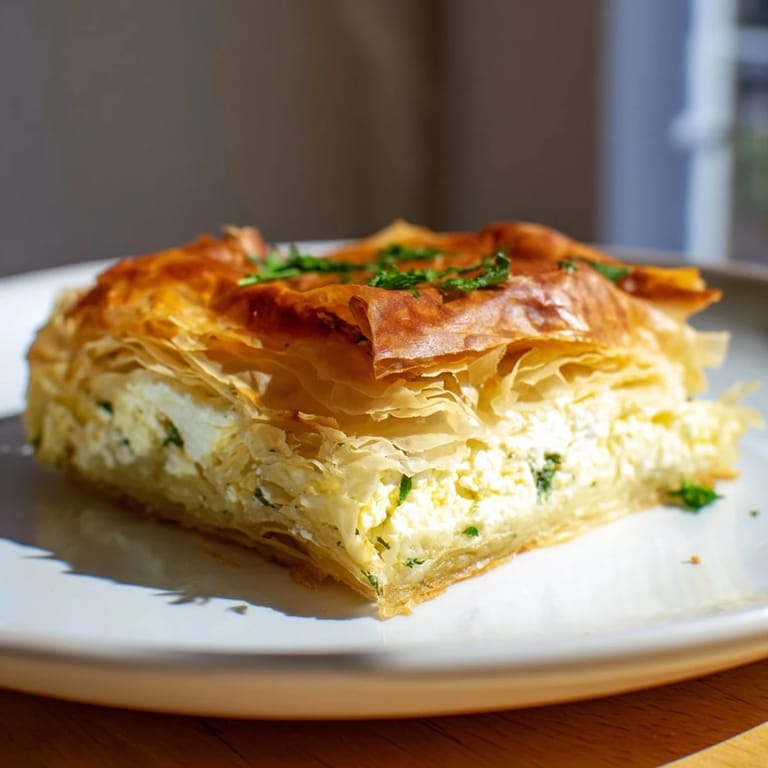
Save There's a quiet moment when banitsa comes out of the oven, the kitchen filled with that unmistakable aroma of caramelized butter and melted cheese, and you realize you've just made something that could grace any Bulgarian table. That moment of anticipation before the first bite, when you're about to prove to yourself that you've mastered this ancient technique—that's when food becomes memory.
The Secret Language of Phyllo
Phyllo demands respect but not fear. I've made this recipe enough times to know that a single tear doesn't ruin anything—just butter over it and carry on. The sheets want to stick together slightly when buttered, and that's exactly what you want because it creates those crispy, shattered layers people dream about. The real secret is understanding that phyllo is listening to your hands; work with confidence and it responds beautifully.
Why Yogurt Changes Everything
The yogurt in banitsa isn't an afterthought—it's the element that separates a good banitsa from one that tastes like home. It adds a subtle sourness that cuts through the richness of the feta and butter, and it keeps the filling from feeling heavy even after you've eaten a generous portion. Bulgarian cooks have known this for generations, and once you understand what the yogurt does, you'll never skip it or substitute it carelessly.
Serving and Pairing Wisdom
Banitsa is impossibly versatile, equally at home at breakfast with strong coffee as it is at a late-night table with friends and conversation. The warm-versus-room-temperature question isn't really a question—both are magnificent, and you'll find yourself returning to whichever way your family prefers. One simple salad of tomato, cucumber, and onion with olive oil and a glass of cold ayran transforms banitsa from a pastry into a complete, balanced meal that feels like celebration even on an ordinary Tuesday.
- A crisp white wine or sparkling water pairs beautifully if you're serving this for brunch or entertaining.
- Leftover banitsa keeps well for three days and actually improves slightly as flavors meld, so don't hesitate to make it ahead.
- If you're adding fresh herbs, dill and parsley are traditional, but even a whisper of mint works beautifully.
 Save
Save Make this banitsa, and you'll understand why it endures across generations and across continents wherever Bulgarians find themselves. It's simple enough for a quiet breakfast and grand enough for the table when people you love gather around.
Recipe FAQ
- → What type of cheese is best for Banitsa?
Feta cheese is traditional for Banitsa, offering a salty, tangy flavor. Bulgarian sirene or ricotta can be used for a milder taste.
- → How do you keep phyllo dough from drying out?
Keep phyllo covered with a damp towel while working to prevent it from drying and becoming brittle.
- → Can Banitsa be served cold?
While typically enjoyed warm or at room temperature, Banitsa can also be served cold, retaining its flaky texture.
- → What herbs complement the filling?
Fresh chopped dill or parsley added to the filling enhance the flavor and add a pleasant aromatic touch.
- → How should Banitsa be stored?
Store in an airtight container at room temperature for up to two days or refrigerate to extend freshness, reheating gently before serving.