 Save
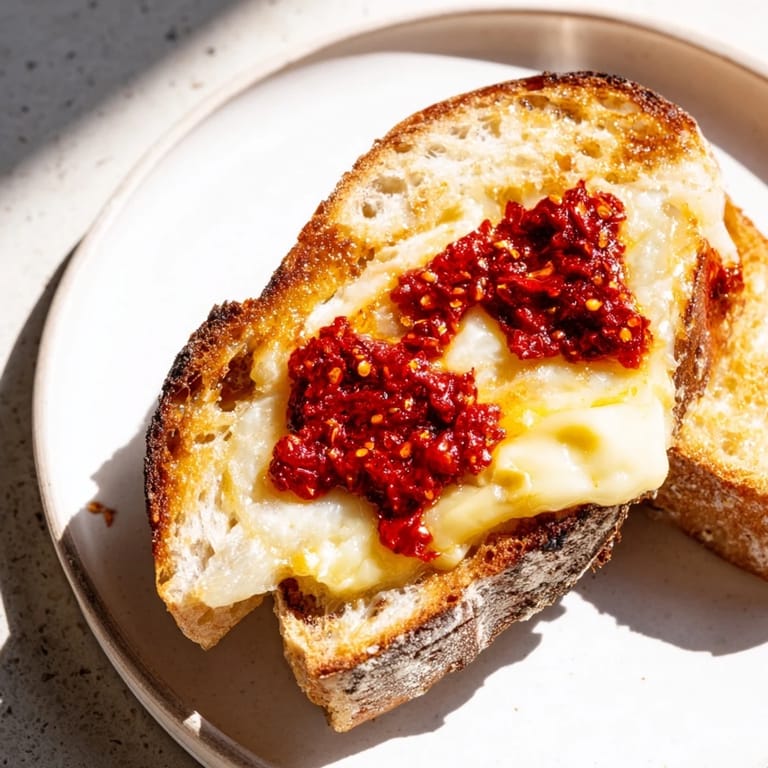
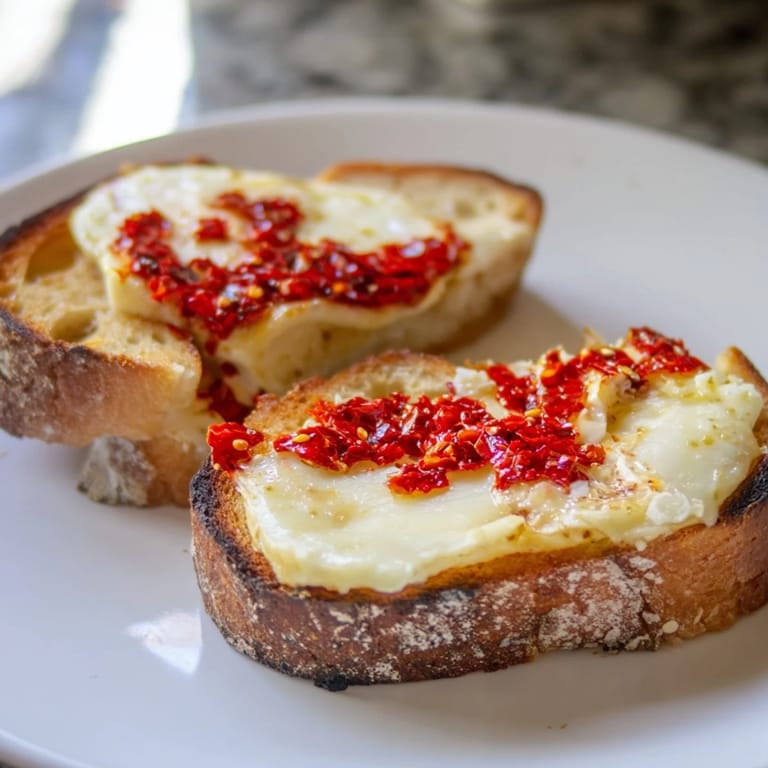
Save There's something about the smell of butter hitting a hot skillet that makes everything feel a little more luxurious, even when you're just making lunch. I stumbled onto this version of grilled cheese during one of those afternoons when I wanted something more interesting than the usual, but didn't have the energy for actual cooking. The brie melts into these pockets of creamy richness, and the chili crisp adds this sharp, spicy contrast that feels almost indulgent. It's the kind of sandwich that makes you pause mid-bite and think, how is this so good?
I made these for my partner on a Saturday morning when we were both hungry and tired, and watching them take that first bite and just go quiet—that's when I knew this one was a keeper. The warmth of the sandwich, the crunch of the crispy bread edges, the way the brie started to ooze slightly when they pressed down with their fork. It was one of those small moments where food became less about feeding yourself and more about sharing something genuinely good.
Ingredients
- Rustic sourdough or country bread (4 slices): The texture matters here—you want something with enough structure to get golden and crispy on the outside while staying slightly chewy within.
- Brie cheese with rind (6 oz, sliced): The rind keeps everything together and adds a subtle earthiness; don't skip it just because you're nervous about it.
- Unsalted butter, softened (2 tbsp): Softened butter spreads easily and browns more evenly than cold butter straight from the fridge.
- Chili crisp (2–3 tbsp): This is your wild card—the heat, the texture, the oil that seeps into the bread. Taste your chili crisp first and adjust accordingly.
Tired of Takeout? 🥡
Get 10 meals you can make faster than delivery arrives. Seriously.
One email. No spam. Unsubscribe anytime.
Instructions
- Butter your bread gently:
- Spread a thin, even layer of softened butter on one side of each slice. You're not trying to create butter sandwiches here; just enough to kiss the surface and help it brown.
- Build your layers:
- Place two slices buttered-side down, then layer brie on the unbuttered side of each. The brie should cover most of the surface but doesn't need to be perfect.
- Add the heat:
- Spoon 1 to 1.5 tablespoons of chili crisp onto the brie on each sandwich. The oil will help it distribute as it melts.
- Close and seal:
- Top each sandwich with the remaining bread slice, buttered side facing out. Press gently with your hands just to make sure everything's in contact.
- Get your pan ready:
- Heat a large nonstick skillet or griddle over medium-low heat until a drop of water sizzles gently but doesn't immediately evaporate. You want steady, gentle heat, not a raging fire.
- Cook with patience:
- Place the sandwiches in the skillet and cook for 3–4 minutes on the first side without moving them around. You're looking for a deep golden brown, not pale or burnt. Gently press with a spatula, listening for that satisfying sizzle.
- Flip and finish:
- Flip carefully and cook the other side for another 3–4 minutes until the bread is golden and the brie is fully melted inside. You should feel slight resistance when you press, like the cheese is trying to hold everything together.
- Rest and serve:
- Remove from heat and let rest for exactly one minute—this lets the cheese set slightly so it doesn't immediately run out when you slice.
 Save
Save The first time I let someone else make this sandwich, I watched them cook it way too hot and I had to sit with my disappointment silently. But then I realized—that's exactly when teaching someone becomes more fun than just making it yourself. Now whenever someone asks how I make it, I slow down and explain the medium-low heat thing like it's the most important secret in the world, because honestly, it kind of is.
Why Medium-Low Heat Changes Everything
I used to think grilled cheese was just grilled cheese, but this sandwich proved me wrong the moment I started paying attention to temperature. The difference between medium and medium-low might seem tiny, but it's the difference between a sandwich that looks beautiful and one that actually tastes the way you imagined. When you rush it with high heat, the bread exterior sets before the brie inside has even started to think about melting. Medium-low gives you time—time for the butter to brown slowly, time for the cheese to become this warm, flowing layer of richness, time to actually enjoy the process instead of just racing to the finish.
Flavor Combinations Worth Trying
Once you've made this version a few times, you start thinking about what else could live in that buttery, cheesy space. A small handful of peppery arugula adds a fresh bite that cuts through the richness beautifully. Thinly sliced apples bring a subtle sweetness that makes you wonder why you didn't think of it sooner. There's even something lovely about a whisper of whole grain mustard underneath the brie, though I learned that the hard way by adding too much and making my sandwich aggressively tangy. The chili crisp is the non-negotiable anchor, but everything else is up for your own kitchen experiments.
Making It Your Own
The beauty of this sandwich is that it's simple enough to execute perfectly, but flexible enough to reflect what's in your kitchen and what you're craving. Some days I make it exactly as written because the combination is just that good. Other days I'm reaching for whole-grain bread because I'm in a different mood, or swapping brie for camembert because it's what I have. The structure stays the same, but the feeling shifts depending on what you bring to it.
- If your chili crisp is particularly spicy, dial it back to 1–2 tablespoons and taste as you go.
- Cold butter straight from the fridge works fine if you're in a hurry, but it spreads less evenly.
- The one-minute rest after cooking genuinely matters—it's the difference between cheese that stays in the sandwich and cheese that doesn't.
 Save
Save This sandwich reminds me that sometimes the most satisfying meals are the ones you make for yourself on an ordinary day, without fanfare or planning. Pour yourself something cold to drink and actually sit down while you eat it.
Recipe FAQ
- → What type of bread works best?
Rustic sourdough or country bread slices provide a sturdy and flavorful base that crisps well during grilling.
- → How much chili crisp should I use?
Use 2 to 3 tablespoons per sandwich, adjusting to your preferred spice level for a balanced kick.
- → Can I substitute brie with other cheeses?
Camembert works well as a creamy alternative, but avoid hard cheeses that don't melt easily.
- → What cooking equipment is recommended?
A nonstick skillet or griddle heated over medium-low ensures even browning and melting without burning.
- → Are there tips for adding extra flavor?
Adding arugula or thinly sliced apples before grilling adds fresh texture and complementary flavor.