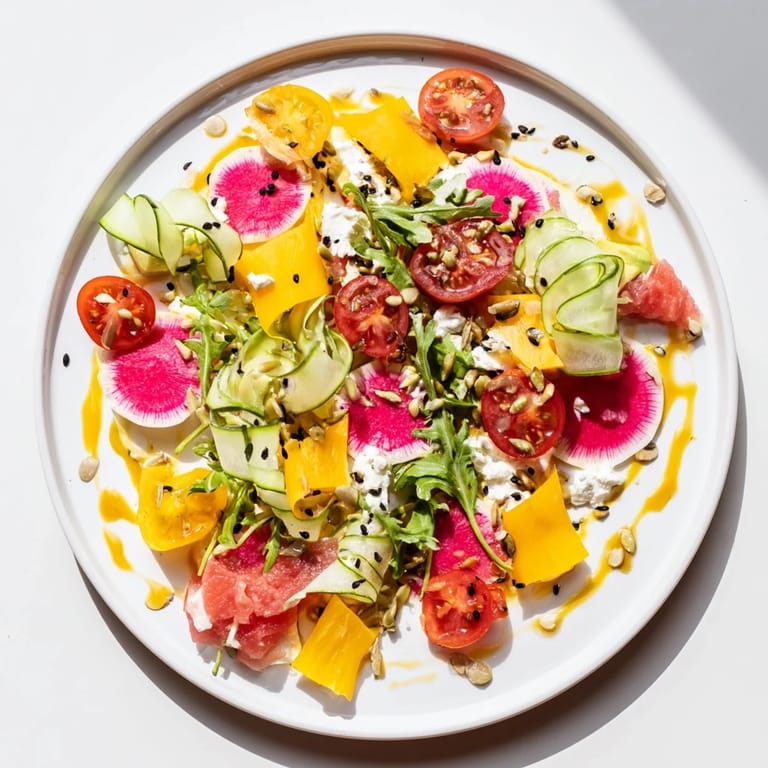
 Save
Save I'll never forget the afternoon I wandered into a small modern art gallery and found myself mesmerized by a Jackson Pollock painting—all wild splashes and chaotic energy that somehow created perfect harmony. That evening, standing in my kitchen with an armful of farmers market vegetables, I thought: why can't a salad feel like that? So I started arranging ingredients like colors on a canvas, letting them collide and overlap in beautiful disorder. That first version made my friends pause mid-conversation to just stare at their plates. This salad became my edible manifesto: proof that food doesn't need to follow rules to feel absolutely right.
I made this for my sister's art opening last spring, and I watched people photograph their plates before eating them—something I'd never seen happen at a dinner party before. She told me later that guests were still talking about the salad weeks afterward, asking for the recipe like it held some kind of secret. That's when I realized this dish had become more than just food; it was a conversation starter, a moment of joy you could actually eat.
Ingredients
- Cherry tomatoes, red and yellow, halved (1 cup): These jewel-toned gems are the foundation of your color story—their natural sweetness balances everything else. I learned to halve them rather than leave them whole so they nestle into the arrangement and catch the light beautifully.
- Golden beet, peeled and shaved (1 small): This ingredient taught me patience in the best way. The earthiness and burnished gold color create depth that simple vegetables can't achieve alone. A vegetable peeler or mandoline turns it into delicate ribbons that feel precious.
- Cucumber, sliced into ribbons (1 small): The cooling freshness here prevents the salad from feeling heavy. When you peel it into ribbons instead of chopping, it becomes architectural and catches the dressing beautifully.
- Red radishes, thinly sliced (1/2 cup): These little discs add a peppery snap that wakes up every other ingredient. They're like the exclamation points in your visual sentence.
- Watermelon, cut into irregular cubes (1 cup): Here's the magic moment I discovered: watermelon in a savory salad feels unexpected and wonderfully refreshing. The irregular cutting keeps the presentation playful rather than precious.
- Ripe avocado, cubed (1): Creamy and grounding, this ingredient adds richness that makes the salad feel complete. Add it just before serving so it stays pristine and beautiful.
- Mixed baby greens—arugula, baby spinach, frisée (1 cup): These greens are your canvas. Their subtle bitterness and delicate texture support everything else without demanding attention.
- Fresh mint leaves, torn (2 tbsp): A discovery that changed everything: torn mint rather than sliced releases its oils and brings a brightness that feels like spring on your plate.
- Toasted pumpkin seeds (1/4 cup): The crunch is essential, and toasting them yourself intensifies their nutty flavor. They add grounding texture to all the fresh vegetables.
- Pomegranate seeds (1/4 cup): These jewels are pure visual drama and add a tart-sweet burst that keeps your palate surprised with every bite.
- Crumbled feta cheese (1/4 cup): Salty, creamy, and tangy—this ties the whole composition together with a sophisticated touch.
- Extra-virgin olive oil (3 tbsp): This is where quality matters deeply. A good olive oil carries flavor and helps emulsify the dressing into something silky.
- White balsamic vinegar (1 tbsp): I use white balsamic instead of regular because it adds acidity without darkening your carefully composed colors. It's a small choice with big impact.
- Honey (1 tsp): The sweetness rounds out the sharpness and helps everything feel cohesive.
- Dijon mustard (1/2 tsp): This emulsifies the dressing and adds a subtle sophistication you'll taste but not identify.
- Salt and freshly ground black pepper, to taste: Season boldly—this salad's bright flavors can handle it.
Tired of Takeout? 🥡
Get 10 meals you can make faster than delivery arrives. Seriously.
One email. No spam. Unsubscribe anytime.
Instructions
- Prep Your Masterpiece:
- Gather your vegetables and fruits and arrange them in separate bowls like a painter organizing their palette. This is where the magic begins—nothing feels rushed, and you can admire each ingredient's colors before they meet on the plate.
- Build Your Canvas:
- Take your large platter and scatter the baby greens and torn mint in loose, intentional clumps. Let them feel organic and wild, not perfectly arranged. This is your green foundation, and it should feel alive.
- Paint with Colors:
- Now comes the part that feels like play: splash and scatter the tomatoes, beet shavings, cucumber ribbons, radish slices, watermelon cubes, and avocado across the greens. Let them overlap and intermingle. There's no wrong way to do this—lean into the chaos. Step back and look at your work from different angles. Does it feel balanced? Not symmetrical, but balanced?
- Add Texture Drama:
- Sprinkle the pumpkin seeds, pomegranate seeds, and feta cheese over the top in an intentionally irregular pattern. These are your final brushstrokes, adding dimension and surprise.
- Emulsify Your Dressing:
- In a small bowl, whisk together the olive oil, white balsamic vinegar, honey, Dijon mustard, salt, and pepper. Keep whisking until it becomes silky and slightly thickened—this is the moment it transforms from separate ingredients into something unified and sophisticated.
- Drizzle Like You Mean It:
- Pour the dressing across the salad in zigzags and splatters, mimicking brushstrokes. Some parts will have more dressing, some less—and that's exactly right. This is where the presentation becomes complete.
- Serve and Celebrate:
- Bring it to the table while it's still fresh, letting everyone admire the wild arrangement for a moment. Then let them mix it up, breaking the careful composition into something delicious. Sometimes the most beautiful things are meant to be unmade.
 Save
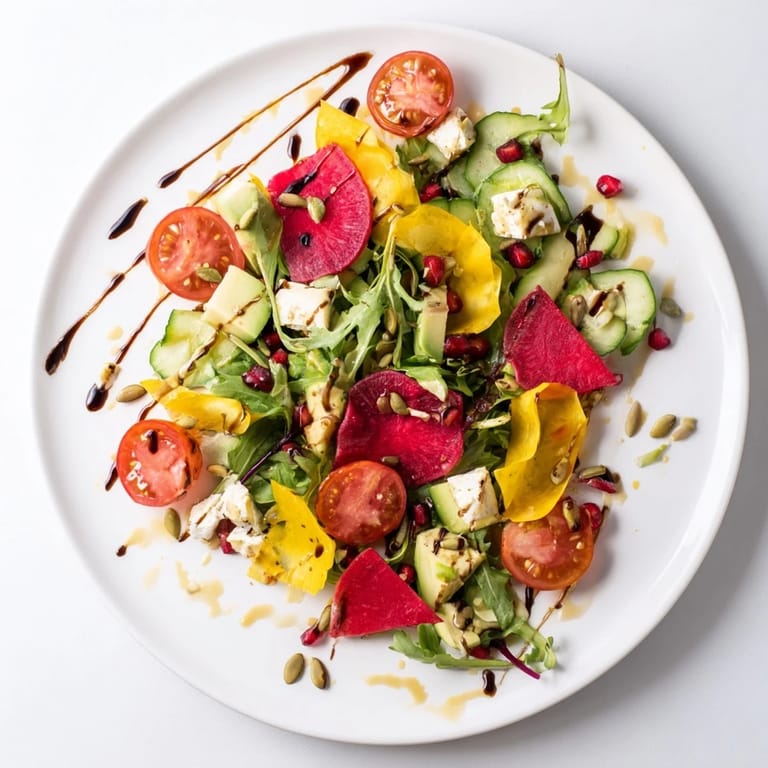
Save There's a moment right before serving when I always pause and just look at what I've created. It feels almost too beautiful to eat, like I'm about to destroy a painting. But that's the point, isn't it? This salad taught me that food is about the joy of sharing, and sometimes the most memorable meals are the ones that looked impossible to make but turned out to be delightfully simple.
The Art of Arrangement
This salad is named for abstract expressionism for a reason—it celebrates the beauty of apparent chaos. But here's what I've learned: there's actually a method to the madness. The key is thinking about color balance rather than symmetry. You want pockets of red, sections of green, areas of gold, all scattered so your eye is drawn around the plate. It's less like following a recipe and more like creating with intention. Don't be afraid to rearrange things if something doesn't feel right. Your instincts about beauty are probably correct.
Seasonal Variations and Swaps
One of my favorite things about this salad is how adaptable it is. In summer, when berries are at their peak, I swap watermelon for fresh raspberries or blackberries. In fall, I've roasted purple sweet potatoes and added them for earthiness and extra color. Spring calls for fresh peas and edible flowers—pansies and violas add color without compromising the flavor balance. The bones of the recipe stay the same, but you're always painting with what's freshest and most beautiful. This flexibility makes it a year-round staple in my kitchen.
Making It Your Own
The best recipes are the ones you feel permission to change. If you don't love feta, use creamy goat cheese or skip dairy entirely with a vegan alternative. If you're allergic to pumpkin seeds, sunflower seeds or toasted hazelnuts work beautifully. If white balsamic isn't in your pantry, red wine vinegar is fine—the flavor profile shifts slightly but the magic remains. The philosophy of this salad is about celebrating what you have and making it beautiful. That spirit matters more than any single ingredient.
- For extra drama, add edible flowers like nasturtiums, pansies, or borage flowers—they're both beautiful and delicious
- If you want more protein, crumbled tofu, grilled chicken, or roasted chickpeas make wonderful additions
- This salad pairs perfectly with a crisp Sauvignon Blanc, sparkling water with citrus, or even a light rosé if you want something special
 Save
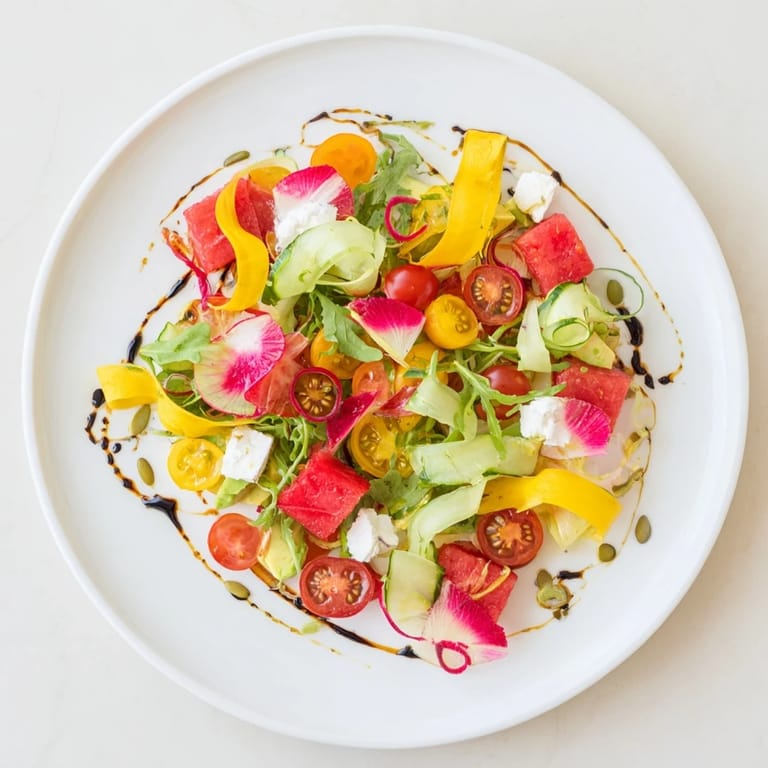
Save This salad reminds me that cooking doesn't always have to be serious or precious to be meaningful. Sometimes the best meals are the ones where you throw off the rules, trust your instincts, and let your food be as joyful and colorful as you are.
Recipe FAQ
- → What makes this salad visually unique?
The salad features a wild, artistic layering of colorful ingredients arranged to resemble abstract expressionism, combining diverse textures and vibrant hues.
- → How is the dressing prepared?
The dressing is a mixture of extra-virgin olive oil, white balsamic vinegar, honey, Dijon mustard, salt, and pepper, whisked until emulsified for a tangy, sweet finish.
- → Can this dish accommodate dietary restrictions?
Yes, it is vegetarian and gluten-free. For dairy-free options, feta cheese may be replaced with vegan alternatives.
- → What textures are highlighted in the salad?
Crunch from toasted pumpkin and pomegranate seeds contrasts with the soft avocado and juicy watermelon cubes, enhanced by crisp fresh vegetables.
- → How should the ingredients be prepared for ideal presentation?
Vegetables and fruits are thinly sliced, shaved, or cut into irregular shapes and artistically scattered over mixed baby greens to create a dynamic, layered look.